Blockchain Beyond Cryptocurrency - Revolutionizing Industries
Imagine a world where your medical records are securely stored and easily accessible, or your supply chain is transparent and tamper-proof. Welcome to the world of blockchain, where trust and transparency are revolutionizing industries beyond cryptocurrency. With the global blockchain market expected to reach $67.4 billion by 2026, growing at a staggering 68.2% CAGR, it's clear that this technology is here to stay. From healthcare to finance, and from logistics to identity management, blockchain is breaking barriers and unlocking new possibilities. Let's dive into the world of blockchain and explore how it's transforming industries and shaping the future.
The Misconception of Blockchain
You probably think blockchain is all about cryptocurrency, right? Well, you're not alone. For years, that's all we've heard about - Bitcoin, Ethereum, Dogecoin... the list goes on. But here's the thing: blockchain is so much more than that. In fact, the technology has been around since the 1970s, with the first real-world application, Bitcoin, launching in 2009 by the mysterious Satoshi Nakamoto.
But it's not just about digital currencies. Many industries are now exploring blockchain's potential, and it's exciting stuff. According to a report by PwC, 84% of companies are experimenting with blockchain technology. That's a huge jump from just a few years ago. As Don Tapscott, the blockchain expert, puts it, "Blockchain is the internet of value, where transactions are secure, transparent, and tamper-proof."
Beyond the Hype
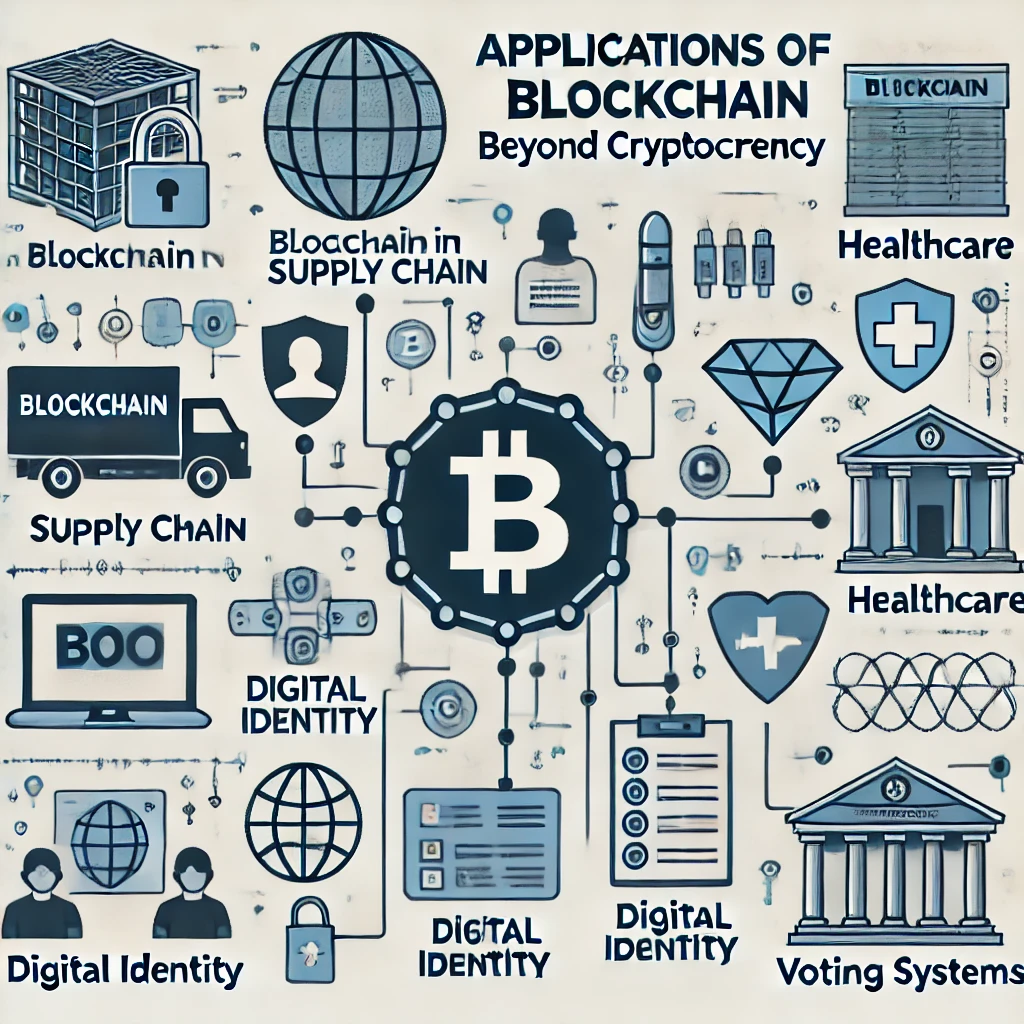
So, what's driving this interest? For starters, blockchain offers a decentralized, secure way to record transactions and data. This means increased trust, transparency, and efficiency in industries like supply chain management, healthcare, and voting systems. Take Estonia, for example, which has been using blockchain to secure its citizens' health records since 2016. Or Walmart, which is using blockchain to track its produce from farm to table.
- Supply chain management: increased transparency and efficiency
- Healthcare: secure storage of medical records
- Voting systems: secure and transparent elections
- Smart contracts: automated agreements and transactions
The potential applications are endless, and we're just scratching the surface. In this article, we'll dive deeper into how blockchain is revolutionizing industries beyond cryptocurrency.
Key Benefits of Blockchain
So, you've got a grasp of what blockchain is and how it's shaking things up beyond cryptocurrency. Now, let's dive into the good stuff – the benefits that make blockchain a game-changer. One of the biggest perks is encryption. You see, blockchain uses advanced cryptography to jumble up data, making it unreadable without the key. Think of it like a super-secure digital lockbox, and only authorized parties have the key.
Unpacking the Benefits
There are three key benefits that make blockchain so powerful: encryption, provenance, and immutability. Let's break 'em down.
- Encryption: Data is encrypted, making it virtually unhackable. For example, companies like Maersk and Walmart are using blockchain to secure supply chain data.
- Provenance: Blockchain ensures the validity and integrity of data history. A great example is Everledger, which tracks diamond provenance, ensuring conflict-free sourcing.
- Immutability: Once a block is validated, the data can't be altered. This is huge for industries like healthcare, where patient records need to be tamper-proof. Estonia, for instance, uses blockchain to secure its citizens' health records.
The benefits are clear. With blockchain, you're not just securing data – you're creating trust. And trust is the currency of the digital age.
Blockchain in Financial Services
You're probably aware of the massive impact blockchain's had on cryptocurrencies, but its influence extends far beyond that. Companies like American Express are leveraging blockchain to revolutionize traditional financial services. They've joined Ripple's global payment network and launched a blockchain-based system for membership rewards, making transactions faster and more secure.
Real-Time Updates, Transparency, and Trust
One of the key benefits of blockchain in financial services is the near real-time updates it offers. With a distributed ledger, everyone in the value chain is informed simultaneously, reducing delays and increasing trust. This is particularly valuable in industries like banking and insurance, where transparency and security are paramount.
Take cross-border payments, for instance. Traditional systems can be slow and costly, with transactions taking days to settle. Blockchain changes this landscape by enabling near-instant transfers, cutting costs, and minimizing the risk of fraud. It's no wonder companies like Ripple are gaining traction.
- Enhanced security through immutable records
- Improved efficiency in payment processing
- Increased transparency for regulatory compliance
The immutability of blockchain records is a game-changer for financial institutions. It ensures that once a transaction is recorded, it can't be altered or deleted. This level of security is crucial for industries handling sensitive data and high-value transactions. As blockchain continues to evolve, we're likely to see even more innovative applications in financial services.
Blockchain in Healthcare: Securing Your Health Records
Imagine having complete control over your medical records, deciding who can access them, and getting notified whenever someone does. That's the power blockchain brings to healthcare. Medicalchain, a UK-based startup, is using blockchain to securely store health records, giving you ownership and control. It's not just about data security; it's about putting you at the center of your healthcare journey.
Enabling Care Coordination
SimplyVital Health is another example of blockchain's potential in healthcare. They're granting secure access to patient information, enabling seamless care coordination among healthcare providers. This means doctors can focus on treating you, not paperwork. With blockchain, your medical history is just a click away, but only for those you authorize.
Counterfeit drugs are a $200 billion problem globally. BlockPharma, a blockchain-based platform, is tackling this issue head-on. By tracking drugs through every step of the supply chain, they ensure the medications you take are genuine and safe.
These examples show how blockchain is revolutionizing healthcare – improving data security, enhancing patient care, and combating counterfeiting. As this technology evolves, we're likely to see even more innovative healthcare solutions.
- Secure storage and management of health records
- Seamless care coordination among healthcare providers
- Tracking and verification of pharmaceuticals
- Enhanced patient control over medical data
Blockchain in Supply Chain: Tracking Goods with Unprecedented Transparency
You've probably heard of De Beers, the diamond giant that's been around for over a century. They're now revolutionizing the diamond trade with Tracr, a blockchain platform that tracks diamonds from mine to market. This means you can scan a diamond's QR code and instantly verify its authenticity, origin, and journey. No more blood diamonds or fakes!
Real-Time Transparency
Home Depot, the home improvement giant, is another example. They're using IBM Blockchain to track shipments and resolve vendor disputes in real-time. This has improved their supply chain efficiency and reduced paperwork by a significant margin. With blockchain, every transaction is time-stamped and immutable, so you can trust the data.
IPwe, a Singapore-based startup, is using IBM Blockchain and AI to create a global patent market. They're making it easier for inventors to license their patents and for companies to find the tech they need. This is just one example of how blockchain is unlocking new business models and opportunities.
- De Beers' Tracr: tracking diamonds, ensuring authenticity
- Home Depot's IBM Blockchain: real-time supply chain management
- IPwe's patent market: connecting inventors and innovators
These examples show how blockchain is transforming industries beyond cryptocurrency. By providing a secure, transparent, and tamper-proof record of transactions, blockchain is building trust and efficiency in supply chains worldwide.
Blockchain in Government and Identity
Governments are waking up to blockchain's potential, and it's about time. Estonia, for instance, has been a pioneer in this space. Since 2012, they've been using blockchain to secure citizens' health records, ensuring that medical professionals can access accurate and up-to-date information. This is just the tip of the iceberg – blockchain can revolutionize identity management, making it more secure and efficient.
Secure Digital Identity
You might be wondering how this works. Well, blockchain allows for the creation of decentralized digital identities, giving you control over your personal data. Microsoft's ION (Identity Overlay Network) is a great example of this. It's built on top of the Bitcoin blockchain, enabling users to manage their digital identities securely. No more lost passwords or compromised personal data!
Blockchain-based identity systems can also transform voting systems, making them more transparent and tamper-proof. Sierra Leone's 2018 presidential election is a great example of this. The country used blockchain technology to ensure the integrity of the electoral process, making it virtually hack-proof.
Beyond Voting
Agriculture is another sector that can benefit from blockchain-based identity management. In countries like India, where farmers often struggle with identity verification, blockchain can provide a secure and reliable solution. For instance, the Andhra Pradesh government has partnered with a blockchain startup to create digital identities for farmers, enabling them to access financial services and other benefits seamlessly.
- Estonia's e-health system: 1 million+ citizens with secure health records
- Microsoft ION: decentralized digital identity solution
- Sierra Leone's blockchain-based voting system: 1st country to use blockchain in a presidential election
These are just a few examples of how blockchain is revolutionizing government and identity management. As this technology continues to evolve, we can expect to see even more innovative applications.
The Future of Blockchain
You're probably wondering what's next for blockchain technology. Well, the possibilities are endless! From supply chain management to healthcare, blockchain is poised to revolutionize numerous industries. Companies like Walmart and Maersk are already using blockchain to track inventory and shipments, reducing errors and increasing efficiency.
Beyond the Hype
While blockchain is gaining momentum, we're still a few years away from mass deployment. According to a report by Gartner, 90% of blockchain projects will fail to deliver on their promises, highlighting the challenges that lie ahead. Security concerns, regulatory hurdles, and lack of standardization are just a few of the barriers that need to be overcome.
Despite these challenges, experts predict that blockchain will become a mainstream technology in the next 5-7 years. In fact, the World Economic Forum estimates that blockchain could generate $1 trillion in new revenue by 2025. Industries like insurance, healthcare, and finance are already investing heavily in blockchain, and it's exciting to think about the potential breakthroughs that could come from this technology.
- Supply chain management: Companies like Unilever and Nestle are using blockchain to track products and ensure sustainability.
- Healthcare: Estonia's e-health system uses blockchain to secure patient data and ensure interoperability.
- Finance: JPMorgan Chase is using blockchain to facilitate cross-border payments and reduce settlement times.
As blockchain continues to mature, we're likely to see even more innovative use cases emerge. It's an exciting time to be following this technology, and I can't wait to see what the future holds!
Actionable Insights for Businesses
So, you've got a grasp on how blockchain can revolutionize industries beyond cryptocurrency. Now, what's next? Identify areas where blockchain can improve security and transparency in your business. Think supply chain management, like Maersk's partnership with IBM, which reduced shipping times by 40% and saved millions.
Get Moving with Strategic Partnerships
Don't go it alone. Explore partnerships with blockchain-focused companies like ConsenSys or Hyperledger. They've got the expertise and resources to help you scale. Just look at Walmart's partnership with IBM and Maersk – it's revolutionizing food safety and supply chain efficiency.
Start small, scale up. Learn from early adopters and industry leaders. Take JP Morgan's Quorum, for instance – it's now processing over 1 million transactions daily. You can too.
- Assess your current infrastructure for blockchain readiness
- Develop a clear use case and ROI model
- Build a cross-functional team with tech and business expertise
The future's bright, and it's blockchain-powered. As Ginni Ramesh, Microsoft's Cloud & AI leader, says, "Blockchain is the foundation for a new era of enterprise innovation." You're not just adopting a tech – you're joining a revolution.
What's your blockchain move? The possibilities are endless.











Comments ()