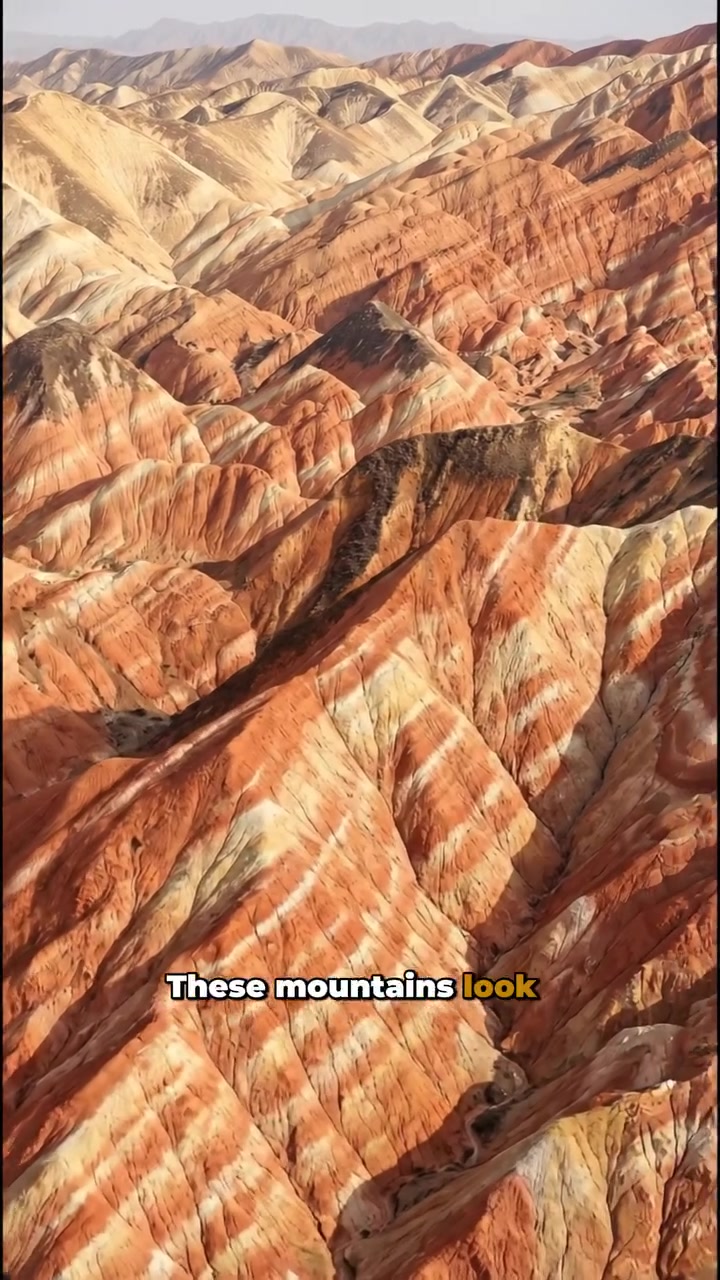
Across northwestern China, there stretches a landscape so vivid it seems hand-painted. Over 100 square miles of red, orange, and yellow stripes run across the mountains — an optical illusion since the hue is not merely on the surface. In the layer of the rock the color runs all the way through.
The Making of a Mountain Canvas
The Zhangye Danxia landscape in northwest China features these vividly striped hills. These mountains are the product of geological forces pushing and tilting layers of rock, creating a display no paintbrush can replicate. The tiny iron oxide particles embedded in each layer create a rust effect that adds red tones, while other minerals add yellows, browns, and even greens. Each stripe of the mountain is a separate layer of rock, and the color runs all the way through. These colors come from different minerals that settled into these layers of stone. Over tens of millions of years, the ground layering formed the hues that we see today. The red stripes in the mountains were originally sediments from the bottom of ancient basins. The reds come from iron oxide—the very same thing that makes metal rust. Other minerals such as ferric oxides and feldspars add the yellows, browns, and even greens. Although the colors appear to be painted on, they are actually the result of the varying minerals in the rock.
50 Million Years of Geological Painting
Fifty million years ago, tremendous geological forces set these bands into motion. The continent of India crashed into Asia, pushing up the Himalayas and bending the flat layers of rock in what is now northwest China. The shifts in the earth's surface due to the collision of India and Asia bent and tilted these formations onto their side. Then, wind and rain wore away the rock on top, while these layers remained undisturbed. The flat layers that formed 50 million years back were hardened and colored as they settled.
The Colorful Collision
The geological drama behind these mountains began 50 million years ago—when the Indian tectonic plate pushed forcefully into the Asian plate. The force of the collision was so vast that the underlying land was forced upward, and the previously flat layers of rock were folded and tilted. The force of this collision resulted in rocks being forced out to sea. The collision that pushed up the Himalayas was the same one that folded and tilted the flat layers of rock.
How The Colors Came Into Being
The colors in the mountains are due to different layers of sediment that were created millions of years ago. These sediments settled in bottoms of basins and were colored by the sedimentary mix. Over millions of years, the earth's weathering process eroded the topmost rock layers, exposing the vibrant colored layers of rock underneath. This process, known as differential erosion, means that harder and softer materials weather at different rates, leaving behind the visible bands we see today.
The Creation and Destruction of the Colors
The colors of the mountains are due to the different sedimentary layers of rock that were created millions of years ago. These sediments were deposited in the bottom of basins and over the course of tens of millions of years, hardened into rock. The rocks are colored by different minerals in the rocks that give them their distinct shades. Different forms of iron oxide, such as hematite and goethite, give the rocks their red color. Other minerals, such as feldspars, add the browns, green, and yellows to the rock.
How to See These Mountains
Anyone planning to witness the wonders of Zhangye Danxia for themselves is encouraged to heed a few tips:
- Best time to visit: For the best viewing, visit the area between February and April. During these months, the weather is mild, and the skies are generally clear with minimal precipitation. However, if you plan on hiking it is better to visit in either August to September or June to July.
- Sunscreen and cover: The sun can be fierce, so adequate protection from the sun is essential.
- Wear comfortable shoes: Wear comfortable, sturdy shoes for hiking in this area, as the terrain can be quite rough. Good shoes will help you avoid slipping and falling.
- Plan a multi-day trip: To fully appreciate the expansive landscape, consider a multi-day trip. It will allow you to explore the various views and fully immerse yourself in the splendid natural wonder. Sprawling over more than 100 square miles, the Zhangye Danxia mountains are a testament to nature's ability to create beauty on a grand scale. These mountains are a living testament to how the earth's forces can create such beauty.
Questions readers ask
What exactly causes the vibrant colors in Zhangye Danxia's mountains?
The vibrant colors are primarily due to minerals embedded in the rock layers. Iron oxide creates the red tones, while other minerals like ferric oxides and feldspars contribute to the yellows, browns, and greens. These minerals were deposited over millions of years, creating distinct layers of color that run all the way through the rock.
How did the mountains get their striped appearance?
The striped appearance is a result of geological forces tilting and folding the layers of rock. Over tens of millions of years, different minerals settled into these layers, creating distinct stripes of color that have been exposed through erosion.
Can visitors actually see the colors up close, or are they better viewed from a distance?
Visitors can see the colors up close and from a distance. The colors are not just on the surface but run through the entire layer of rock, making them visible from various angles and distances. There are also viewing platforms and hiking trails that offer different perspectives of the landscape.
How were the layers of rock formed in the first place?
The layers of rock were formed over tens of millions of years as different minerals settled into these layers. The red stripes, for example, originally came from sediments at the bottom of ancient basins. These layers were then hardened and colored as they settled, creating the vibrant hues we see today.
What role did the collision of the Indian and Asian tectonic plates play in shaping Zhangye Danxia?
The collision of the Indian and Asian tectonic plates around 50 million years ago was a major factor in shaping Zhangye Danxia. The force of the collision pushed up the Himalayas and tilted the flat layers of rock in northwest China, creating the dramatic formations we see today.
Are there any similar landscapes in the world that feature these kinds of colorful, striped mountains?
While Zhangye Danxia is unique in its scale and vividness, there are other landscapes around the world with similar striped formations, such as the Rainbow Mountains in Peru and the Painted Hills in Oregon, USA. However, the specific combination of colors and the geological history behind Zhangye Danxia make it a standout natural wonder.
Related deep dives
Similar reads based on topic and creator.




Recent articles
Fresh deep dives from the latest Reels we unpacked.




Comments
Be the first to comment.