Kindness to Birds During Heatwaves
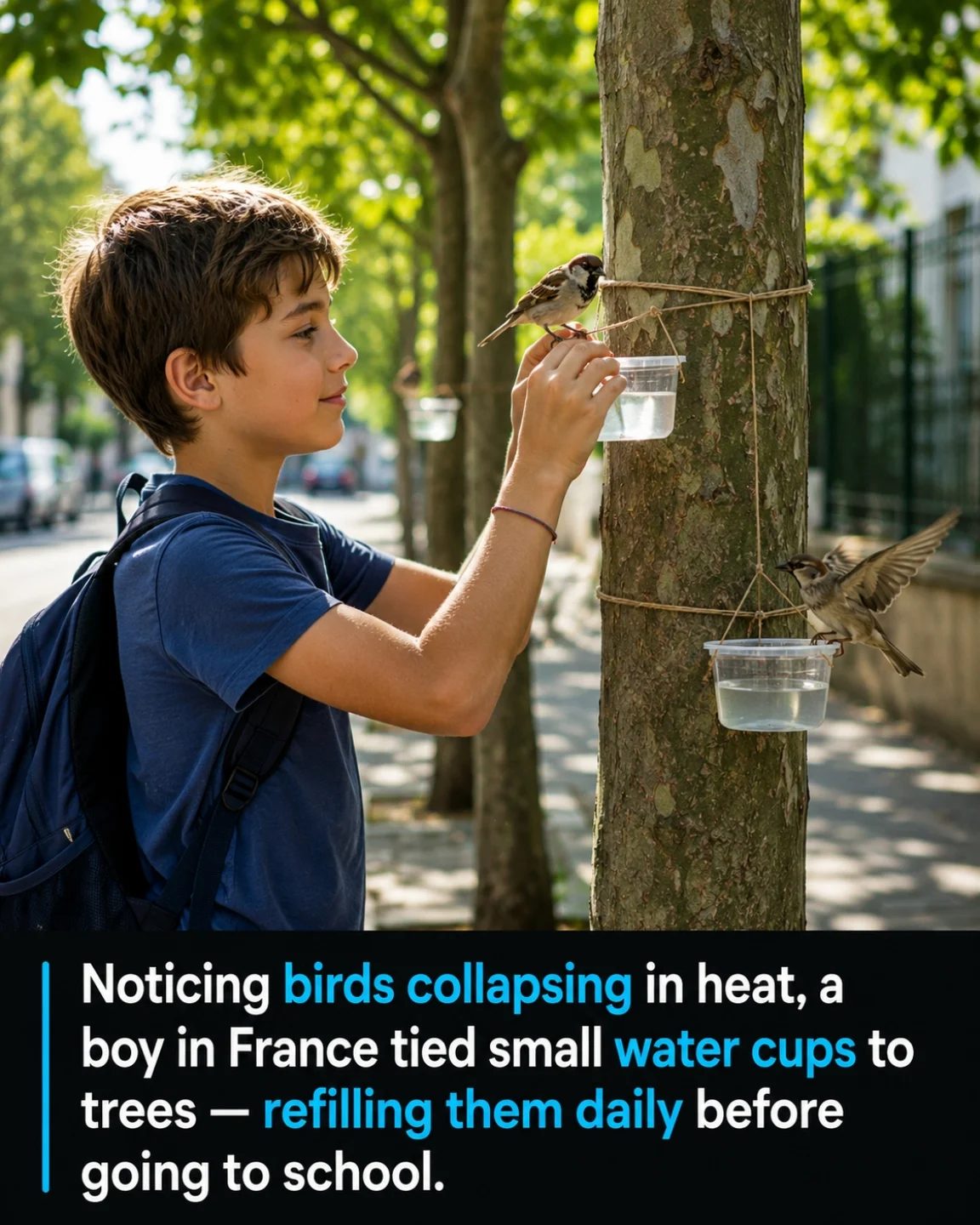
Helping birds stay hydrated is a simple yet impactful way to support local wildlife, especially during periods of extreme heat. In France, a young boy has taken the initiative to provide birds with a vital lifeline by offering them fresh water each day.
Why This Matters
Birds, like humans and other animals, are vulnerable to heatwaves. Extreme temperatures can lead to dehydration, exhaustion, and even death for birds. Small acts of kindness, such as providing fresh water, can make a significant difference in their survival.
The Impact of Small Actions
Providing Water for Birds in France
The boy’s simple yet effective method involves tying small water cups to trees in his neighborhood. Each morning, before heading to school, he refills these cups with fresh water. This ensures that birds have access to a reliable water source throughout the day. The cups are strategically placed to be easily accessible to birds, making it a convenient and effective way to help them stay hydrated.
The Benefits of Daily Refills
Refilling the cups daily is crucial because it ensures that the water remains fresh and uncontaminated. Birds are more likely to drink from clean water sources, and this practice helps minimize the risk of waterborne diseases. The daily routine also ensures that the birds have a consistent source of hydration, which is especially important during heatwaves when water sources can quickly dry up or become contaminated.
The Importance of Placement
The placement of the water cups is also strategic. By tying them to trees, the boy ensures that the water is easily accessible to the birds and is less likely to be disturbed by other animals or humans. This method also keeps the water out of direct sunlight, which can help keep it cool and refreshing for the birds.
Practical Tips for Helping Birds
Creating a Bird-Friendly Environment
If you are inspired by the boy’s actions, there are several ways you can create a bird-friendly environment in your own backyard or neighborhood. Here are some practical tips to help you get started:
- Provide Water: Set up a shallow dish or birdbath filled with fresh water. Ensure the water is changed regularly to prevent the buildup of bacteria and algae.
- Place Water Sources Strategically: Place water sources in shaded areas to keep the water cool and reduce evaporation.
- Offer Shelter: Provide birds with shelter from the sun and predators by creating a dense planting area with shrubs and trees. These spaces can also be used for nesting, providing additional benefits for the birds.
- Plant Native Vegetation: Planting native vegetation can attract insects and other food sources that birds rely on. The plants can also help provide shade and shelter.
Monitoring Bird Activities
Regularly monitoring bird activities in your area can help you understand their water requirements. Pay attention to the types of birds that visit your water sources and adjust your practices accordingly. For example, some birds may require deeper water sources, while others may prefer shallow dishes.
Seasonal Considerations
Extreme weather conditions can affect birds’ water needs. During heatwaves, it’s essential to increase the frequency of water refills and ensure that water sources are easily accessible. In colder months, consider using birdbath heaters to prevent water from freezing and maintain a consistent water supply.
Important Takeaways
Helping birds through simple acts like providing water can significantly impact their well-being, especially during extreme weather conditions. The boy's initiative in France showcases how small, consistent efforts can make a big difference. His method of tying small water cups to trees and refilling them daily is a practical and effective way to support local bird populations.
Conclusion
Taking care of birds in your neighborhood is a rewarding and impactful way to contribute to local wildlife conservation. By providing fresh water, offering shelter, and planting native vegetation, you can create a supportive environment for birds to thrive. The example of the boy in France serves as a reminder that even the smallest actions can have a profound impact on the natural world. Whether you live in a bustling city or a quiet rural area, there are always opportunities to make a difference in the lives of birds.
Questions readers ask
How does a young boy in France help birds during heatwaves?
The young boy sets up and maintains water cups tied to trees, providing birds with a daily source of fresh, cool water, which helps them stay hydrated during hot weather. He refills them each morning to ensure birds have access to this vital resource.
What are the benefits of providing water for birds in hot weather?
By providing fresh water, you help birds avoid dehydration, reduce heat exhaustion, and even prevent deaths that can occur when water is scarce. This simple act of kindness can dramatically improve a bird's likelihood of surviving extreme temperatures.
How can I create a water station for birds in my area?
To create a bird water station, you can use a shallow dish, bowl, or a specialized birdbath. Place it in a shady spot, change the water daily to prevent mosquito breeding, and clean the container regularly. Make sure it is easily accessible and visible to birds.
What are some signs that a bird is suffering from heat exhaustion?
When a bird is suffering from heat exhaustion, it might appear lethargic, have its wings spread wide, pant, or appear excessively thirsty. If you notice a bird exhibiting these signs, providing it with fresh water and a cool place to rest can be crucial for its survival.
How can I encourage children to help birds during heatwaves?
Involve children in setting up and maintaining bird water stations. Explain the importance of hydration for birds and the impact of extreme heat. Encourage them to observe the birds and document their visits to the water stations to foster a deeper connection with local wildlife.
What are some alternative ways to help birds during hot weather?
In addition to providing water, you can help birds by offering shade in your garden, planting native vegetation, and avoiding the use of pesticides. Creating a bird-friendly environment can significantly boost their chances of survival during heatwaves.
How can I share the story of the young boy helping birds with others to inspire more acts of kindness?
Share the story on social media, local community groups, or through word of mouth. You can also write a blog post or create a video to highlight the simplicity and effectiveness of the boy's actions with the aim to inspire more people to join the initiative.
Related deep dives
Similar reads based on topic and creator.




Recent articles
Fresh deep dives from the latest Reels we unpacked.




Comments
Be the first to comment.