Levels of Mantras
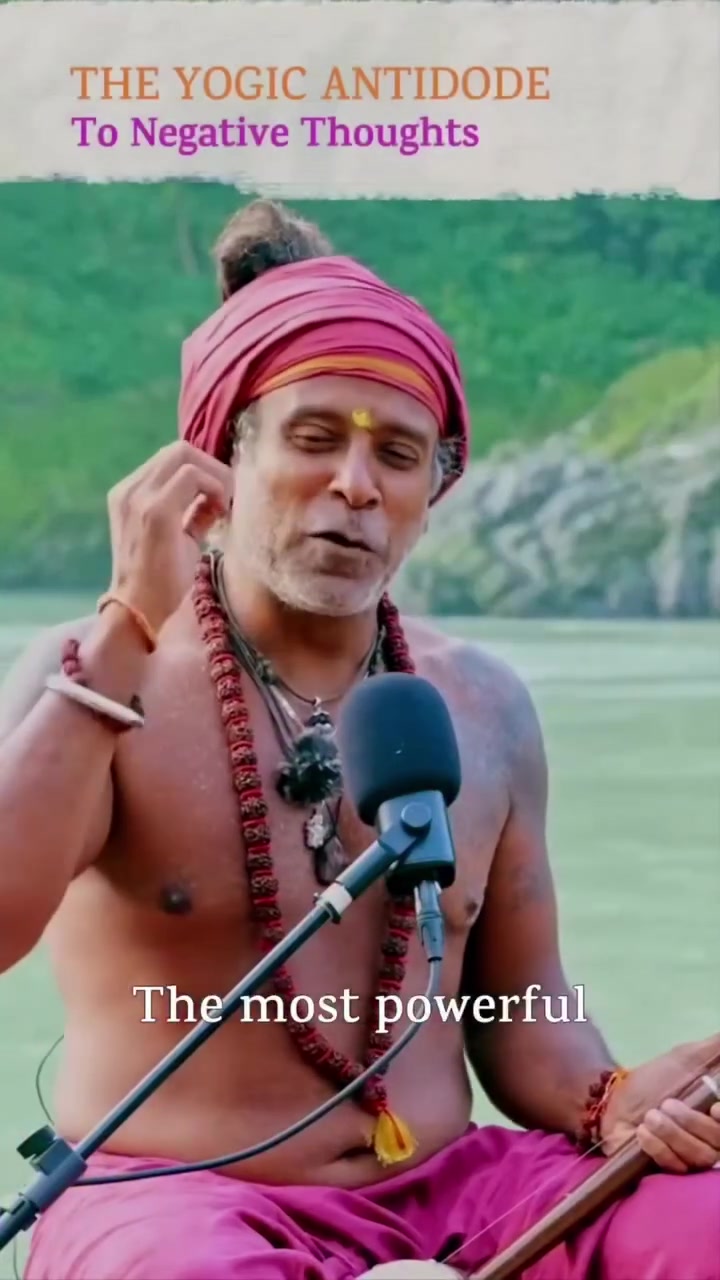
Yogic practice involves several layers of mantras, each with escalating intensity. The most potent, known as para, involves suppressing the mantra entirely. It is the idea of 'wanting to say the mantra, but suppressing it.' Unlike vaikari, which is chanting audibly, or Madhyama, which is mental repetition, para is the highest level of mantric practice, where one doesn't voice the mantra but maintains an awareness. Similarly, Pashanti, where the mantra is seen in written form, is 11,664 times more powerful than Madhyama. This indicates how powerful written text can be. As a result, it underscores that the spoken word is not the only way to connect with our thoughts. However, the yogi suggests that "it's better to just say it out." This is a subtle call to balance suppression and expression. Suppression can be beneficial, but there is a limit to how much can be subdued.
The Yogic Antidote To Negative Thoughts
The yogi suggests that suppressed thoughts can be highly powerful. For example, those who are dissatisfied with a relationship, yet keep quiet due to societal norms, are storing a profound negativity. He uses examples, such as a first date and marriage. He comments that when in a bad relationship, thoughts about the other person are constantly suppressed and this makes them more powerful. The yogi clarifies that these suppressed thoughts can grow exponentially in their power. Therefore, there is a limit to how much should be suppressed. When he says "12 lakh," he is referring to the fact that these thoughts could be powerful as suppressing them might lead to a more profound impact.
Emotional Honesty
The ancient wisdom coined by this yogi aligns with modern psychology. Anger, resentment, and bitterness can overwhelm if not expressed properly. In a relationship, the yogi suggests that it would be better to express dissatisfaction rather than suppress it. If not for the other person, they suggest that it should be vocalized. This highlights the importance of emotional honesty. This yogi’s point is that it is beneficial to vocalize thoughts and emotions, even if it's not directed at the people involved. For example, if someone thinks that “this person is unfair,” they are advised to say this out loud. It acts as a sort of catharsis, providing relief and a release from the burden of suppression.
Recent articles
Fresh deep dives from the latest Reels we unpacked.




Comments
Be the first to comment.