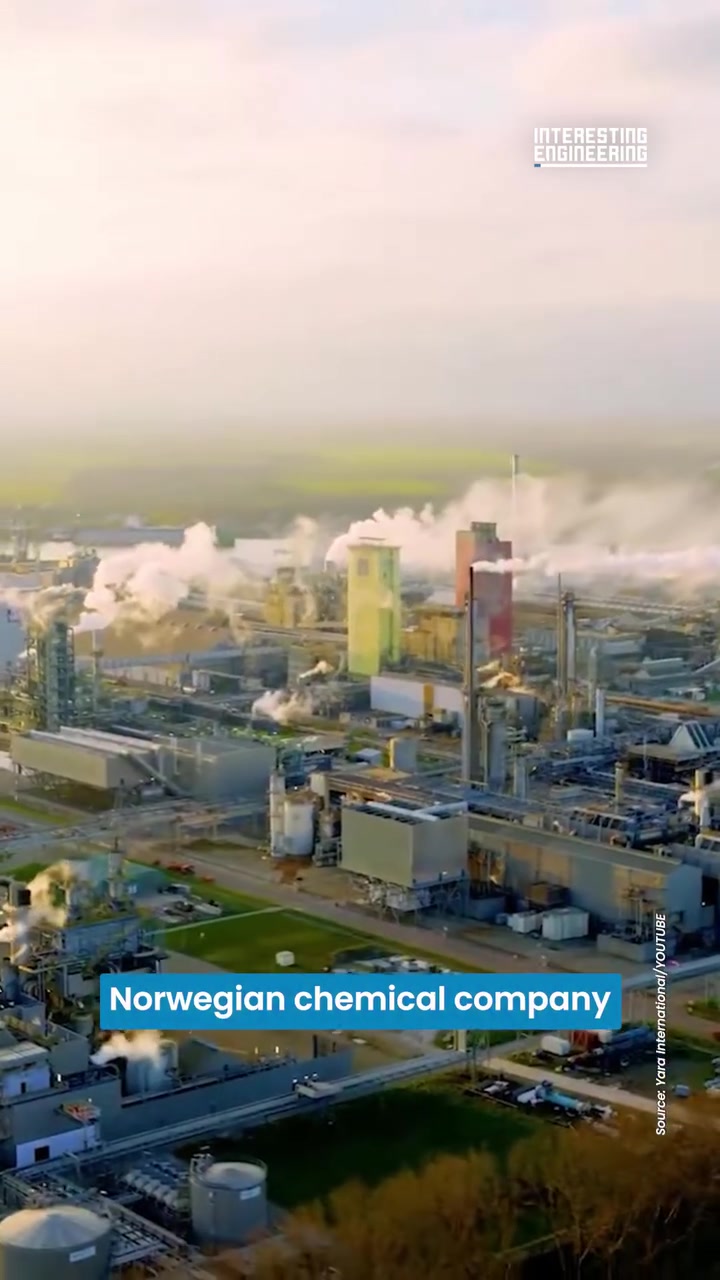
Yara, the Norwegian chemical company, has opened a milestone carbon capture facility in Sluiskil, Netherlands. This facility, inaugurated on September 7th, is Europe's largest, capturing up to 800,000 tonnes of carbon dioxide (CO2) annually. Instead of escaping into the air, this CO2 is trapped, compressed, and transported to Norway, where it's stored deep under the seabed. The Norwegian chemical company Yara has been implementing carbon capture at its Sluiskil ammonia plant in the Netherlands. The plant's carbon capture technology traps CO2 produced during ammonia synthesis from natural gas. This process generates a stream of almost pure CO2, which is compressed, liquefied, and shipped across the North Sea.
Carbon Capture and Storage in Industry
Carbon capture and storage (CCS) is a process that involves trapping CO2 emissions produced from industrial processes or power generation. The CO2 is then transported to a storage site, typically an underground geological formation, where it's injected and stored permanently. CCS is gaining traction as a key technology in reducing greenhouse gas emissions, particularly from industries that emit large volumes of CO2. Yara's facility in Sluiskil demonstrates concentrated carbon capture, capturing CO2 produced by manufacturing ammonia for fertilizer. This process is efficient and cost-effective due to the high concentration of CO2 produced, making it easier and less expensive to capture compared to diluted exhaust from power plants or other industrial sources. Concentrated streams like this one are the cheapest to capture. The IEA puts them at around $15 to $25 a tonne, compared with up to $120 for the diluted exhaust from power stations or cement plants. Plus, it makes SleuSkill one of the first full-scale projects to move industrial carbon across a border for storage.
Context / Why This Matters
Decarbonization is a pressing global challenge. Reducing greenhouse gas emissions, particularly CO2, is critical for mitigating climate change. CCS offers a practical solution for industrial sectors like power generation and manufacturing. Unlike renewable energy, which focuses on eliminating fossil fuel use, CCS can reduce emissions from sectors reliant on fossil fuels, such as heavy industries and natural gas processing — according to the International Energy Agency (IEA).
Main Discussion
Cost Efficiency in Carbon Capture
Cost efficiency is a significant factor in CCS feasibility. The cost of capturing CO2 varies based on its concentration. Concentrated CO2 streams are cheaper to capture than diluted exhaust. For instance, the IEA estimates capture costs around $15 to $25 per tonne for concentrated CO2, such as that produced by ammonia plants. In contrast, capturing diluted CO2 from power stations or cement plants can cost up to $120 per tonne, on. Concentrated CO2 streams are more accessible and straightforward to capture, require less energy. This is because CO2 is already separated from other gases during the manufacturing process, reducing the need for additional purification steps.
Carbon Transport Infrastructure
Transporting captured CO2 to storage sites is a crucial aspect of CCS. At the Sluiskil facility, CO2 is cooled into a liquid and shipped across the North Sea to Oigarden in Norway. Two dedicated ships, each carrying 7,200 tonnes, transport the CO2. Management of the CO2 in transit is safety-conscious and efficient. The liquid CO2 is stored in pressurized tanks, ensuring safe transportation. This method is reliable for moving large volumes of CO2 over long distances, making it a viable option for industrial-scale carbon capture. The shipping infrastructure is specialized, designed to handle the unique properties of liquid CO2, including its low temperature and high pressure.
Long-Term CO2 Storage
Once CO2 is captured and transported, it must be stored safely and permanently. In Norway, the CO2 is injected 600 metres below the seabed into a deep saline rock formation. This method ensures the CO2 stays permanently, isolated from the atmosphere. Undersea storage offers several advantages. The geological formations in underwater areas often have stable rock structures, ensuring CO2 remains trapped underground without leaking back to the atmosphere. Monitoring these sites is crucial to confirm the CO2 remains stored.
Industrial Integration
CCS can be integrated into various industrial processes, making it a flexible solution for reducing emissions. For instance, the Sluiskil facility captures CO2 emitted during the production of ammonia, a key component in fertilizer manufacturing. This integration ensures that the overall process efficiency is minimally affected while significantly reducing carbon emissions. CCS can be adapted to other industries, such as steel, cement, and power generation. For efficient capture, industries need to adapt their processes to produce concentrated CO2 streams, lowering capture costs and improving overall feasibility.
Practical Tips
Evaluate Emission Sources
- Identify high-concentration CO2 sources. Prioritize industries or processes with concentrated CO2 streams, as they are cheaper to capture. Assess Transport Infrastructure
- Consider nearby storage sites. Proximity to suitable CO2 storage sites, such as deep geological formations, is essential for efficient transportation and storage.
- Evaluate Sea Transport Infrastructure. Coordinate with specialized shipping companies for safe and efficient transportation of CO2. Explore Storage Options
- Choose stable geological formations. Ensure long-term, permanent storage by selecting stable rock formations deep underground or underwater.
Important Takeaways
CCS is already being implemented on a large scale, with Yara's facility in Sluiskil capturing up to 800,000 tonnes of CO2 annually. This is an important step towards reducing CO2 emissions from industrial processes, particularly those generating concentrated CO2 streams. The process involves capturing CO2, transporting it, and storing it safely. Yara's facility demonstrates a full-scale, practical approach to industrial carbon capture, making it a significant step towards more sustainable industrial practices.
Conclusion
CCS technology offers a practical solution to reduce CO2 emissions from industrial processes. The Sluiskil facility in the Netherlands demonstrates the feasibility and effectiveness of large-scale carbon capture. By capturing, transporting, and storing CO2, industries can significantly reduce their carbon footprint. As more facilities adopt CCS, it will play a crucial role in mitigating climate change and promoting sustainable industrial practices.
Questions readers ask
What exactly is the process of carbon capture and storage (CCS) at Yara's Sluiskil plant?
The process involves capturing CO2 emissions produced during the synthesis of ammonia. The CO2 is then compressed and liquefied, after which it is transported to Norway where it is stored deep under the seabed. This method ensures that the CO2 does not escape into the atmosphere, contributing to the reduction of greenhouse gas emissions.
Why is Yara's facility in Sluiskil considered a milestone in industrial decarbonization?
Yara's facility is Europe's largest carbon capture plant, capable of sequestering 800,000 tonnes of CO2 annually. It's also one of the first full-scale projects to transport industrial carbon across a border for storage, setting a significant precedent for international cooperation in carbon management.
How does the cost of capturing CO2 at Yara's facility compare to other industrial sources?
The cost of capturing CO2 at Yara's facility is relatively low because the CO2 produced is highly concentrated, making it easier and less expensive to capture. The International Energy Agency (IEA) estimates the cost to be around $15 to $25 per tonne, compared to up to $120 per tonne for diluted exhaust from power stations or cement plants.
What makes concentrated CO2 streams more cost-effective to capture?
Concentrated CO2 streams, like those produced by ammonia plants, are more cost-effective to capture because the CO2 is already separated from other gases during the manufacturing process. This reduces the need for additional purification steps and energy, making the capture process more efficient and less expensive.
How does Yara's facility contribute to global decarbonization efforts?
Yara's facility plays a crucial role in global decarbonization by capturing and storing 800,000 tonnes of CO2 annually. This significantly reduces the amount of CO2 released into the atmosphere, helping to mitigate climate change. The facility also serves as a model for other industrial sectors, demonstrating the feasibility and cost-effectiveness of carbon capture and storage.
What are the challenges associated with transporting captured CO2 to storage sites?
Transporting captured CO2 involves significant infrastructure and logistical challenges. The CO2 must be safely and efficiently transported to storage sites, which can be located far from the capture facility. Additionally, the transportation process must ensure that the CO2 remains in a stable form to prevent leakage or escape into the atmosphere.
How does Yara's carbon capture technology compare to other methods of reducing greenhouse gas emissions?
Yara's carbon capture technology focuses on reducing emissions from industries that are reliant on fossil fuels, such as heavy industries and natural gas processing. Unlike renewable energy, which aims to eliminate fossil fuel use, carbon capture and storage (CCS) can reduce emissions from these sectors, providing a practical solution for industries that cannot easily transition to renewable energy sources.
Related deep dives
Similar reads based on topic and creator.

Recent articles
Fresh deep dives from the latest Reels we unpacked.
Comments
Be the first to comment.