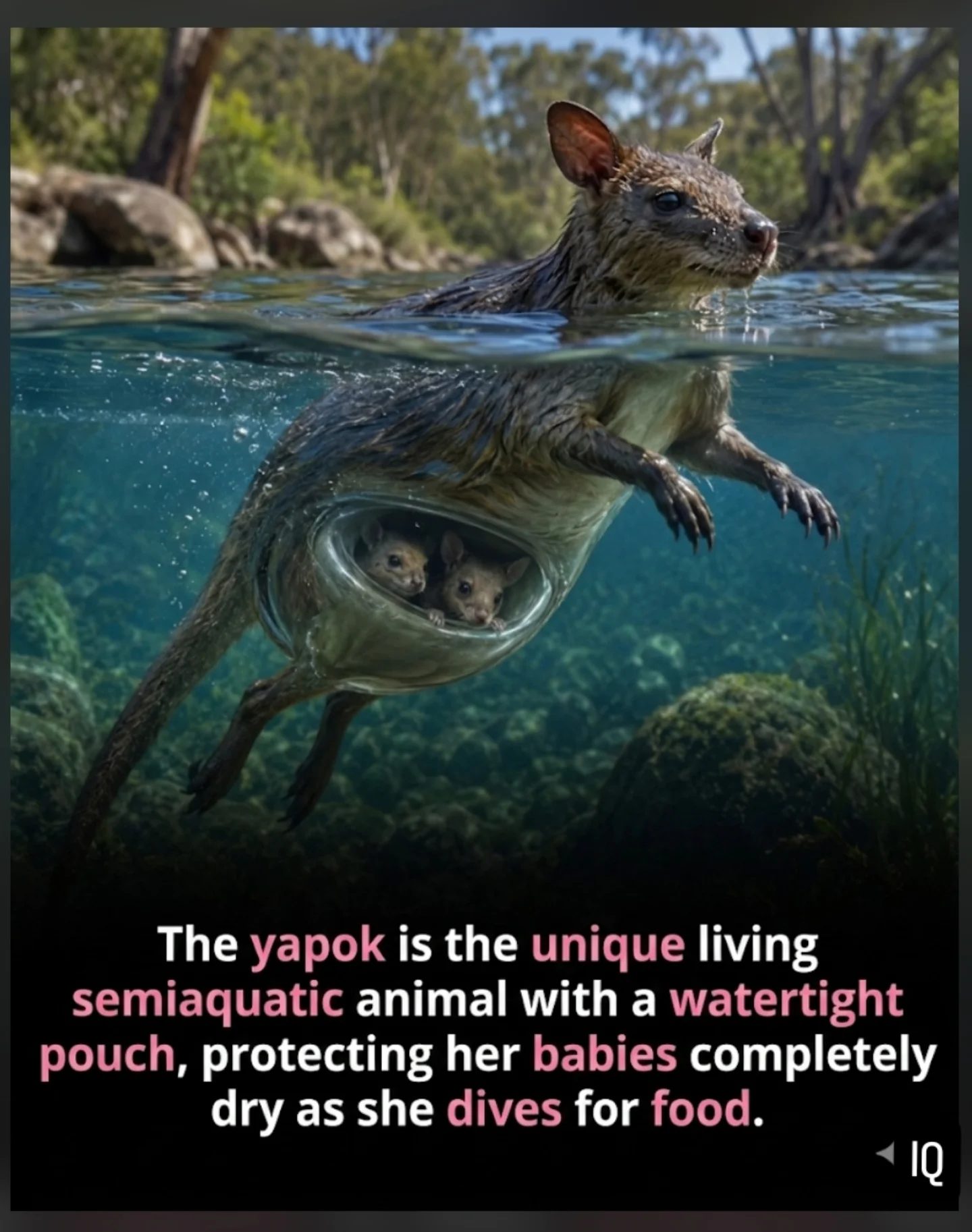
Yapok: The Unique Semiaquatic Marsupial with a Watertight Pouch
The yapok, also known as the water opossum, is a fascinating semiaquatic marsupial with a remarkable biological adaptation: a watertight pouch that allows the female to keep her offspring safe and dry while she hunts underwater. This unique feature makes the yapok one of the most extraordinary animals in the semiaquatic world.
Context
The yapok's extraordinary adaptation is a testament to the wonders of evolution. This small, semiaquatic marsupial has developed a specialized pouch that allows it to submerge completely while keeping its babies dry and safe. Understanding this adaptation not only provides insight into the natural world but also highlights the incredible strategies animals use to ensure the survival of their offspring.
The Yapok's Watertight Pouch
Anatomical Marvel
The yapok's pouch is a highly specialized anatomical feature. Unlike other marsupials, which typically have an open pouch, the yapok's pouch is watertight. This adaptation is crucial for its semiaquatic lifestyle, as it allows the mother to dive underwater and forage for food without endangering her young. The pouch is designed to seal tightly, creating a protected chamber that keeps the babies dry and safe from the water.
Evolutionary Significance
The evolution of the yapok's watertight pouch is a fascinating example of how animals adapt to their environments. Living in both aquatic and terrestrial habitats, the yapok faces unique challenges. The pouch allows the mother to feed efficiently while ensuring the survival of her offspring. This adaptation has likely contributed to the yapok's success as a species, enabling it to thrive in diverse ecosystems.
Behavioral Implications
The yapok's behavior is intricately linked to its unique anatomy. When the mother dives underwater, she can hunt for food without worrying about her babies. This behavior ensures that the young are nourished and protected, giving them the best chance of survival. The pouch's watertight seal prevents water from entering, providing a safe and dry environment for the developing young.
Practical Tips for Observing Yapoks
Observing yapoks in their natural habitat can be a rewarding experience. Here are some practical tips to help you spot these remarkable animals:
Best Times and Places to Observe
Yapoks are primarily active during the night, so planning an observation around dusk and dawn can increase your chances of spotting them. They are typically found in freshwater habitats, including rivers, streams, and marshes. Look for areas with dense vegetation near the water's edge, as yapoks often hide in these spots during the day.
What to Look For
When observing yapoks, pay close attention to their behavior. You may see them swimming underwater with their babies safely tucked in their watertight pouches. Keep a respectful distance to avoid disturbing the animals, and use binoculars or a telephoto lens to get a closer look.
Important Takeaways
The yapok's watertight pouch is a remarkable adaptation that allows the mother to forage underwater while keeping her babies dry and safe. This unique feature highlights the extraordinary ways in which animals adapt to their environments. Observing yapoks in their natural habitat can provide a deeper understanding of their behavior and the importance of their specialized pouch.
Conclusion
The yapok's watertight pouch is a testament to the incredible adaptations found in the natural world. This unique feature not only ensures the survival of the offspring but also allows the mother to forage efficiently. Understanding and appreciating these adaptations can enhance our connection to the natural world and inspire a deeper respect for the diverse strategies animals use to thrive in their habitats.
Questions readers ask
What is the primary purpose of the yapok's watertight pouch?
The primary purpose of the yapok's watertight pouch is to keep the babies dry and safe while the mother forages underwater. This adaptation allows the mother to hunt efficiently without compromising the safety of her offspring.
How does the yapok's underwater foraging benefit its survival?
The yapok's ability to forage underwater is crucial for its survival. It allows the mother to access a diverse range of food sources in various ecosystems, ensuring that she can provide for her offspring effectively.
What makes the yapok's pouch unique among semiaquatic mammals?
The yapok's pouch is unique because it is watertight, allowing the mother to submerge completely in water while keeping her babies dry. This feature is not commonly found in other semiaquatic mammals, making the yapok a remarkable example of specialized adaptation.
How does the yapok's motherhood strategy differ from other marsupials?
Unlike many other marsupials, the yapok's motherhood strategy involves keeping her offspring safe and dry in a watertight pouch while she hunts underwater. This allows her to continue foraging efficiently to ensure the survival of her offspring.
What kind of ecosystems does the yapok inhabit?
The yapok inhabits diverse ecosystems, including freshwater environments like rivers, streams, and marshes. Its unique adaptation for underwater foraging and baby care allows it to thrive in these habitats.
Can the yapok's watertight pouch be observed in other animals?
The yapok's watertight pouch is a unique feature not found in other animals. While some animals have specialized adaptations for aquatic life, the specific watertight pouch for keeping babies dry during underwater foraging is distinctive to the yapok.
Related deep dives
Similar reads based on topic and creator.




Recent articles
Fresh deep dives from the latest Reels we unpacked.




Comments
Be the first to comment.