In 1931, a dentist named Weston A. Price embarked on a photographic journey across five continents. He'd started to spin from seeing narrower faces on his young patients, observing a surge in dental issues — alongside obvious dental decay to crooked teeth. He refused to accept that genetics were the sole cause: a claim that was buzzing around the medical community at the time. Price launched a search for individuals living traditionally on ancestral diets: the people still eating the way their grandparents had. As he said, "In the Swiss Alps with raw cheese, deep yellow butter, and rye nearly two teeth in a hundred had ever decayed. In one Arctic community, the local diet — fish and organ meats — had left participants with broad, strong jaws and almost no tooth decay. The Cleveland dentist's conviction was clear: the vanishing dental health of his young patients was not a matter of natural inheritance, but of diet. His exploration covered roughly a decade, until 1942, the year when he released his final research.
The Price of Progress and Some Missteps
Price, in his global search, compared isolated populations who had not yet been affected by the "displacing foods of modern civilization." This included white flour, sugar, and tinned food. Conversely, when processed foods invaded, so did the dental chaos. Long before modern science caught up, Price's studies concluded that lack of tooth decay and broad, straight jaws were not coincidentally present in regions that sustained traditional diets. Price’s hypothesis was eventually backed by studying family lines, in the same generation "narrowing faces, crowding teeth, ten times the decay of the valley next door." Price documented the phenomenon happening in a few years. The dental changes — shifts in jaw structure and dental alignment — were due to a dramatic shift in diet.
Honoring the Old Guard
The major factors in traditional diets that Price studied were:
- hard-to-chew foods: The mechanical stress of chewing tough foods helped build broad, straight jaws and healthy teeth.
- fats and vitamins: Dense in fat-soluble vitamins, including a factor Price called Activator X, now thought to be vitamin K2. Despite debate amongst health researchers today, one thing remains constant — the broad and strong jaw structures, near-perfect teeth, and dental health Price documented. In the Hebrides, Maasai, and Arctic, Price found that traditional diets enriched with fat-soluble vitamins, including Activator X (now known as vitamin K2), led to strong jawlines and excellent dental health. Price ensured that dental health was not about what people looked like, "the same face looked back": broad, strong, almost no decay. Price proved to be ahead of his time, making observations on how different foods — processed and unprocessed — impact the body, and finding the link between diet and dental health and facial structure.
Price’s photographic evidence
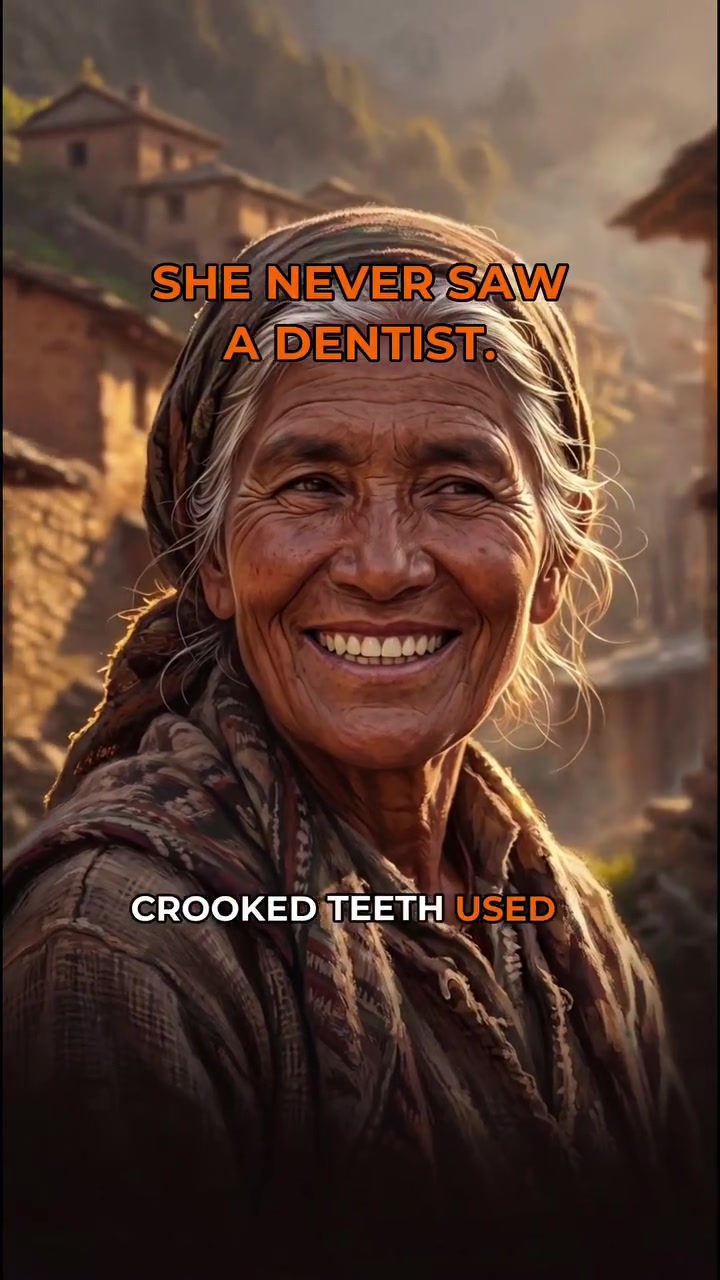
Price focused on portraiture — his viewfinder would capture faces, mouths, teeth. The portrait series was evidence of dietary habits. Every portrait was a visual lesson in cause and effect, showing that Western processed foods lead to narrow faces, crooked teeth, and increased tooth decay. The visual content was tightly and consistently styled, creating a narrative through imagery and text, the portraits with somber expressions, a clear impact of the "modern" invasion on their traditional lifestyles. This series is Price’s photographic evidence that highlights the impact that a diet heavy in refined foods had on the people he documented. As shown, dental health and jaw structures are imperceptibly molded by diet.
The influence of White Flour, Sugar, and Tinning
To Price, the worst culprits were white flour, sugar, and canned food — he called them "the displacing foods of modern civilization." These food items, he believed, had begun to replace traditional diets in places across the globe, leading to a sharp rise in dental issues. Price saw that these foods were not present in places like the Arctic or Maasai. However, if they could be replaced with nutritious and tough foods, people would improve dental health.
A Threat to a Healthy Smile
There is a growing debate on how our diets affect our health. Price's findings suggest there is a deeper link between our teeth, faces, and overall health outcomes. In this sense, Price's life works can now be looked at again. His findings can be a gateway to improved health through diet. He saw that the more people ate processed foods, the more their facial structures and dental health deteriorated. As noted by Price, proper nutrition is vital in maintaining a healthy body and mind. The link between nutrition and health is complex, and there is still much we don’t know.
Questions readers ask
What exactly did Weston Price observe about the dental health of those on traditional diets?
Weston Price observed that people on traditional diets, rich in hard-to-chew foods, fats, and vitamins, had broad, strong jaws and excellent dental health. He noted that these populations had much less tooth decay and better dental alignment compared to those on modern, processed diets.
Who were the people that Weston Price studied, and why did he study them?
Price studied isolated populations around the world who were living traditionally and consuming ancestral diets. He sought to understand why his young patients had much worse dental health than their predecessors, and he believed that traditional diets could offer clues.
What did Weston Price mean by 'Activator X' and why is it important?
'Activator X' was a factor that Price identified in traditional diets, now believed to be vitamin K2. He found that this nutrient, along with other fat-soluble vitamins, played a crucial role in building strong jawlines and excellent dental health.
How did Weston Price document his findings?
Weston Price documented his findings through extensive photographic evidence. He captured portraits of individuals from various populations, highlighting the differences in dental health and facial structure between those on traditional diets and those on modern, processed diets. His photographs served as visual lessons in the impact of diet on dental health.
What were the main differences Weston Price saw in dental health between isolated populations and modern societies?
Price saw stark differences in dental health, with isolated populations having broad, straight jaws and almost no tooth decay, while modern societies showed a surge in dental issues and narrower faces. He attributed these differences to dietary changes, particularly the introduction of processed foods.
How did Weston Price's work challenge the prevailing beliefs of his time?
Price's work challenged the prevailing belief that dental issues were solely due to genetics. He argued that diet played a significant role in dental health, and his observations of rapid dental changes in a single generation supported this hypothesis.
Did Weston Price's findings have any limitations or criticisms?
While Price's findings were groundbreaking, they have been subject to debate among health researchers. Some argue that his methods and data interpretation may not fully account for all variables, but his observations on the impact of diet on dental health and facial structure remain compelling.
Related deep dives
Similar reads based on topic and creator.




Recent articles
Fresh deep dives from the latest Reels we unpacked.




Comments
Be the first to comment.