Retail Worker Rights: The Battle for Cashier Seating
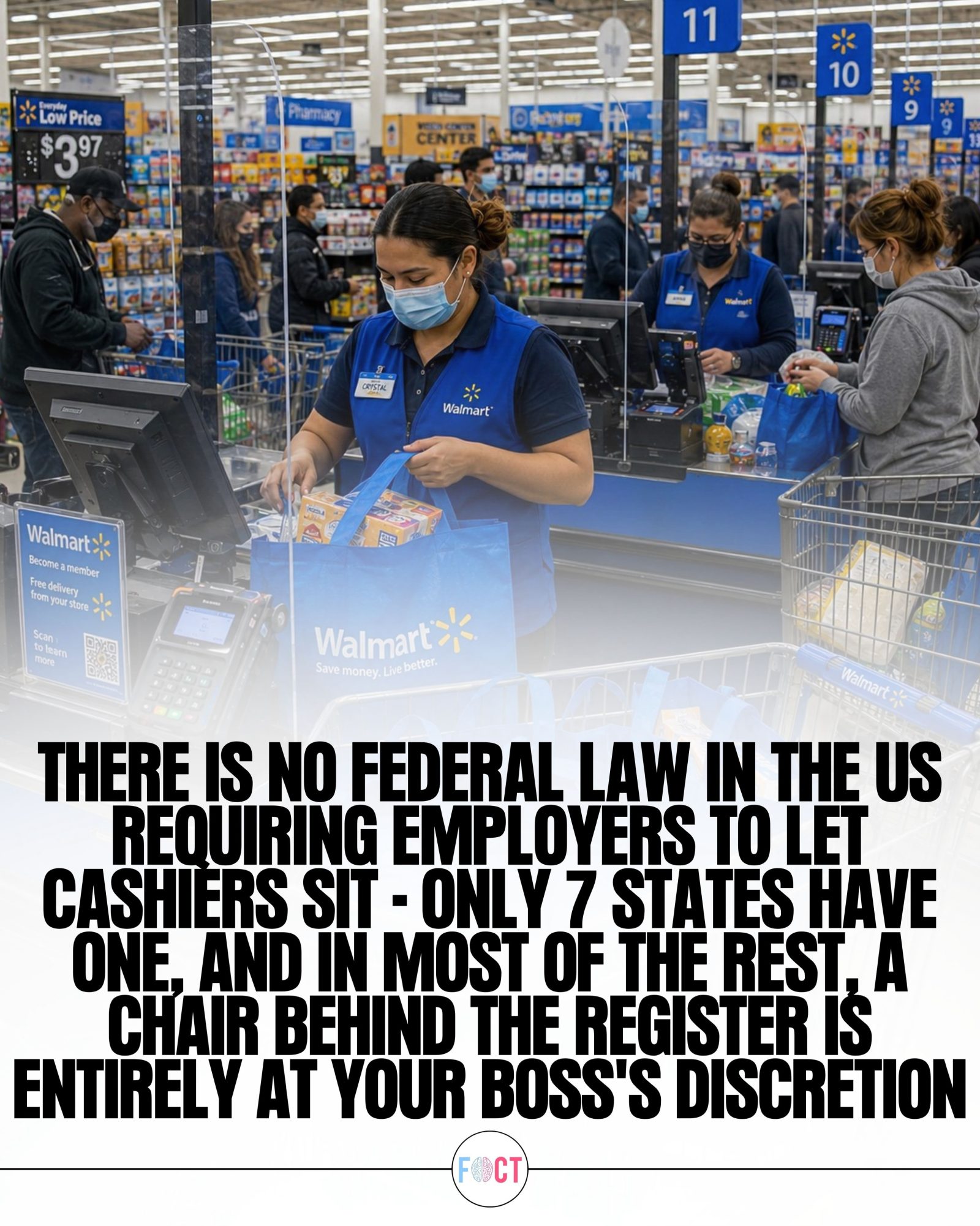
Cashiers are the face of retail, often the first and last worker a customer interacts with. Most of us have seen them standing for hours, scanning items and bagging groceries. However, in most of the United States, a cashier asking to sit down is making a request, not exercising a right. There is no federal law in the U.S. mandating that employers provide seating to workers whose jobs could reasonably be done sitting.
Context: Why this matters
This issue is more than just about comfort; it's about worker health and rights. Cashiers often experience health issues due to prolonged standing, such as back pain, varicose veins, and even heart trouble. Knowing the rules regarding seating can help cashiers and their advocates push for better working conditions.
Federal Law vs. State Laws
There is no comprehensive federal law requiring employers to provide seating for cashiers. Instead, the U.S. has a patchwork of state laws. Currently, only seven states—California, Florida, Massachusetts, Montana, New Jersey, Oregon, and Wisconsin—have gender-neutral “right to sit” laws. These laws require employers to provide suitable seating when the nature of the work allows. The remaining 43 states have no such requirement.
Historical Context
This wasn't always the case. Between 1881 and 1917, nearly every U.S. state, along with D.C. and Puerto Rico, passed suitable-seating legislation. This was a significant achievement of the Progressive Era labor movement, largely driven by women workers. These laws were then quietly repealed between 1953 and 2015, leaving workers without this protection for much of the 20th century.
The Case of California
California is a focal point in the modern seating debate. In the 2016 case Kilby v. CVS Pharmacy, cashiers and bank tellers sued after suffering standing-related injuries. They argued that the law's requirement of “suitable seats when the nature of the work reasonably permits” applied to specific tasks, like scanning items, not an employee’s entire job description. The court agreed, ruling that there is no principled reason to deny a seat for tasks that could reasonably be done seated just because other parts of the job require standing.
Industry Arguments and Data
The industry argument against seating often centers on perception rather than physiology. Many employers believe that a standing cashier looks more alert, professional, and ready to serve, while sitting might be perceived as idle. However, this belief runs counter to data from major retail chains that do allow cashiers to sit, such as Aldi. Aldi, with roughly 2,000 U.S. stores, has a high standard for scan rates. They push staff to process more than 1,000 items per hour, proving that efficiency and seating are not mutually exclusive.
Practical Tips for Cashiers and Advocates
Cashiers who want to sit down at work should start by understanding the laws in their state. If their state has no such law, they should consider advocating for change.
- Know Your State's Laws: Check if your state has a “right to sit” law. If it does, understand what it entails and how it applies to your job.
- Advocate for Change: If your state doesn’t have such a law, consider joining or starting a local advocacy group to push for legislative change.
- Document Your Work: Keep a record of your tasks and how they could reasonably be done while seated. This could be useful in any future litigation.
- Talk to Your Employer: Approach your employer with data and examples from other retailers that allow seating. Make a case for how it could benefit both you and the company.
Important Takeaways
Cashiers often have to stand for long periods, which can lead to health issues. However, the legal landscape for seating rights is complex and varies by state. While federal law does not mandate seating for cashiers, some states do have laws in place. Understanding these laws and advocating for better working conditions can help improve the health and well-being of retail workers.
Conclusion
The battle for cashier seating is a fight for better working conditions and worker health. While the legal landscape is complex, understanding the laws in your state and advocating for change can make a significant difference. Whether you're a cashier or an advocate, know your rights and be ready to fight for them.
Questions readers ask
Which states have laws requiring employers to provide seating for cashiers?
As of now, only a few states have enacted laws mandating employer-provided seating for cashiers. These states include California, Washington, Oregon, and Indiana. Each state has its own specific requirements, so it's essential to check the local regulations for precise details.
Can Walmart cashiers request to sit while working?
Yes, cashiers at Walmart can request to sit while working, provided that sitting does not interfere with their job performance or the company's operations. However, it's important to note that this is a request, not a federally mandated right. The decision ultimately lies with the employer, and cashiers may need to refer to state-specific laws for more robust protections.
What are some health issues that cashiers might face due to prolonged standing?
Cashiers who stand for extended periods may experience various health issues, including back pain, varicose veins, and heart troubles. Prolonged standing can also lead to fatigue, swelling in the legs, and even increased risk of miscarriage for pregnant women.
How can cashiers and their advocates push for better seating rights?
Cashiers and their advocates can push for better seating rights by familiarizing themselves with state-specific laws and advocating for legislative changes. Connecting with labor unions, local legislators, and other advocacy groups can help amplify their voices and push for stronger worker protections at both state and federal levels.
What should a cashier do if their employer denies their request to sit?
If a cashier's request to sit is denied, they should first review their company's policies and their state's laws regarding seating. If the employer is violating state law, the cashier can file a complaint with the appropriate state labor agency. Additionally, cashiers can seek support from labor unions or worker advocacy groups to help negotiate better working conditions.
Are there any federal laws protecting cashiers' right to sit?
Currently, there are no federal laws in the U.S. that specifically mandate employers to provide seating for cashiers. However, the Occupational Safety and Health Administration (OSHA) has guidelines encouraging employers to provide seating when it is reasonable and safe to do so. Cashiers can refer to these guidelines and their state laws for additional support.
How does the lack of a federal seating law affect cashiers' health and well-being?
The lack of a federal seating law means that many cashiers are left without a guaranteed right to sit, which can negatively impact their physical and mental well-being. Prolonged standing can lead to chronic pain, fatigue, and other health issues, ultimately affecting a cashier's overall quality of life and job satisfaction.
Recent articles
Fresh deep dives from the latest Reels we unpacked.




Comments
Be the first to comment.