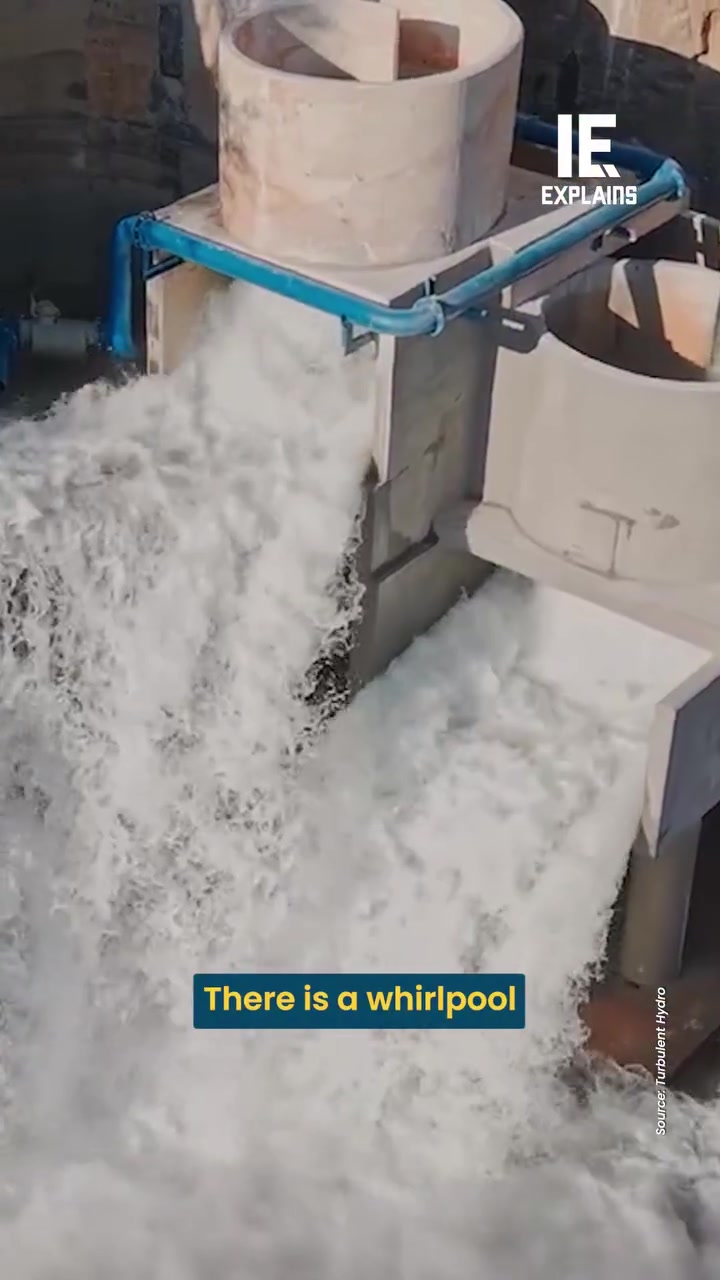
In the heart of a river, a whirlpool silently harnesses the power of water. This phenomenon isn't a mere quirk of nature; it powers what's called the Vortex Turbine. A hydroelectric device developed by Belgian engineering firm Turbulent Turbines, it does not need massive infrastructure. It only requires a waterfall — a drop of 1.5 meters — and a steady flow of 1.5 cubic meters per second of river water. Working in conjunction with gravity and the existing river channel, it creates a “tight vortex” and taps the water flow’s energy. The turbine itself operates with just one moving part and can generate enough electricity to sustain up to 15 to 70 kilowatts.****
The Vortex Turbine in Practice
The Vortex Turbine's design stands out in hydropower. Turbulent Turbines created a sloped basin with a central opening and a "single impeller," which spins at a slow 50 to 120 rotations per minute. A fast vortex streamlines the turbine. The impeller spins, converts mechanical energy into electrical energy for transmission across the grid. Once the water goes through the turbine it becomes free of kinetic energy, creating a low-turbulence river flow. This ensures that fish and other aquatic life can pass through the vortex without harm. It takes only 1.5 meters of head (the vertical drop of water). The turbine is also preassembled, making it quick to deploy. Installation can be done within two weeks, and the unit is designed to last 30 years. The turbine requires little surface area, making it suitable for urban environments and remote locations — and ideal for generating electricity from diverse water sources. Its ability to operate at low water flow rates ensures steady energy production through varying seasonal conditions.
Its Role In Energy Infrastructure
The Vortex Turbine aligns with the growing demand for sustainable energy sources. As governments and businesses strive to reduce carbon footprints, renewable energy projects are becoming more widespread. Hydropower, which accounts for a significant portion of renewable energy generation, is becoming more innovative. While traditional hydropower systems require significant infrastructure and land use, the simplicity and low environmental impact of the Vortex Turbine make it a compelling option. It allows for hydropower generation without large dams or significant disruptions to the environment. The turbine's benefits extend beyond its simplicity and low environmental impact. Using the river's natural flow, with no need for extensive land clearings or environmental impacts, it actively exceeds alternatives in efficiency. It can generate enough energy to power dozens of homes and operate consistently, unaffected by weather fluctuations. The turbine's design can power remote and off-grid communities, convert energy without modifying existing infrastructure.The Vortex Turbine is already deployed in places including Chile, Belgium, Estonia, Portugal, Kenya, Taiwan, and Indonesia.
The Hard Parts: Physics and Engineering
Hydropower works with gravity and water pressure to generate electricity. The Vortex Turbine applies this principle, using the movement of water over a ledge to create a vortex. The turbine would not work without gravity and the river's natural flow.
The Impeller Mechanism
The turbine is simplicity itself. A single moving part — the impeller — turns at a low speed of 50-120 rotations per minute, converting the energy of the vortex into electricity. The hydraulic power is sustained by the torque generated, and the turbine is connected to an electric generator. The turbine spins the generator, and the electrical power is transmitted across the grid.
Waterways and Wildlife
The Vortex Turbine’s design ensures minimal disruption to the waterway ecosystem. The turbine creates low turbulence, which allows fish and other aquatic life to pass through unharmed. Its low-speed operation and minimal environmental impact make it an environmentally friendly solution for hydropower generation. The vortex it creates internally is harmless enough for fish to pass through it unharmed. The turbine’s low-speed operation ensures minimal environmental impact for the river.
A Practical Experience
For municipalities or communities planning to implement Vortex Turbines, the process is straightforward:
- Feasibility Site Analysis: Assess the available water source. Ensure a steady flow and a fall of at least 1.5 meters.
- Site Preparation: Prepare the site by clearing any obstructions and ensuring the water flow is consistent.
- Installation: The turbine arrives preassembled, and installation takes approximately two weeks. This involves positioning the turbine in the riverbed and connecting it to the electrical grid.
- Maintenance: The turbine requires minimal maintenance, with regular checks every few months to ensure optimal performance.
- Cost Evaluation: The turbine is an investment, but the long-term energy production and environmental benefits make it worthwhile.
- Community Support: Engage with local stakeholders to ensure support and address any environmental or logistical concerns. Ensure the turbine installation does not harm local ecosystems and communities. By promoting sustainability, communities can benefit from consistent and reliable energy supply.
The Future of The Vortex Turbine
Looking ahead, the Vortex Turbine is poised to play a significant role in the global push for sustainable energy. Its simplicity, low environmental impact, and efficiency make it a valuable addition to the renewable energy portfolio. As renewable energy sources multiply, the turbine could provide electricity to remote areas and power urban sustainability efforts. With its deployment in various countries and ongoing development, the Vortex Turbine is an innovation worth watching. With the Vortex Turbine, the future of hydropower looks bright. This turbine harnesses the power of water. And as the world continues to seek sustainable energy solutions, the Vortex Turbine will be at the forefront of innovation.
Questions readers ask
How exactly does the Vortex Turbine create energy from a whirlpool?
The Vortex Turbine generates energy by harnessing the power of a whirlpool created by a river's natural flow. The turbine has a sloped basin with a central opening and a single impeller. As water flows over a 1.5-meter drop, it creates a fast vortex that spins the impeller at a slow 50 to 120 rotations per minute. This mechanical energy is then converted into electrical energy.
Is the Vortex Turbine safe for aquatic life?
Yes, the Vortex Turbine is designed to be safe for aquatic life. The turbine's design ensures that once the water passes through, it has minimal kinetic energy, creating a low-turbulence flow. This allows fish and other aquatic creatures to pass through the vortex without harm.
Can the Vortex Turbine be installed in any river?
The Vortex Turbine can be installed in most rivers with a drop of at least 1.5 meters and a steady flow of 1.5 cubic meters per second. This makes it suitable for a wide range of locations, including urban environments and remote areas. However, the river must have a consistent flow and the necessary drop to generate energy efficiently.
How does the Vortex Turbine compare to traditional hydropower systems?
Unlike traditional hydropower systems, the Vortex Turbine does not require large dams or significant infrastructure. It operates with a single moving part and can be installed quickly, making it a more environmentally friendly and cost-effective option. Traditional systems often involve extensive land use and environmental disruption, while the Vortex Turbine works with the river's natural flow and minimal environmental impact.
What kind of maintenance does the Vortex Turbine require?
The Vortex Turbine is designed to be low-maintenance. It has only one moving part, the impeller, which reduces the likelihood of mechanical failures. The turbine is also built to last 30 years, ensuring long-term reliability and minimal upkeep. However, regular inspections and occasional maintenance checks are recommended to ensure optimal performance.
Can the Vortex Turbine power an entire city?
The Vortex Turbine can generate enough electricity to sustain up to 15 to 70 kilowatts, which is sufficient to power dozens of homes. However, powering an entire city would require multiple turbines and a well-designed energy distribution system. The turbine's efficiency and low environmental impact make it a valuable addition to a city's energy infrastructure, but it is typically used in smaller, community-based projects.
Related deep dives
Similar reads based on topic and creator.
Recent articles
Fresh deep dives from the latest Reels we unpacked.

Comments
Be the first to comment.