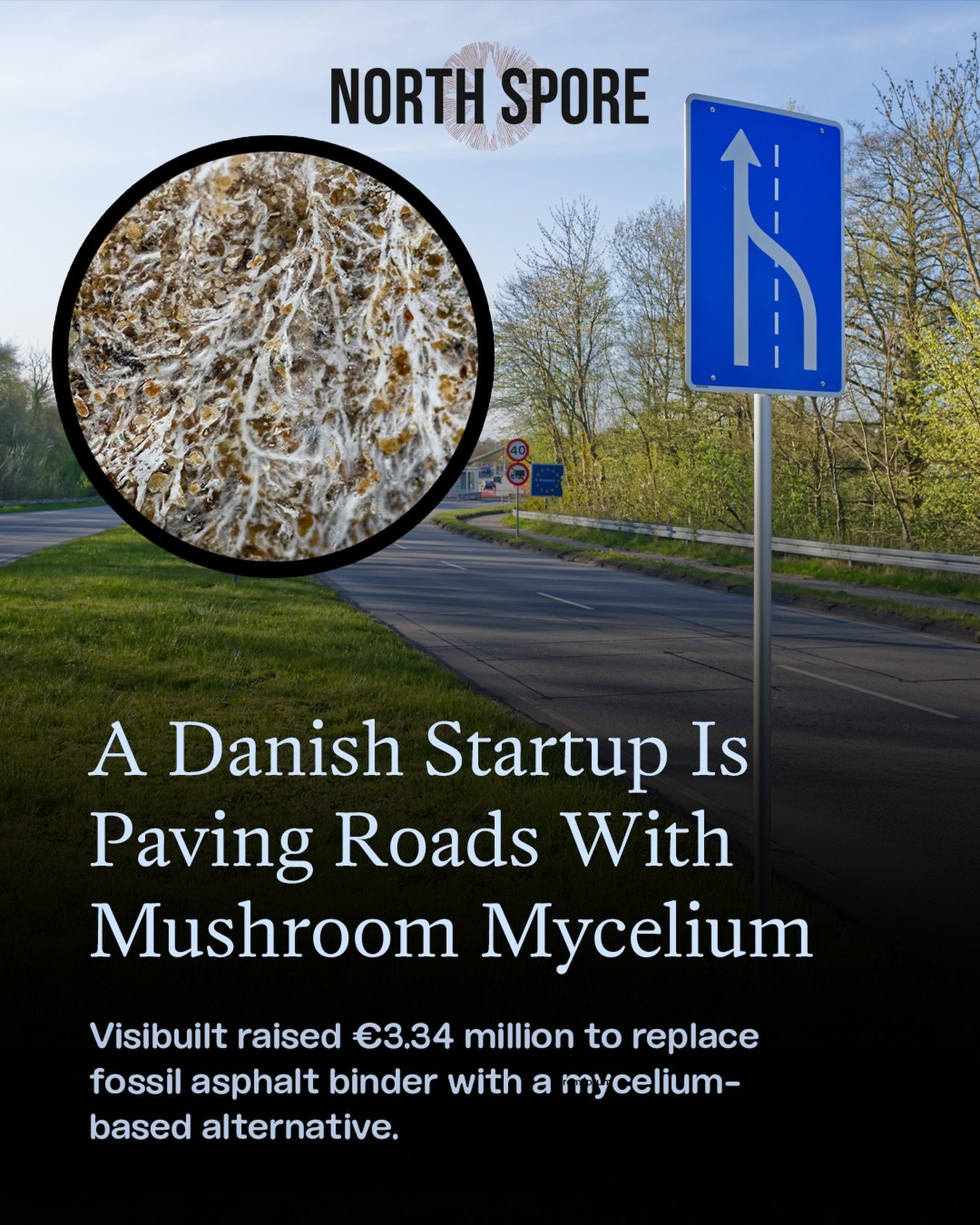
Mushroom Roads: The Future of Sustainable Paving
Mushroom mycelium is transforming how we think about road paving. This biologically-derived material has become the heart of Visibuild's innovative approach to sustainable infrastructure. The Danish startup has secured a whopping €3.34 million in funding to develop and scale their mycelium-based road paving material. Their goal? To replace fossil asphalt binders with a more sustainable, eco-friendly alternative.
Why This Matters
The construction industry, particularly the production of asphalt and concrete, is a significant contributor to global CO2 emissions. Funnily enough, this makes it one of the most polluting industries on the planet. Traditional paving materials rely heavily on fossil fuels, leading to substantial carbon footprints. By introducing mycelium-based materials, companies like Visibuild are paving the way for a more sustainable future in infrastructure.
The Science Behind Mycelium
Mycelium, the vegetative part of a fungus, has remarkable properties that make it an excellent candidate for road paving. It is naturally adhesive and can be grown from waste materials, making it a renewable and eco-friendly resource. When combined with other natural binders, mycelium can create a strong, durable material suitable for various infrastructure projects.
How It's Made
The process of creating mycelium-based paving material involves growing mycelium in controlled environments using agricultural waste. The mycelium is then harvested and mixed with other natural binders to form a composite material. This material can be molded and hardened to create paving stones, asphalt, and other construction materials. The result is a strong, durable, and eco-friendly alternative to traditional fossil-based materials.
Environmental Benefits
One of the most significant advantages of using mycelium in road paving is its environmental impact. Unlike traditional asphalt and concrete, which rely on fossil fuels and emit large amounts of CO2 during production, mycelium is a renewable resource. It can be grown from waste materials, reducing the need for virgin resources and minimizing waste. Additionally, the production process for mycelium-based materials is less energy-intensive, further reducing their carbon footprint.
Visibuild and visiBINDER
Visibuild has developed a mycelium-based binder called visiBINDER, designed to replace fossil bitumen and cement in paving and infrastructure projects. This innovative material has already been tested in real-world scenarios, with promising results. Visibuild has partnered with Denmark’s largest concrete paver manufacturer and the city of Copenhagen to test and implement their mycelium-based solutions.
Funding and Growth
Visibuild's success is evidenced by their recent €3.34 million seed round, which has provided the necessary capital to scale their operations and further develop visiBINDER. This funding has enabled the company to conduct real-world testing, partner with industry leaders, and expand their research and development efforts. With this investment, Visibuild is poised to become a key player in the global effort to decarbonize the construction industry.
Practical Tips for Sustainable Paving
Implementing mycelium-based paving materials in your projects can be a game-changer. Here are some practical tips to get you started:
- Research and Development: Start by understanding the properties and advantages of mycelium-based materials. Conduct thorough research and development to determine the best applications for your projects.
- Partner with Experts: Collaborate with companies like Visibuild, who have extensive experience and expertise in mycelium-based materials. Their knowledge and support can be invaluable in implementing sustainable paving solutions.
- Pilot Projects: Begin with small-scale pilot projects to test the feasibility and effectiveness of mycelium-based materials. This approach allows you to gather data, make adjustments, and identify potential challenges before scaling up.
- Regulatory Compliance: Ensure that your mycelium-based paving materials comply with local regulations and standards. Consult with regulatory bodies and industry experts to navigate the legal landscape and obtain necessary approvals.
- Monitor and Evaluate: Continuously monitor and evaluate the performance of mycelium-based materials in your projects. Collect data on durability, environmental impact, and cost-effectiveness to refine your sustainable paving strategies.
Important Takeaways
Mycelium-based road paving materials offer a sustainable and innovative alternative to traditional fossil-based materials. By leveraging the unique properties of mycelium, companies like Visibuild are leading the way in decarbonizing the construction industry. The environmental benefits, coupled with practical applications and real-world testing, make mycelium a promising solution for future infrastructure projects.
Conclusion
The future of sustainable paving lies in innovative materials like mycelium. Companies like Visibuild are at the forefront of this movement, providing eco-friendly alternatives to traditional asphalt and concrete. By embracing mycelium-based materials, we can significantly reduce the environmental impact of the construction industry and pave the way for a more sustainable future. Whether you are a homeowner, a contractor, or a city planner, exploring mycelium-based paving materials is a step towards a greener and more sustainable world.
Questions readers ask
How does mushroom mycelium paving compare to traditional asphalt in terms of strength and durability?
Mushroom mycelium paving is designed to be strong and durable, comparable to traditional asphalt. While the specific lifespan and durability can vary, mycelium-based materials are engineered to withstand the demands of road construction, including traffic and weathering, while offering an eco-friendly alternative.
What are the environmental benefits of using mycelium paving blocks in road construction?
Mycelium paving blocks offer several environmental benefits. They are grown from waste materials, reducing the need for raw resources. Additionally, the production process of mycelium paving blocks emits significantly less CO2 compared to traditional asphalt, making them a more sustainable option for reducing the construction industry's carbon footprint.
How does Visibuild's technology contribute to sustainable infrastructure development?
Visibuild's technology contributes to sustainable infrastructure by providing a renewable, eco-friendly alternative to fossil-based asphalt binders. By using mushroom mycelium, they reduce the reliance on fossil fuels in paving, thus lowering greenhouse gas emissions. Their innovative approach supports a more environmentally conscious future.
Can mycelium paving blocks be used in all types of road construction projects?
While mycelium paving blocks are a promising innovation, their use is currently being explored and tested for various applications. Visibuild is focusing on developing and scaling this technology to ensure it meets the demands of different road construction projects. It is best to consult with experts to determine the suitability of mycelium paving for specific projects.
What are the advantages of using fungi-based road materials over concrete?
Fungi-based road materials like those developed by Visibuild offer several advantages over concrete. They are more sustainable as they can be grown from waste and are biodegradable. Additionally, the production of fungi-based materials typically has a lower environmental impact, including reduced CO2 emissions, making them a greener alternative to concrete.
How does Visibuild's funding support the development of mycelium road construction?
Visibuild's €3.34 million in funding is instrumental in advancing their mycelium road construction technology. This funding supports research, development, and scaling of mycelium-based paving materials, enabling the startup to refine their technology, conduct further testing, and prepare for larger-scale implementation in real-world road construction projects.
Related deep dives
Similar reads based on topic and creator.


Recent articles
Fresh deep dives from the latest Reels we unpacked.




Comments
Be the first to comment.