Vietnamese Community Walkways: A Unique Blend of Shade and Sustenance
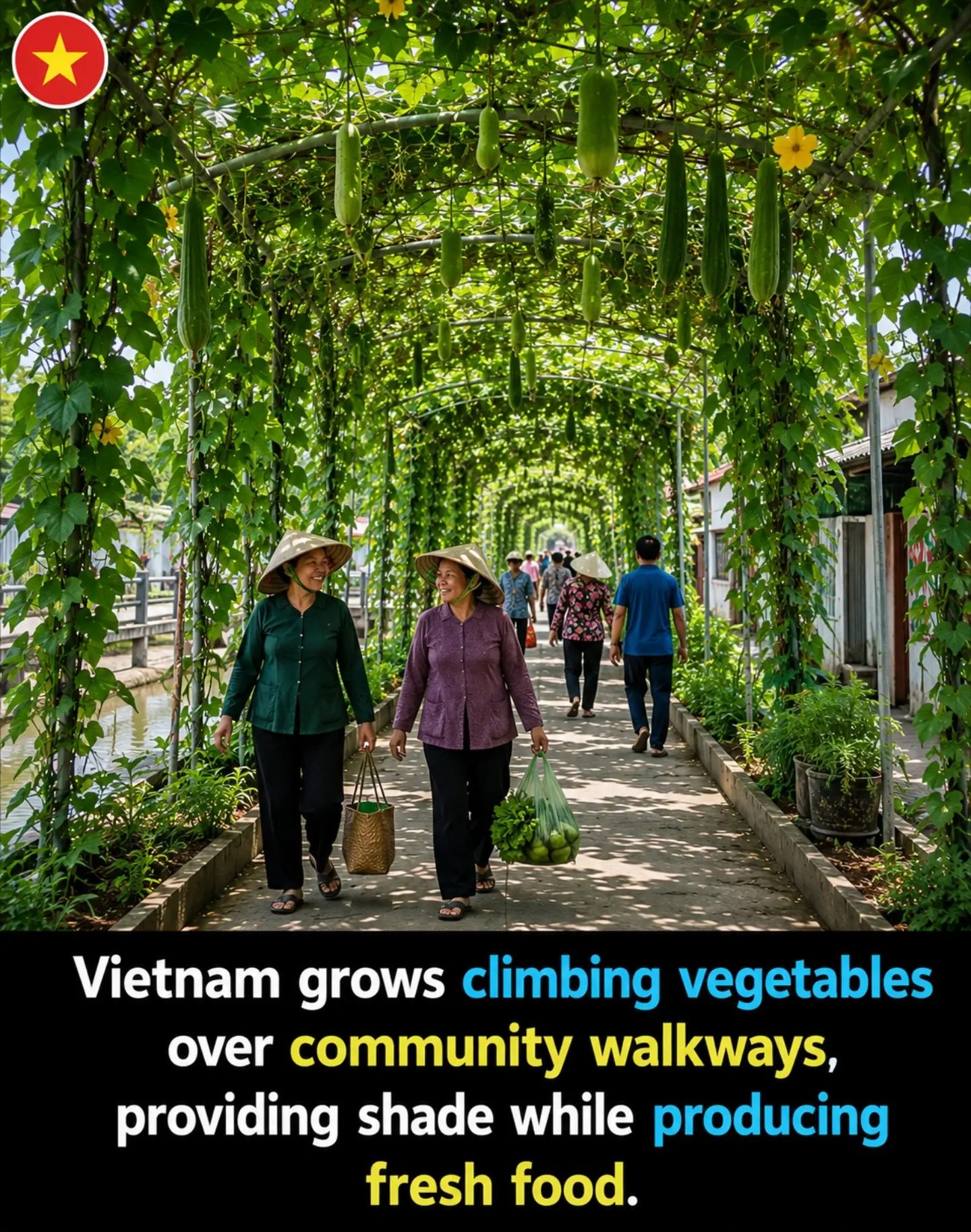
Vietnamese community walkways offer more than just a path to traverse; they serve as a testament to sustainable living and community integration. These walkways, often covered with climbing vegetables, provide a dual benefit of shade and fresh produce, making them a vital part of local life.
Why This Matters
In an era where urban planning often focuses on efficiency and aesthetics, the Vietnamese approach to community walkways stands out for its practicality and sustainability. By integrating greenery into pedestrian paths, these walkways not only enhance the quality of life for residents but also contribute to local food production. This practice offers valuable insights into how urban spaces can be designed to be both functional and environmentally beneficial.
The Unique Aspects of Vietnamese Community Walkways
Sustainable Design
The design of these walkways is a prime example of sustainable urban planning. By growing climbing vegetables over the paths, communities create a natural canopy that provides much-needed shade, especially in the hot and humid climate of Vietnam. This design reduces the need for artificial shading structures, lowering both construction costs and energy consumption.
Community Involvement
The walkways encourage community involvement in multiple ways. The act of growing and maintaining the vegetables fosters a sense of collective responsibility and ownership. Residents, including women often seen in traditional hats, actively participate in the upkeep, ensuring the walkways remain vibrant and functional. This involvement builds a stronger sense of community and shared purpose.
Fresh Produce Production
One of the most significant benefits of these walkways is the production of fresh food. Climbing vegetables, such as beans, peas, and certain varieties of gourds, thrive in the vertical spaces provided by the walkways. This not only maximizes the use of limited land but also ensures a steady supply of fresh, nutritious food for the community. The integration of food production into public spaces is a model that other urban areas could learn from.
Practical Considerations
These walkways are not just about aesthetics or sustainability; they address practical needs as well. The shade provided by the climbing vegetables makes walking comfortable, especially during hot summer days. This encourages more people to walk, promoting physical activity and reducing reliance on motorized transport, which, in turn, lowers carbon emissions.
Practical Tips for Implementing Similar Walkways
While the specific conditions in Vietnam may not be replicable everywhere, the principles can be adapted to other contexts. Here are some practical tips for creating similar community walkways:
Assess Local Conditions
Consider the local climate and vegetation. Choose plants that thrive in the vertical space and provide the desired benefits, such as shade and food production.
Engage the Community
Involve local residents in the planning and implementation process. Their input and participation are crucial for the success and sustainability of the project. Community meetings and workshops can help gauge interest and gather ideas.
Plan for Maintenance
Ensure there is a plan for regular maintenance. This includes pruning the plants, cleaning the walkways, and addressing any structural issues. Community involvement can be a key factor here, as residents are more likely to take care of spaces they helped create.
Utilize Available Space
Maximize the use of available space. Vertical gardening is an effective way to do this, especially in densely populated urban areas where horizontal space is limited. Consider the types of plants that can climb and grow well in such conditions.
Foster a Sense of Ownership
Encourage a sense of ownership and responsibility among community members. This can be achieved through workshops, training sessions, and regular community meetings. When residents feel a sense of ownership, they are more likely to take care of the space and ensure its sustainability.
Important Takeaways
Vietnamese community walkways are a prime example of sustainable urban planning. They offer multiple benefits, including shade, fresh produce, and community involvement. By integrating greenery into public spaces, these walkways not only enhance the quality of life for residents but also contribute to local food production. The principles behind these walkways can be adapted to other contexts, offering valuable insights into how urban spaces can be designed to be both functional and environmentally beneficial.
Conclusion
The practice of growing climbing vegetables over community walkways in Vietnam is a model worth emulating. It highlights the potential for urban spaces to serve multiple purposes, from providing shade and fresh produce to fostering community engagement. By adopting similar practices, other communities can create sustainable, functional, and aesthetically pleasing public spaces that enhance the quality of life for residents.
Questions readers ask
How do Vietnamese community walkways incorporate vertical gardens?
Vietnamese community walkways integrate vertical gardens by allowing climbing vegetables and plants to grow along the walkways. These plants provide shade and fresh produce, creating a functional and sustainable urban environment.
What are the benefits of greenery on Vietnamese walkways?
Greenery on Vietnamese walkways offers multiple benefits, including providing shade for pedestrians, producing fresh fruits and vegetables for local consumption, and enhancing the overall aesthetics of the community.
How do vertical gardens in Vietnam contribute to urban life?
Vertical gardens in Vietnam contribute to urban life by creating sustainable pathways that offer food and shade. These gardens promote local food production and make urban spaces more enjoyable for residents.
What types of plants are typically found in Vietnamese walkway gardens?
Vietnamese walkway gardens typically feature climbing plants and vegetables like beans, cucumbers, and other vines that can grow vertically along the walkway structures, providing both shade and edible produce.
How do vertical gardens in Vietnam support local communities?
Vertical gardens in Vietnam support local communities by offering fresh, locally grown produce, fostering a sense of community through shared spaces, and enhancing the overall quality of life with greenery and shade.
What is the impact of sustainable urban design in Vietnam's walkways?
Sustainable urban design in Vietnam's walkways has a significant impact by integrating greenery and food production into daily life, reducing the need for long-distance food transportation, and promoting a more eco-friendly urban environment.
How do Vietnamese walkway gardens enhance urban spaces?
Vietnamese walkway gardens enhance urban spaces by transforming ordinary walkways into lush, productive areas. These gardens make urban environments more appealing, encourage residents to spend more time outdoors, and support local food systems.
Related deep dives
Similar reads based on topic and creator.
Recent articles
Fresh deep dives from the latest Reels we unpacked.



Comments
Be the first to comment.