What It Is
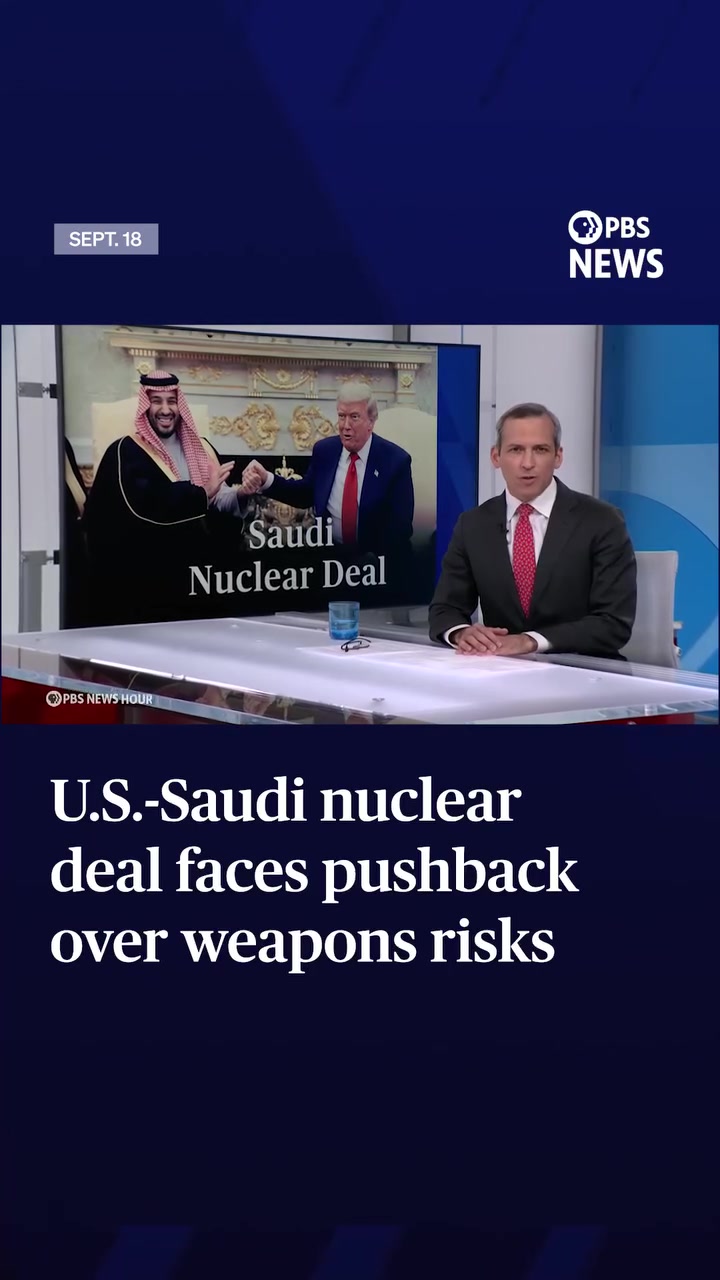
The U.S.-Saudi nuclear deal, formally a "123 agreement," is a civil nuclear accord signed last month by Energy Secretary Chris Wright and Saudi Energy Minister Abdulaziz bin Salman. This deal enables a study of Saudi Arabia's economic viability to enrich uranium domestically to fuel its own plants. Such enrichment was prohibited in a recent deal with the United Arab Emirates, a standard hailed as the "gold standard" for nuclear cooperation. However, the Saudi deal introduces different terms, making it a departure from the UAE agreement. Notably, Saudi Arabia agrees to nuclear inspections but stops short of signing the U.N. nuclear agency's additional protocol for verification. The deal also allows for a feasibility study of domestic uranium enrichment, a significant shift from previous U.S. nuclear agreements.
Beyond the Nuclear Plant
The U.S. and Saudi Arabia are working together to encourage Saudi Arabia to diversify its energy sources, and this nuclear deal is a central part of that effort. Saudi Arabia is the world's largest oil exporter, and the diversification away from fossil fuels is a critical aspect of the country's economic future, but the deal comes with geopolitical implications. Saudi Arabia's Crown Prince Mohammed bin Salman (MBS) has publicly stated that if Iran develops a nuclear bomb, Saudi Arabia will follow suit. This has sparked concerns, particularly among U.S. lawmakers, about the potential for nuclear weapons proliferation in the region. The debate hinges on whether the deal provides sufficient safeguards against Saudi Arabia developing nuclear weapons.
The Battle of the Deal
The Two Sides
The debate over the U.S.-Saudi nuclear deal is polarized. On one side, Congressman Brad Sherman (D-CA) argues that the deal is inadequate and could potentially lead to Saudi Arabia developing nuclear weapons. The agreement allows for the possibility of domestic uranium enrichment after a two-year study, a concern for Sherman, who points out that Saudi Arabia was the home to the vast majority of the 9/11 hijackers. Sherman also criticizes the deal's inspection provisions, arguing that they are not robust enough to prevent covert nuclear activities. On the other side, Dan Poneman, former Deputy Secretary of Energy and current distinguished fellow at the Atlantic Council, argues that the deal provides the best nonproliferation outcome available. He points out that the deal includes robust inspection rights implemented by the International Atomic Energy Agency and that the U.S. will be the exclusive partner in Saudi Arabia's nuclear program. Poneman also argues that if the U.S. does not partner with Saudi Arabia, other countries like Russia or China could, and they would not provide the same level of transparency and protection.
Verification Challenges
A core concern raised by Sherman is the verification process. The U.S.-Saudi agreement allows for short-notice inspections during regular working hours, but Sherman argues that this is insufficient. He points out that the deal does not allow for inspections at undeclared sites, where covert activities could potentially take place. Poneman, however, argues that the deal's exclusivity provision means that any nuclear activities outside of the agreement would violate Saudi Arabia's full-scope safeguards agreement with the International Atomic Energy Agency, potentially leading to special inspections.
Enrichment and Proliferation
The agreement's provisions for domestic uranium enrichment are another point of contention. Sherman argues that allowing Saudi Arabia to enrich uranium domestically, even with U.S. consent, is a significant proliferation risk. He points out that Saudi Arabia has publicly stated that it would develop nuclear weapons if Iran does, and that the current deal does not do enough to prevent this. Poneman, however, argues that the deal's provisions for robust inspections and the exclusivity of the U.S. partnership provide sufficient safeguards against proliferation. He also points out that the black box system proposed by the Biden administration would ensure that Saudi Arabia has no access to the enrichment technology, even if the enrichment takes place in Saudi Arabia.
Geopolitical Calculations
Global pressures shape the debate. Poneman advocates for the U.S. as the partner of choice for nonproliferation, asserting that the deal is in the long-term strategic interest of the U.S. He argues that partnering with Saudi Arabia is better than letting other countries, like Russia or China, take the lead. Sherman, however, is skeptical of Saudi Arabia's intentions, pointing to its historical ties to terrorism and the unpredictability of its future leadership. He argues that a promise not to develop nuclear weapons is not enough, citing past broken promises from North Korea and Iran.
Eye on the Region
For those following geopolitics in the Middle East, several steps can help evaluate this deal. First, track the progress of the two-year study on uranium enrichment and monitor any changes in Saudi Arabia's stance on nuclear weapons. Second, pay attention to the implementation of the inspection regime and any requests for special inspections by the International Atomic Energy Agency. Third, keep an eye on the broader geopolitical context, including Iran's nuclear program and the dynamics of U.S.-Saudi relations. Finally, stay informed about any developments in Saudi Arabia's domestic politics, as the stability of the royal family could impact the deal's future. Engage with experts and analysts who specialize in nuclear nonproliferation and Middle East politics to gain deeper insights into the implications of this deal.
Questions readers ask
What exactly is a '123 agreement,' and how does it apply to the U.S.-Saudi nuclear deal?
A '123 agreement' is a type of civil nuclear accord named after Section 123 of the U.S. Atomic Energy Act. It allows for the peaceful use of nuclear energy between the U.S. and another country. In the case of the U.S.-Saudi deal, it enables a study to assess Saudi Arabia's potential to enrich uranium domestically, which is a significant shift from previous agreements.
Why is Saudi Arabia's interest in uranium enrichment concerning?
Saudi Arabia's interest in uranium enrichment is concerning because it could potentially be used to develop nuclear weapons. This concern is heightened by Crown Prince Mohammed bin Salman's public statements that Saudi Arabia would follow suit if Iran develops a nuclear bomb, raising fears of nuclear weapons proliferation in the region.
What are the key differences between the U.S.-Saudi nuclear deal and the U.S.-UAE nuclear deal?
The U.S.-Saudi deal allows for a feasibility study of domestic uranium enrichment, which was prohibited in the U.S.-UAE deal. Additionally, the Saudi deal does not include the U.N. nuclear agency's additional protocol for verification, unlike the UAE deal, which is considered the 'gold standard' for nuclear cooperation. These differences make the Saudi deal a departure from the UAE agreement.
Why is Saudi Arabia diversifying its energy sources, and what is the significance of this nuclear deal in that process?
Saudi Arabia is diversifying its energy sources to reduce its dependence on oil, which is crucial for its economic future. The nuclear deal is a central part of this effort, as it allows Saudi Arabia to explore nuclear energy as an alternative to fossil fuels. The deal aims to foster economic viability and diversify the country's energy portfolio, which includes a study of uranium enrichment.
What are the main arguments of those who oppose the U.S.-Saudi nuclear deal, and what are the arguments of those who support it?
Opponents, like Congressman Brad Sherman, argue that the deal could lead to Saudi Arabia developing nuclear weapons and that the inspection provisions are not robust enough. Supporters, like Dan Poneman, argue that the deal provides the best nonproliferation outcome available, with robust inspection rights and the U.S. as the exclusive partner in Saudi Arabia's nuclear program. They also point out that if the U.S. does not partner with Saudi Arabia, other countries like Russia or China could, and they would not provide the same level of transparency and protection.
What are the verification challenges in the U.S.-Saudi nuclear deal, and why are they a concern?
The verification challenges in the U.S.-Saudi nuclear deal include the lack of inspections at undeclared sites, where covert activities could potentially take place, and the limitation of inspections to regular working hours. These challenges are a concern because they may not be sufficient to prevent covert nuclear activities, as raised by critics like Congressman Brad Sherman.
How does the U.S.-Saudi nuclear deal address the geopolitical implications of Saudi Arabia's nuclear ambitions?
The U.S.-Saudi nuclear deal aims to address geopolitical implications by allowing the U.S. to be the exclusive partner in Saudi Arabia's nuclear program, thereby maintaining some level of control and transparency. However, it is also a point of contention, as critics argue that the deal does not provide sufficient safeguards against Saudi Arabia developing nuclear weapons, given the geopolitical tensions in the region, particularly with Iran.
Related deep dives
Similar reads based on topic and creator.

Recent articles
Fresh deep dives from the latest Reels we unpacked.



Comments
Be the first to comment.