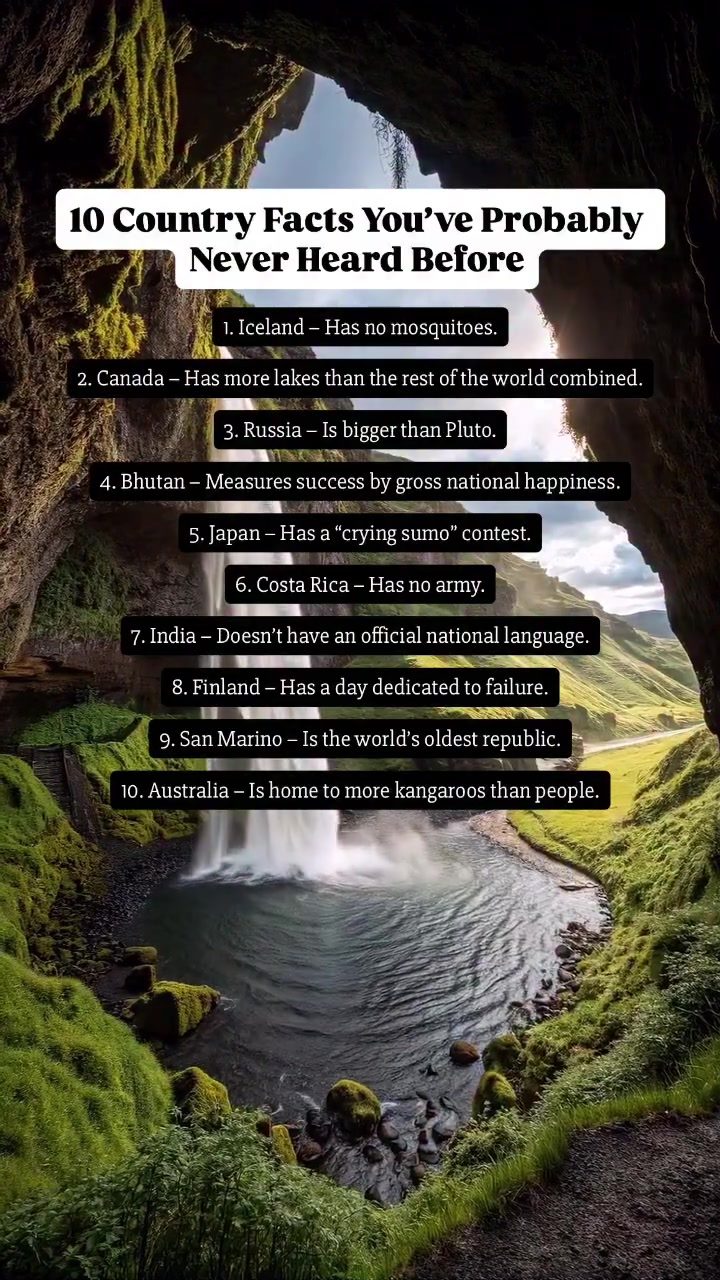
Country Facts: A Global Tour of Unusual Truths
Countries around the world are full of surprises. From unique geographical features to cultural traditions, each nation has something distinctive to offer. Here, we explore ten fascinating and unusual facts about different countries.
Context / Why this Matters
Understanding the unique aspects of different countries can foster a deeper appreciation for global diversity. These facts not only highlight the differences but also the similarities that bind us together. Whether it's a geographical quirk, a cultural tradition, or a historical milestone, each fact tells a story about the country's identity and values.
Main Discussion
Iceland: A Land Without Mosquitoes
Iceland is known for its stunning landscapes and geological wonders. One of the lesser-known facts about this Nordic island is that it has no mosquitoes. This might seem trivial, but it's a significant relief for tourists and locals alike, especially for those who dread insect bites.
Iceland's mosquito-free status is due to its unique climate and geographical isolation. While the exact reasons are still debated, the lack of mosquitoes adds to Iceland's appeal as a destination for nature lovers.
Canada: The Land of Lakes
Canada is famous for its vast wilderness and stunning natural beauty. One of its most impressive features is the sheer number of lakes. In fact, Canada has more lakes than the rest of the world combined. This abundance of freshwater bodies not only contributes to Canada's breathtaking scenery but also plays a crucial role in its ecosystems and economy.
From the Great Lakes to the countless smaller lakes scattered throughout the country, Canada's water bodies are a testament to its natural wealth.
Russia: Larger than Pluto
When it comes to sheer size, Russia is unparalleled. Spanning over 17 million square kilometers, Russia is not only the largest country in the world but also larger than the dwarf planet Pluto. This vast expanse means Russia covers a wide range of landscapes, from the frozen tundra of Siberia to the subtropical beaches of the Black Sea.
Bhutan: Happiness Over Wealth
Bhutan, a small landlocked country in the Himalayas, is unique in its approach to governance and development. Rather than measuring success by traditional economic indicators, Bhutan focuses on Gross National Happiness (GNH). This concept prioritizes the well-being and happiness of its citizens over material wealth.
The GNH index considers factors such as psychological well-being, health, education, cultural diversity, and resilience of communities. Bhutan's approach offers a compelling alternative to the Western model of development.
Japan: The Crying Sumo Contest
Sumo wrestling, an ancient martial art, is deeply rooted in Japanese culture. One of the more unusual traditions within sumo is the "crying sumo" contest. This event, held annually, features young sumo wrestlers competing to see who can cry the loudest and longest. The contest is a testament to the emotional and cultural depth of Japanese traditions.
Costa Rica: A Nation Without an Army
Costa Rica is renowned for its commitment to peace and environmental sustainability. In 1948, Costa Rica abolished its army, redirecting funds towards education, healthcare, and social services. This decision has made Costa Rica one of the most peaceful and stable countries in Latin America.
Costa Rica's focus on sustainability and peace has also made it a global leader in eco-tourism and conservation efforts.
India: A Multilingual Nation
India is a melting pot of cultures, languages, and traditions. One of the most surprising facts about India is that it doesn’t have an official national language. Instead, the country recognizes 22 official languages, reflecting its incredible linguistic diversity.
While Hindi and English are widely used, the richness of India's languages is a testament to its cultural heritage and the diversity of its people.
Finland: Embracing Failure
Finland, known for its high standard of living and progressive policies, has a unique approach to personal growth. The country celebrates a "Day of Failure," encouraging people to embrace their mistakes and learn from them. This holiday is part of a broader cultural ethos that values resilience, innovation, and self-improvement.
San Marino: The World's Oldest Republic
San Marino, a small landlocked country in Italy, holds the title of the world's oldest republic. Established in 301 AD, it has maintained its independence and sovereignty for over 1,700 years. San Marino's unique political and historical legacy makes it a fascinating study in governance and longevity.
Australia: Kangaroos Outnumber Humans
Australia is home to a diverse range of wildlife, with kangaroos being one of the most iconic. What many people don't know is that there are more kangaroos in Australia than humans. This is a testament to the country's unique ecosystems and conservation efforts.
Australia’s large kangaroo population also plays a significant role in the country's culture and economy, attracting tourists and contributing to the nation's identity.
Practical Tips
When exploring these countries, consider delving deeper into their unique aspects. For instance, in Iceland, you might want to take a guided tour to learn more about its mosquito-free status. If you're in Canada, a lake tour can offer a different perspective on its natural beauty. Visiting Bhutan provides an opportunity to understand the concept of Gross National Happiness and how it influences daily life.
In Japan, attending a sumo wrestling event can give you a firsthand experience of the "crying sumo" contest. Costa Rica's eco-tourism offers a chance to see how the country's commitment to sustainability and peace translates into tangible experiences. In India, interacting with locals can help you appreciate the country's linguistic diversity.
Finland's Day of Failure can be a learning experience, showing how embracing mistakes can lead to personal growth. San Marino's ancient architecture and historical sites offer a glimpse into its rich past. Finally, in Australia, visiting national parks and wildlife sanctuaries can give an up-close look at the country's unique wildlife, including kangaroos.
Important Takeaways
- Iceland's mosquito-free status is a unique feature of its climate and geography, contributing to a more comfortable experience for visitors.
- Canada's abundance of lakes is a testament to its natural wealth and is integral to its ecosystems and economy.
- Russia's vast size allows it to encompass a wide range of landscapes, from frozen tundras to subtropical beaches.
- Bhutan's focus on Gross National Happiness (GNH) offers an alternative model of development, prioritizing well-being over material wealth.
- Japan's "crying sumo" contest is a unique cultural tradition that showcases the emotional depth of its martial arts.
- Costa Rica's decision to abolish its army and invest in social services is a testament to its commitment to peace and sustainability.
- India's linguistic diversity is a reflection of its rich cultural heritage and the various traditions of its people.
- Finland's approach to embracing failure is part of a broader cultural ethos that values resilience and innovation.
- San Marino's status as the world’s oldest republic highlights its enduring political and historical legacy.
- Australia's large kangaroo population is a testament to its unique ecosystems and conservation efforts, contributing to its cultural identity.
Conclusion
These ten facts offer a glimpse into the diverse and fascinating world of different countries. From Iceland's absence of mosquitoes to Australia's large kangaroo population, each fact reveals a unique aspect of a country's identity. Whether it's through geographical quirks, cultural traditions, or historical milestones, these countries offer a rich tapestry of experiences and lessons.
Questions readers ask
Why doesn't Iceland have mosquitoes?
Iceland's unique climate and geographical isolation prevent mosquitoes from thriving. The country's cold temperatures and lack of standing water, which mosquitoes need to breed, make it an inhospitable environment for them.
What makes Canada's lake systems so notable?
Canada is home to more lakes than any other country, with over two million. These lakes cover a vast area and provide essential resources, contributing significantly to the country's identity and natural beauty.
How large is Russia compared to other countries?
Russia is the world's largest country by land area, spanning over 17 million square kilometers. To put this into perspective, it covers more than one-eighth of the Earth's inhabited land area.
What is unique about the geography of Iceland?
Iceland's geography is marked by its volcanic activity, geysers, and hot springs. The country is situated on the Mid-Atlantic Ridge, which makes it a hotspot for geological activity and unique landscapes.
What are some of the unique cultural traditions found around the world?
Each country has its own set of cultural traditions. For example, in Japan, the tea ceremony is a ritualized way of preparing and serving green tea to guests, reflecting principles of harmony, respect, and tranquility. In Mexico, the Day of the Dead is a vibrant celebration honoring deceased loved ones with colorful altars, parades, and family gatherings.
What is the significance of understanding unique country facts?
Knowing these facts can deepen your appreciation for the world's diversity. It helps you understand the unique identity and values of different nations, fostering a sense of global connection and respect for various cultures and geographical wonders.
What are some of the most unusual facts about different countries?
Some of the most unusual facts include Iceland's mosquito-free environment, Canada's vast lake systems, and Russia's immense size. These facts highlight the unique characteristics that define each country and contribute to their global identity.
Related deep dives
Similar reads based on topic and creator.

Recent articles
Fresh deep dives from the latest Reels we unpacked.


Comments
Be the first to comment.