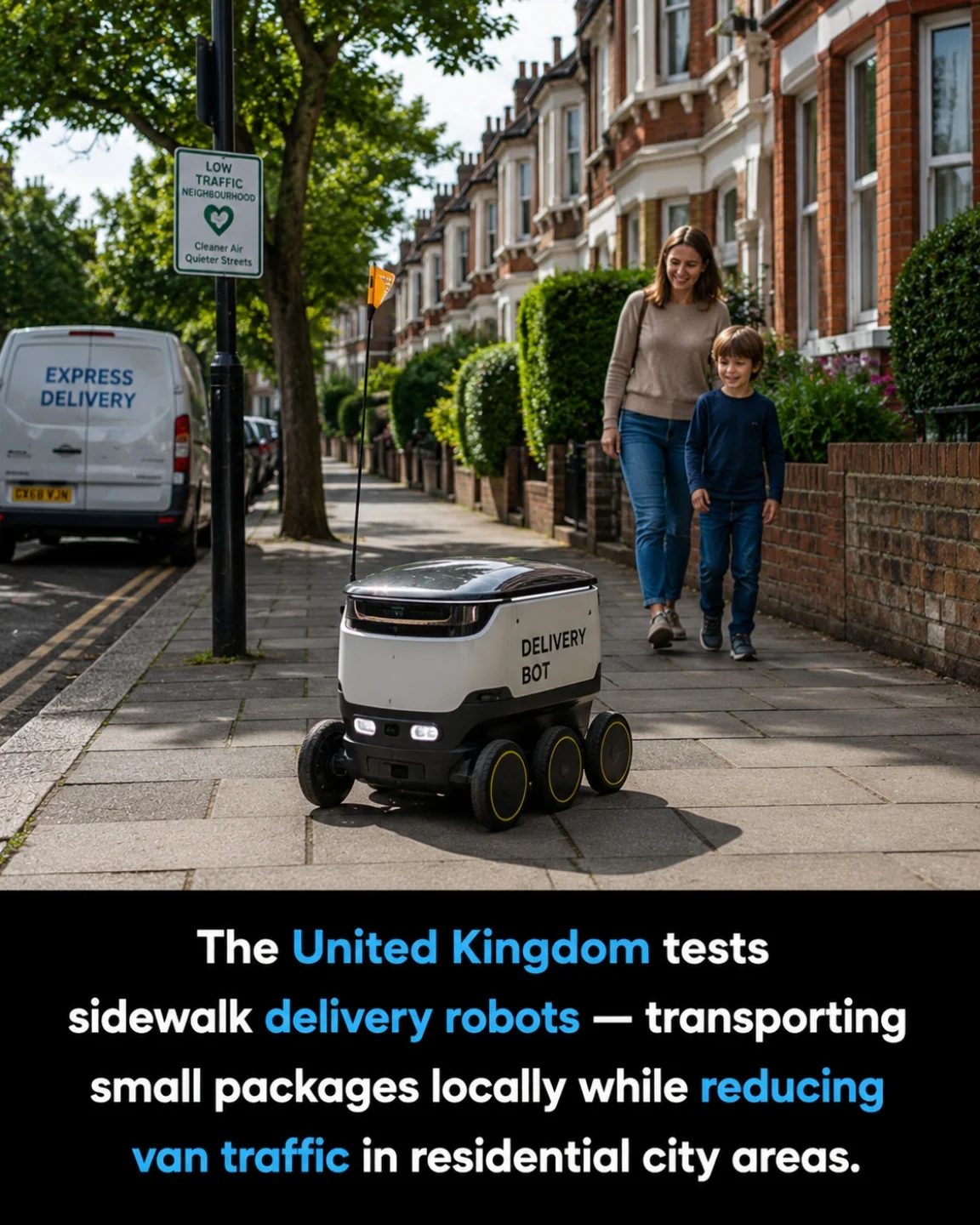
The Rise of Sidewalk Delivery Robots in the UK
Sidewalk delivery robots are transforming urban logistics in the United Kingdom. These autonomous machines are designed to transport small packages locally, aiming to reduce the number of delivery vans in residential areas. This innovative approach to delivery services offers a glimpse into the future of urban transportation and package delivery.
Context: Reducing Van Traffic in Residential Areas
The deployment of sidewalk delivery robots in the UK is primarily driven by the need to reduce van traffic in residential areas. Traditional delivery methods often involve vans that can congest urban streets, leading to increased noise, pollution, and safety concerns. By using delivery robots, the aim is to mitigate these issues while ensuring efficient and timely delivery of small packages. It is a practical solution that can significantly enhance the quality of life in residential areas.
The Mechanics of Sidewalk Delivery Robots
Design and Features
Sidewalk delivery robots are typically designed to be compact and maneuverable, allowing them to navigate urban sidewalks with ease. These robots are equipped with various sensors and cameras to detect obstacles and ensure safe operation. The DELIVERY BOT label often seen on these robots signifies their primary function.
Navigation and Safety
The robots use advanced algorithms and mapping technologies to navigate urban environments. They can plan efficient routes and avoid obstacles, ensuring that packages are delivered on time. Safety features, such as obstacle detection and emergency stop mechanisms, are integrated to prevent accidents and ensure the well-being of pedestrians.
Package Handling
Sidewalk delivery robots are primarily used for transporting small packages locally. This includes items like groceries, small parcels, and takeout orders. The robots are designed to securely hold and protect these packages during transit, ensuring they arrive in good condition.
Practical Tips for Implementing Sidewalk Delivery Robots
Choosing the Right Location
Before deploying sidewalk delivery robots, it is essential to select appropriate locations. Residential areas with low traffic and wide sidewalks are ideal for testing and implementation. Additionally, areas with a high concentration of small businesses and delivery needs can benefit significantly from these robots.
Ensuring Public Acceptance
Public acceptance is crucial for the successful integration of sidewalk delivery robots. Engaging with the community, explaining the benefits, and addressing any concerns can help foster a positive perception. Clear signage and public awareness campaigns can educate residents about the robots' functions and safety features.
Regulatory Compliance
Compliance with local regulations is essential. This includes obtaining necessary permits, adhering to safety standards, and following guidelines for autonomous vehicle operation. Collaborating with local authorities can ensure a smooth and lawful implementation process. Regulatory bodies may have specific requirements for sidewalk delivery robots, so it's important to stay informed and compliant.
Important Takeaways
Environmental Benefits
Sidewalk delivery robots contribute to a greener urban environment by reducing the number of delivery vans on the road. This decrease in van traffic leads to lower carbon emissions and noise pollution, promoting sustainability and a healthier living environment.
Enhanced Delivery Efficiency
By leveraging advanced navigation and mapping technologies, these robots can optimize delivery routes, ensuring faster and more efficient delivery of small packages. This translates into improved customer satisfaction and operational efficiency for delivery services.
Community Integration
When implemented thoughtfully, sidewalk delivery robots can seamlessly integrate into residential communities. They can coexist with pedestrians, minimizing disruptions and enhancing the overall quality of life in urban areas.
Conclusion
Sidewalk delivery robots represent a significant advancement in urban logistics, offering a practical solution to reduce van traffic and enhance delivery efficiency. As the UK continues to test and implement these autonomous machines, the future of urban transportation and package delivery looks promising. With the right approach, these robots can become an integral part of our daily lives, making urban environments cleaner, quieter, and more efficient.
Questions readers ask
What are sidewalk delivery robots and how do they benefit urban areas in the UK?
Sidewalk delivery robots are autonomous machines designed to navigate urban sidewalks to transport small packages. Their primary benefit is reducing the number of delivery vans in residential areas, which in turn cuts down on traffic, noise, and pollution, while also enhancing safety.
Why is the UK testing sidewalk delivery robots?
The UK is testing these robots to address the congestion and safety issues caused by delivery vans in residential areas. By deploying autonomous delivery robots, the UK aims to create more efficient and safer urban environments.
How do sidewalk delivery robots navigate urban environments?
Sidewalk delivery robots are equipped with advanced sensors and algorithms that allow them to navigate urban sidewalks autonomously. They can detect and avoid obstacles, follow designated routes, and safely interact with pedestrians and other obstacles in their path.
What types of packages can sidewalk delivery robots typically carry?
Sidewalk delivery robots are designed to transport small packages. While the exact size and weight capacity can vary depending on the model, they are generally suited for items that are commonly delivered to residential addresses, such as groceries, small parcels, and takeout meals.
Are sidewalk delivery robots a replacement for human delivery drivers?
Sidewalk delivery robots are not intended to completely replace human delivery drivers but to supplement and optimize delivery services. They handle last-mile deliveries for small packages, reducing the need for human drivers to navigate congested residential areas, while human drivers can focus on larger deliveries or other logistics tasks.
What safety measures are in place for sidewalk delivery robots?
Sidewalk delivery robots are equipped with various safety features, including sensors that detect and avoid obstacles, and lights and audible signals to alert pedestrians of their presence. Additionally, these robots are designed to operate at low speeds and follow traffic rules to ensure the safety of everyone in the urban environment.
Related deep dives
Similar reads based on topic and creator.

Recent articles
Fresh deep dives from the latest Reels we unpacked.




Comments
Be the first to comment.