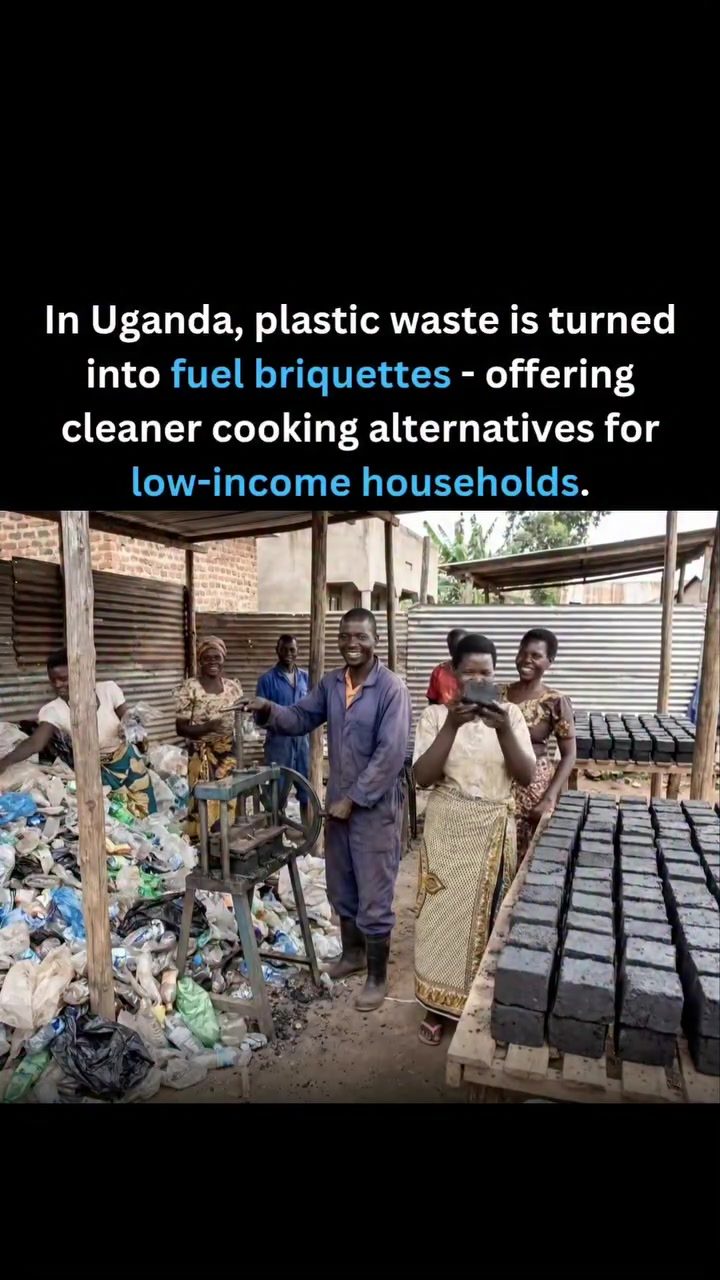
Plastic Waste to Fuel: A Cleaner Solution for Low-Income Households
In Uganda, an innovative initiative is transforming plastic waste into a valuable resource: fuel briquettes. This environmental solution not only addresses the growing problem of plastic waste but also provides a cleaner cooking alternative for low-income households.
Context / Why this matters
Plastic waste is a global issue with severe environmental consequences. Traditional methods of waste management, such as landfills and incineration, often exacerbate environmental problems, contributing to pollution and greenhouse gas emissions. Meanwhile, low-income households often rely on inefficient and polluting cooking fuels like charcoal and firewood, which pose significant health risks. The conversion of plastic waste into fuel briquettes offers a dual solution: mitigating plastic pollution and providing a cleaner, more sustainable cooking fuel.
Plactic waste to fuel briquettes
The Process
The process of turning plastic waste into fuel involves several steps. First, the plastic waste is collected and sorted. Common types of plastic, such as polyethylene and polypropylene, are suitable for this process. These plastics are then cleaned to remove any contaminants, such as food residue or dirt.
Next, the cleaned plastic is shredded into small pieces. This step is crucial as it increases the surface area of the plastic, making it easier to melt and mold into briquettes. The shredded plastic is then melted and compressed into briquettes using a specialized machine. This process ensures that the briquettes are strong and clean, making them an efficient and safe fuel source.
Benefits
The fuel briquettes produced from plastic waste offer several benefits. Firstly, they are a clean and sustainable fuel source, producing fewer emissions compared to traditional cooking fuels. This makes them a healthier option for households, particularly in areas with poor ventilation. Additionally, the briquettes are strong and durable, ensuring that they burn evenly and efficiently.
Practical tips for waste-to-energy initiatives
Starting a waste-to-energy initiative, like turning plastic waste into fuel, involves several practical considerations. Here are some tips to help you get started:
-
Community Engagement: Engage with the local community to raise awareness about the benefits of waste-to-energy initiatives. This can help garner support and participation, making the project more successful.
-
Waste Collection and Sorting: Establish a system for collecting and sorting plastic waste. This could involve partnering with local waste management services or setting up collection points in the community.
-
Technology and Equipment: Invest in the necessary technology and equipment for processing plastic waste into fuel briquettes. This could include shredders, melting machines, and briquette presses. Ensure that the equipment is reliable and efficient to maximize productivity.
-
Training and Education: Provide training and education to community members on the proper use of fuel briquettes. This can help ensure that the briquettes are used safely and efficiently, maximizing their benefits.
Important takeaways
The conversion of plastic waste into fuel briquettes in Uganda is a testament to innovative and sustainable waste management solutions. This initiative not only helps to reduce plastic pollution but also provides a cleaner and more efficient cooking fuel for low-income households. By addressing both environmental and social challenges, this approach sets a model for other communities facing similar issues.
Conclusion
The transformation of plastic waste into fuel briquettes in Uganda highlights a practical and effective solution to combat plastic pollution and improve cooking conditions for low-income households. By embracing innovative waste management practices, communities can achieve significant environmental and health benefits. This initiative serves as a beacon for other regions, demonstrating the potential of turning waste into a valuable resource.
Questions readers ask
How does Uganda's Plastic Waste to Fuel Initiative benefit low-income households?
The initiative provides low-income households with a cleaner and more sustainable cooking fuel. By converting plastic waste into fuel briquettes, the initiative offers a healthier alternative to traditional fuels like charcoal and firewood, reducing indoor air pollution and associated health risks.
What are the environmental benefits of converting plastic waste into fuel briquettes?
Converting plastic waste into fuel briquettes helps reduce plastic pollution in Uganda. This process lowers the amount of plastic waste sent to landfills and incinerators, decreasing greenhouse gas emissions and environmental pollution. The conversion also promotes a circular economy by turning waste into a valuable resource.
How does cooking with fuel briquettes compare to traditional cooking methods?
Cooking with fuel briquettes is generally cleaner and more efficient than traditional methods using charcoal or firewood. Briquettes produce less smoke, reducing indoor air pollution. They also burn more evenly and for longer periods, which can improve cooking efficiency and reduce fuel costs over time.
What types of plastic waste can be converted into fuel briquettes in Uganda?
The initiative typically uses common plastic waste materials such as polyethylene (PE) and polypropylene (PP), which are prevalent in packaging and consumer goods. These plastics are processed and transformed into solid fuel briquettes, which can be used for cooking in low-income households.
How does the Plastic Waste to Fuel Initiative contribute to public health in Uganda?
By providing a cleaner cooking fuel, the initiative helps to reduce respiratory ailments and other health issues associated with inhaling smoke from traditional fuels. This improves the overall health and well-being of low-income households, particularly women and children who are often most affected by indoor air pollution.
What steps are involved in converting plastic waste into fuel briquettes?
The conversion process involves collecting plastic waste, sorting and cleaning it, then shredding and melting the plastic. The molten plastic is then compressed into briquette form and allowed to cool. These briquettes can be used as a sustainable and clean cooking fuel for low-income households.
What challenges might be faced in implementing the Plastic Waste to Fuel Initiative in Uganda?
Some challenges include the need for efficient waste collection and sorting infrastructure, ensuring consistent supply of raw materials, and raising awareness among low-income households about the benefits and proper use of fuel briquettes. Additionally, the initiative requires investment in technology and training for local communities to sustain the process.
Related deep dives
Similar reads based on topic and creator.



Recent articles
Fresh deep dives from the latest Reels we unpacked.



Comments
Be the first to comment.