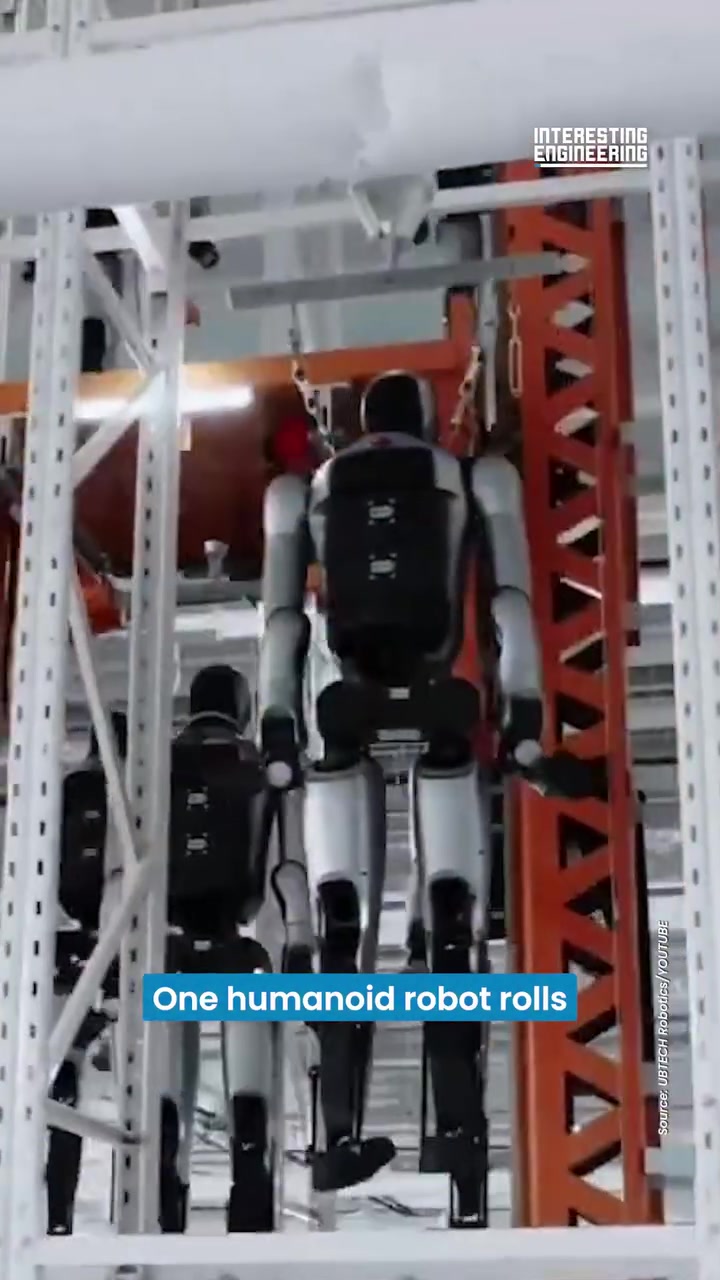
Human-like forms roll off assembly lines every 10 minutes. This isn't a dystopian sci-fi film — it's the reality inside UB-TECH's SuperSmart factory in Liuzhou, southern China. Commissioned in September, the robots inside share something distinctive with the workers: Both are humanoid.
The Human-Like Helpers of UB-TECH
A humanoid robot is a robot with a physical structure that resembles the human body. Unlike many robots that are restricted to specialized tasks or fixed environments. Human-like robots can move in more complex environments and interact with objects designed for human use. Their design enables them to replicate human actions, such as walking, grasping, and performing manual tasks. UB-TECH’s "industrial humanoid robots" are a leap forward in automation technology. These robots are built to handle industrial tasks, like loading and unloading, moving materials, and more, using wheeled units. The key to their efficiency lies in their ability to navigate and manipulate objects, making them versatile for a variety of automated tasks. Humans still play a crucial role, working alongside these robots to handle more intricate tasks that require human-like dexterity and judgment.
The Robot-Workforce Ratio
UB-TECH—or, as the Chinese company is officially known— is a pioneer in the robotics industry. Under the gaze of China's "Made in China, 2025" initiative, UB-TECH has launched a new standard of automation. This is a glimpse of how China's robotics industry is advancing to address global demand. But why is robotics in manufacturing on the rise? The answer lies in the numbers. Automation is transforming manufacturing, driven by the need for efficiency and cost-saving solutions. China's manufacturing landscape is increasingly competitive, demanding higher precision and faster production. The 2023 introduction of the SuperSmart factory by UB-TECH marks a shift towards more integrated, automated workflows. The success of this approach is clear in the targets set by UB-TECH for the future. The company sold just over 900 full-size humanoids in the first half of 2023. This number represents a 20-fold increase from the previous year, but UB-TECH still reported significant losses. Despite a loss of 3339 million yuan, the company has set an ambitious target of 10,000 full-size humanoids by 2026. The SuperSmart factory marks the capital-intensive bet that UB-TECH has placed on the future, hoping that the demand for humanoid robots, justifies production scale and ongoing investment.
Not Just for Warehouses
The factory's approach to production is exemplified by the skills and automation UBT-ECH robots bring. The SuperSmart factory in Liuzhou is a glimpse into a future where logistics and industrial operations are increasingly automated. It's a model for efficiency, where every detail is meticulously monitored and managed. The factory can produce and test every robot, from the material processing, to packaging, each step is tracked for quality and consistency. In another factory, human workers would assemble components, a collaborative robot would fasten some 2,000 screws into each robot.
Depalletizing and Loading Materials Without Stopping
One of the standout functions of the humanoid robots in UB-TECH's factory is their ability to depalletize and load materials seamlessly. The Cruiser robots navigate the factory floor, executing tasks such as unloading pallets, transporting materials, and loading them onto the production line. This function optimizes material handling, reducing human intervention and errors, and enhancing overall productivity. The strength of these machines lies in how UB-TECH designed the factory line. The design enables robots to work directly beside human operators, and allows operators to focus on the more detailed, intricate tasks. The efficiency of this approach is clear: In four hours of stress testing, the robots showcase their reliability and consistency. This setup allows collaborators to work in tandem, enhancing productivity and ensuring that every step in production is executed flawlessly.
Monitoring and Data Tracking
Every robot unit rolling off the UB-TECH line comes with a serial number. The number indicates much more than a random set of digits: it’s an identification code that logs the origins of the robot, its components, the way they were fastened, and the performance in stress testing. This logging is not just about quality control; it lays out the "blueprint" for the robot’s future, ensuring that each unit is trackable and traceable. How does this benefit the manufacturing process? It allows UB-TECH to continually monitor every single robot for updates and maintenance. This level of transparency and precision ensures that any issues can be quickly identified and addressed. The company's industrial humanoids show that robotics production is moving to a new standard of precision and transparency.
Mapping Progress in Manufacturing
UB-TECH’s investment in robotics and automation reveals the industry’s evolution. The SuperSmart factory is a stepping stone toward fully-automated production. The convergence of industrial automation and embodied intelligence pushes manufacturing to embrace the future. These robots contribute to human-like tasks, thus enabling new, energetic, designs.
The Expectations of Embodied Intelligence and Robotics
The human-like design of UB-TECH’s robots goes beyond basic automation. It’s an embodiment of intelligence designed to interact with their surroundings in ways that mimic human actions. They navigate factory floors, transport materials, and perform intricate tasks using their mechanical limbs. This embodiment of intelligence is pivotal for complex environments where traditional automation falls short. The robots do more than just move materials — they perform tasks once thought reserved for the human workforce.
How the Future of Production Will Resemble Liuzhou
The factory in Liuzhou hints at a future of hybrid production lines, where robotics and human collaboration redefine efficiency. Human workers can focus on operational quality and innovation, while humanoid robots handle repetitive tasks. Over time, as technology evolves, the roles will shift. In ten years, Liuzhou's factory could revolutionize manufacturing. It shows that precision, automation, and efficiency mark the template for the future. The robotic factories will cover thousands of square meters. Human workers will handle new tasks, marking the path for robotics in global logistics. The adoption of humanoid robots in logistics and industrial operations is not just about automation; it’s about creating a new paradigm of human-robot collaboration. It is UBT-ECH's bet that the future is worth it.
Questions readers ask
What exactly is a humanoid robot, and how does it differ from other types of robots?
A humanoid robot is designed to mimic the human body, allowing it to move and interact with environments and objects in ways similar to humans. This means they can perform tasks like walking, grasping, and handling items designed for human use, unlike specialized robots that are often limited to specific tasks or fixed environments.
How do UBTECH's industrial humanoid robots enhance warehouse operations?
UBTECH's industrial humanoid robots are built to handle a variety of tasks, such as loading and unloading materials, moving objects, and navigating complex environments. Their ability to replicate human actions makes them versatile for many automated tasks, increasing efficiency and precision in warehouse operations.
What is the significance of the SuperSmart factory in Liuzhou?
The SuperSmart factory in Liuzhou is a showcase of UBTECH's advanced automation technology. It produces humanoid robots at a rapid pace, with a new robot rolling off the assembly line every 10 minutes. The factory exemplifies a future where logistics and industrial operations are increasingly automated, monitored, and managed with high precision.
Why is UBTECH investing heavily in humanoid robots despite reported losses?
UBTECH’s investment in humanoid robots is driven by the potential for significant future demand. Despite reporting losses, the company has set ambitious targets, aiming to produce 10,000 full-size humanoids by 2026. This reflects a strategic bet on the growing need for automated solutions in manufacturing, especially in competitive markets like China.
Can these humanoid robots completely replace human workers in factories?
While humanoid robots can handle many tasks efficiently, they are not a complete replacement for human workers. Humans still play a crucial role in tasks that require dexterity, judgment, and intricate handling. The collaboration between robots and humans is key to optimizing production processes.
How does the SuperSmart factory ensure the quality and consistency of its robots?
The SuperSmart factory employs meticulous monitoring and management at every stage of production. From material processing to packaging, each step is tracked for quality and consistency. This ensures that every robot produced meets high standards, which is crucial for maintaining the reliability and efficiency of automated operations.
What other industries besides warehousing could benefit from UBTECH's humanoid robots?
The versatility of UBTECH's humanoid robots makes them suitable for various industries beyond warehousing. Any sector that requires precise handling of materials, efficient logistics, and automated tasks could benefit. This includes manufacturing, logistics, healthcare, and even service industries where human-like interactions are beneficial.
Related deep dives
Similar reads based on topic and creator.

Recent articles
Fresh deep dives from the latest Reels we unpacked.


Comments
Be the first to comment.