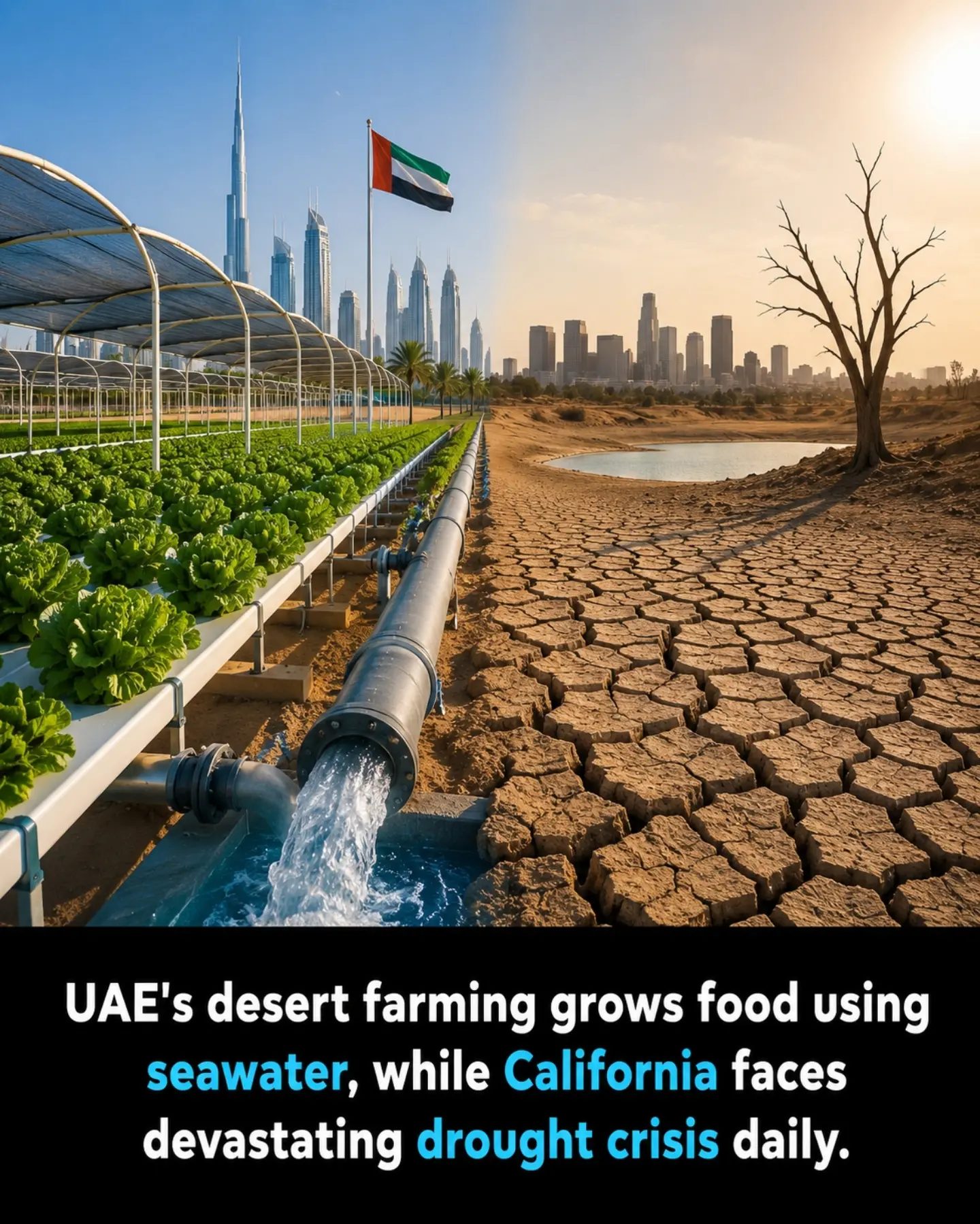
Desert Farming vs. Drought: A Tale of Two Water Crises
Desert farming and droughts are two sides of the same coin, each presenting unique challenges and solutions in the face of water scarcity. The United Arab Emirates (UAE) and California offer contrasting examples of how different regions approach this issue, from innovative farming techniques to managing severe water shortages.
Context: Water Scarcity and Agricultural Innovation
The Global Water Crisis
Water scarcity is a pressing global issue, affecting millions of people and agricultural landscapes worldwide. As populations grow and climate change accelerates, the demand for water increases while supplies become more unpredictable. Agriculture, which accounts for approximately 70% of global fresh water use, is at the forefront of this challenge. Innovative solutions are crucial for sustaining food production in arid regions.
UAE's Desert Farming
The UAE, known for its desert landscapes, has developed innovative farming techniques to grow crops in harsh conditions. The country utilizes seawater to grow food, which is a groundbreaking approach to sustainable agriculture. By desalinating seawater and using advanced irrigation systems, the UAE has created a thriving agricultural sector in the heart of the desert.
California's Drought Crisis
In stark contrast, California is grappling with a devastating drought crisis. The state, which relies heavily on agriculture, has seen its water resources dwindle due to prolonged dry spells. This crisis not only affects the region's agricultural productivity but also its economy and ecosystem. The contrast between the UAE's innovative solutions and California's ongoing drought underscores the importance of water management and sustainable farming practices.
Innovative Solutions in Desert Farming
Seawater Desalination
Desalination, the process of removing salt and minerals from seawater to make it suitable for human consumption and agricultural use, is a cornerstone of the UAE's desert farming. This technology has enabled the country to grow crops in areas where traditional farming would be impossible. Advanced desalination plants convert seawater into freshwater, which is then used to irrigate fields.
Advanced Irrigation Systems
The UAE employs advanced irrigation systems, including drip irrigation and hydroponics, to optimize water use. Drip irrigation delivers water directly to the roots of plants, minimizing evaporation and runoff. Hydroponics, on the other hand, grows plants in nutrient-rich solutions without soil, further conserving water.
Sustainable Agriculture Practices
In addition to technological advancements, the UAE promotes sustainable agricultural practices. Farmers in the region use cover crops and organic fertilizers to improve soil health and nutrient retention. These practices reduce the need for synthetic fertilizers and pesticides, contributing to a more sustainable ecosystem.
The Impact of Drought in California
Economic and Agricultural Challenges
California's drought crisis has had profound economic and agricultural impacts. The state's agricultural sector, which is a significant contributor to the national economy, has seen reduced yields and increased costs due to water shortages. Farmers have had to adopt emergency measures, such as fallowing fields and reducing crop diversity, to cope with the crisis.
Environmental Consequences
The drought has also taken a toll on California's environment. Reduced water supplies have led to the degradation of wetlands, loss of biodiversity, and increased risk of wildfires. The crisis has highlighted the delicate balance between human activities and natural ecosystems, emphasizing the need for sustainable water management.
Practical Tips for Sustainable Agriculture
Water Conservation Techniques
One of the most effective ways to mitigate the impact of drought is through water conservation. Farmers can adopt techniques such as drip irrigation, which delivers water directly to the roots of plants, reducing evaporation and runoff. Mulching, which involves covering the soil surface with organic materials, can also help retain moisture and suppress weeds.
Integrated Pest Management
Integrated Pest Management (IPM) is a sustainable approach to pest control that minimizes the use of synthetic pesticides. By using a combination of biological, cultural, and physical methods, farmers can control pests while promoting a healthy ecosystem. IPM practices include the use of natural predators, crop rotation, and selective breeding of pest-resistant varieties.
Agroforestry and Crop Rotation
Agroforestry, the practice of integrating trees with crops and livestock, can help improve soil health and water retention. Trees provide shade, reduce soil erosion, and enhance biodiversity. Crop rotation, which involves growing different crops in succession on the same plot of land, can help maintain soil fertility and reduce pest and disease incidence.
Important Takeaways
The Need for Innovation
Innovation in agriculture is crucial for addressing water scarcity and ensuring food security. The UAE's success in desert farming demonstrates the potential of technological advancements and sustainable practices in overcoming environmental challenges.
Balancing Agriculture and Ecology
Agriculture and environmental conservation must go hand in hand. Sustainable practices that promote soil health, water conservation, and biodiversity are essential for long-term agricultural productivity and environmental sustainability.
Collaboration and Knowledge Sharing
Collaboration and knowledge sharing among farmers, researchers, and policymakers are vital for addressing water scarcity and drought. By learning from each other's successes and challenges, we can develop more effective and sustainable solutions.
Conclusion
The contrast between the UAE's innovative desert farming and California's drought crisis highlights the importance of sustainable agriculture and water management. By adopting advanced irrigation systems, sustainable practices, and integrated pest management, farmers can mitigate the impact of drought and ensure food security. As we face the challenges of water scarcity and climate change, it is crucial to prioritize innovation, collaboration, and ecological balance in our agricultural practices.
Questions readers ask
How has the UAE achieved success in desert farming?
The UAE has achieved success in desert farming through innovative techniques such as using desalinated seawater for irrigation and developing drought-resistant crops. The country has also implemented advanced greenhouses that maintain optimal growing conditions, allowing crops to thrive in harsh desert environments.
What are some key differences between UAE's desert farming and California's drought management?
The UAE focuses on innovative farming techniques to grow crops in desert conditions, utilizing desalinated seawater and advanced greenhouses, while California struggles with severe water shortages, leading to stricter water management policies and challenges in sustaining traditional agriculture.
What role does desalinated seawater play in the UAE's farming success?
Desalinated seawater is crucial for the UAE's farming success as it provides a reliable water source in arid regions. By desalinating sea water, the UAE can irrigate crops without relying on scarce freshwater resources, making agriculture more sustainable in the desert.
How does the UAE's approach to agriculture in harsh conditions benefit the region?
The UAE's approach to agriculture in harsh conditions benefits the region by enhancing food security, reducing dependence on imported food and fostering innovation in sustainable farming techniques. Additionally, it creates jobs and contributes to the local economy.
What challenges does California face due to its drought crisis?
California faces significant challenges due to its drought crisis, including water shortages that affect both urban and agricultural sectors, reduced crop yields and increased pressure on groundwater resources, which can lead to land subsidence and further environmental degradation.
How can California learn from the UAE's desert farming techniques to improve its water management?
California can learn from the UAE's techniques in desalinated seawater irrigation, drought-resistant crops, and advanced greenhouse technology. Implementing similar innovations can help California sustain its agriculture during droughts and enhance overall water management practices.
What are some innovative technologies used in the UAE's sustainable agriculture practices?
The UAE employs several innovative technologies in its sustainable agriculture practices, including hydroponic and aeroponic systems, which use minimal water and nutrients to grow plants. Additionally, automated farming systems and renewable energy sources like solar power are integrated to enhance efficiency and reduce environmental impact.
Recent articles
Fresh deep dives from the latest Reels we unpacked.



Comments
Be the first to comment.