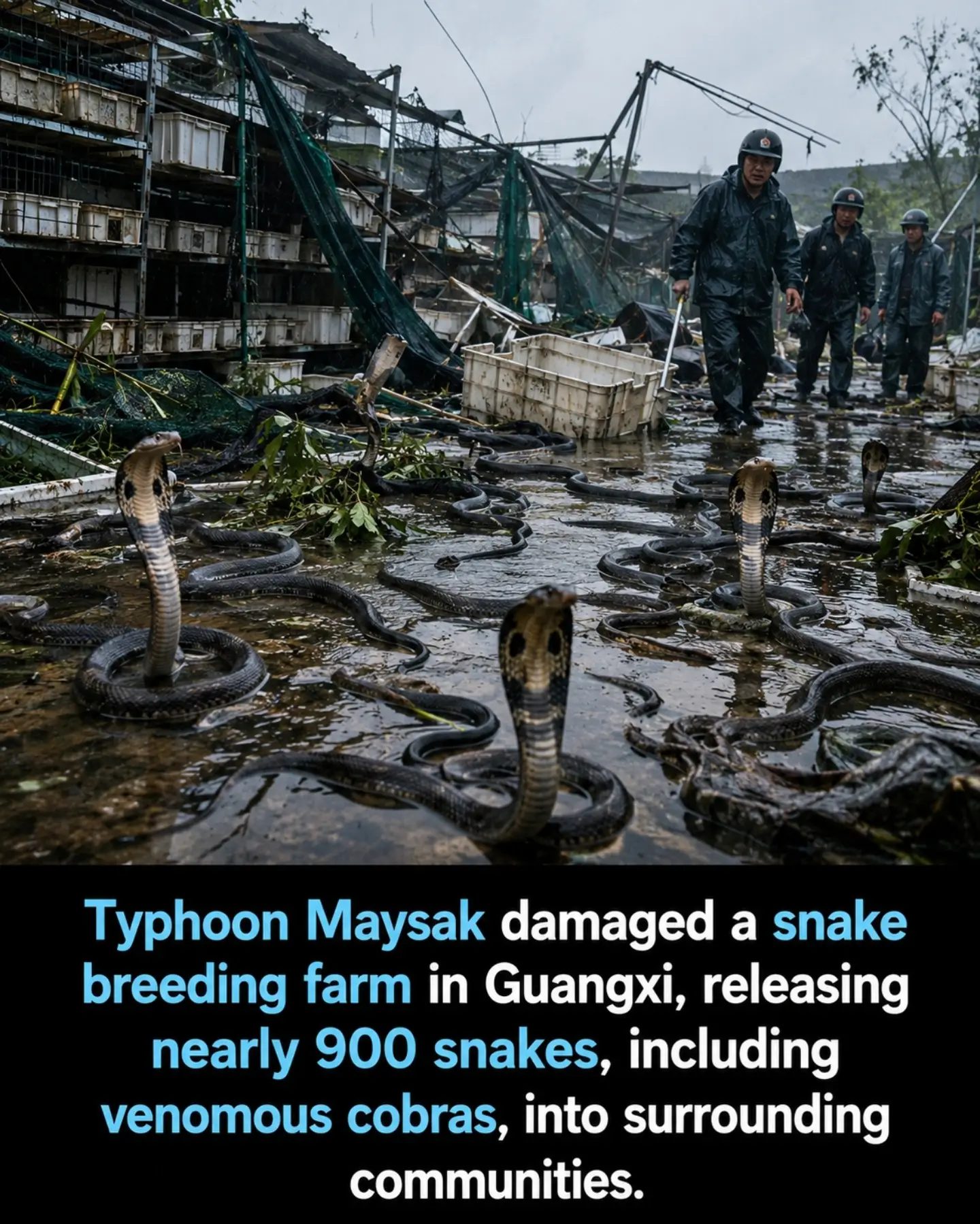
Snake Release After Typhoon
Typhoon Maysak wreaked havoc on a snake breeding farm in Guangxi, China, leading to the release of nearly 900 snakes, including venomous cobras, into the surrounding communities.
Context / Why this matters
Typhoon Maysak was a powerful storm that caused significant destruction in its path. The storm's impact on a snake breeding farm in Guangxi resulted in the release of nearly 900 snakes, including venomous cobras. This situation highlights the broader implications of natural disasters on wildlife and our communities. When natural disasters occur, the safety and welfare of both wildlife and humans are at risk. Understanding these risks is crucial for preparedness and response.
Main discussion
Typhoon Maysak and its impact
Typhoon Maysak, a severe tropical storm, caused extensive damage to the snake breeding farm in Guangxi. The flooding and destruction of enclosures led to the release of nearly 900 snakes, including several venomous species. The impact of such natural disasters on wildlife is a significant concern, as it often results in the displacement of animals and the potential for dangerous encounters with humans.
The Snake Breeding Farm
Snake breeding farms are facilities that specialize in the breeding and raising of snakes for various purposes, including the pet trade, venom extraction, and conservation efforts. These farms often house a variety of snake species, some of which are venomous. The farm in Guangxi was severely damaged by Typhoon Maysak, leading to the escape of nearly 900 snakes, including venomous cobras. The release of these snakes poses a significant risk to the surrounding communities, as venomous snakes can be dangerous to humans.
The Release of Nearly 900 Snakes
The release of nearly 900 snakes, including venomous cobras, into the surrounding communities is a concerning situation. Cobra venom is highly toxic and can be fatal to humans if not treated promptly. The presence of these venomous snakes in the community increases the risk of snake bites and other dangerous encounters. Local authorities and emergency services are likely involved in mitigating this risk, ensuring the safety of the community, and assisting in the capture and relocation of the released snakes.
Potential Dangers
The release of venomous snakes into surrounding communities presents several potential dangers:
- Snake Bites and Medical Emergencies: Cobra venom is highly toxic and can cause severe medical emergencies. Immediate medical attention is crucial for anyone bitten by a venomous snake.
- Community Anxiety and Disruption: The presence of venomous snakes in the community can cause fear and anxiety among residents, leading to disruption in daily activities and potential evacuations.
- Wildlife Encounters and Habitats: The released snakes may also disrupt local ecosystems, potentially causing conflicts with other wildlife and altering the local habitat.
Practical tips
When dealing with the release of venomous snakes or any wild animals, it's essential to follow practical safety measures:
- Stay Informed: Keep up-to-date with local news and alerts from authorities regarding the presence of venomous snakes in the area.
- Avoid Encounters: Stay away from areas where snakes are known to be present, such as flooded enclosures and damaged buildings.
- Be Cautious in Outdoor Activities: When outdoors, be vigilant and aware of your surroundings. Watch where you step and avoid placing your hands or feet in areas where snakes might be hiding.
- Know First Aid: Learn basic first aid for snake bites, including how to immobilize the affected area, keep the victim calm, and seek medical help immediately.
- Contact Authorities: If you encounter a venomous snake, do not attempt to capture or handle it. Contact local animal control or wildlife authorities for assistance.
Important takeaways
The release of nearly 900 snakes, including venomous cobras, due to Typhoon Maysak highlights the significant risks posed by natural disasters to both wildlife and human communities. Key takeaways from this incident include the importance of preparedness, the need for community safety measures, and the potential dangers of encounters with venomous snakes. Understanding and implementing practical safety tips can help mitigate these risks and ensure the safety of both humans and wildlife. As Typhoon Maysak serves as a reminder, the risks posed by natural disasters to wildlife and human communities underscore the need for comprehensive disaster management strategies.
Conclusion
The aftermath of Typhoon Maysak and the release of nearly 900 snakes, including venomous cobras, in Guangxi, China, underscores the need for vigilance and preparedness in the face of natural disasters. Understanding the potential dangers and implementing practical safety measures are crucial for the safety of both wildlife and human communities. By staying informed, avoiding encounters, and knowing first aid, we can mitigate the risks associated with the release of venomous snakes and ensure the well-being of all involved. Natural disasters, while unpredictable, require us to be proactive in our approach to maintaining safety and preparedness.
Questions readers ask
Which specific species of snakes were released due to Typhoon Maysak's impact on the snake breeding farm in Guangxi?
In addition to other species, nearly 900 cobras, known for their venom, were released from the snake breeding farm in Guangxi due to Typhoon Maysak's impact. Cobras, which are venomous, pose a significant threat to both local wildlife and human safety, especially in a community setting.
How did Typhoon Maysak cause the release of nearly 900 snakes from the breeding farm in Guangxi?
Typhoon Maysak's powerful winds, rains, and flooding led to extensive damage to the snake breeding farm in Guangxi, causing the enclosures to fail and resulting in the release of nearly 900 snakes. The exact damage to the farm is still under investigation, but it is clear that the storm's impact was significant.
What are the primary concerns for the communities surrounding the snake breeding farm in Guangxi after the release of the snakes?
The primary concerns for the surrounding communities are the safety risks posed by the released venomous snakes, including cobras, and the potential disruption to local wildlife as these snakes can disrupt the natural ecosystems.
What precautions should residents of the affected areas take to ensure their safety after the release of venomous snakes?
Residents should avoid areas where snakes are likely to be found, stay alert for snake sightings, and contact local authorities if they encounter any snakes. It's also important for residents to keep pets and children away from areas where snakes could be present.
What measures are being taken to address the release of nearly 900 venomous snakes in Guangxi after Typhoon Maysak?
Local authorities are working to capture and contain the released snakes, with a focus on protecting public safety. They are also assessing the damage to the snake breeding farm and planning for the long-term safety and welfare of the surviving snakes, as well as the broader community.
Related deep dives
Similar reads based on topic and creator.
Recent articles
Fresh deep dives from the latest Reels we unpacked.

Comments
Be the first to comment.