A World of Stone Against the Sky
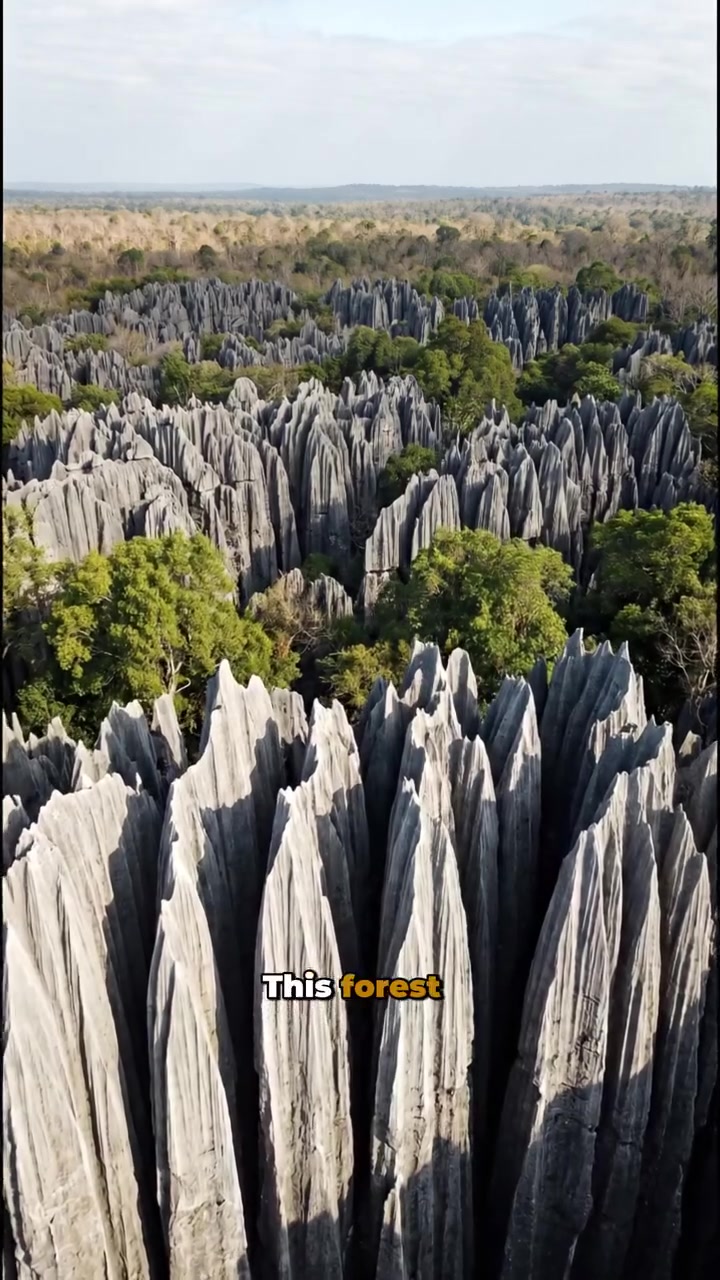
Western Madagascar's Tsingy de Bemaraha is an expanse of more than 1,500 square kilometers, contains a paradoxical landscape named Tsingy Forest. Millions of years ago, this area was a seabed. Now it's a geological wonderland of razor-sharp limestone blades and hidden canyons. No trees grow in this forest. As a result here is no soil. Instead, the ground is a labyrinth of stone formations created by rainwater slowly dissolving the limestone. As the limestone softened, erosion widened the cracks, leaving spires and needles that make it nearly impossible to navigate without protective gear. These formations earned the region a UNESCO World Heritage Site designation in 1990 and a name in the Malagasy language, that echoes their formidable nature. The name is Tsingy, which roughly means "where you cannot walk barefoot".
The Formed Formations of Tsingy
Tsingy’s Geological Origins
The Tsingy forest is made of stone that was once part of the seabed. Over millions of years, a shallow sea ran through Madagascar. The sediment from this water ended up becoming limestone. It's a type of sedimentary rock made from the remains of ancient ocean organisms. Rainwater, slightly acidic, dripped through the rock and widened the cracks in the stone. This slowly dissolved the limestone. It widened the cracks into canyons over many years, leaving behind tall, thin walls and needles. This process left a jagged landscape of sharp limestone pinnacles.
The Alphabet of the Stone
The Tsingy forest was shaped by time. Erosion carved the sharp, rocky spires that give the area its name. Tsingy means the spiky limestone rock formations. The word comes from the malagasy language, the name roughly translates to "where one cannot walk barefoot." Beyond its distinctive landscape, one can only imagine being sliced to death by razor sharp needles. However, the Tsingy forest is not without protection. The forest is a protected UNESCO world heritage site. Because of these spires, scientists have a tough time exploring. The forest provides a glimpse into untouched parts of the world. The area remains untouched, because there are only a few marked routes, which are crossed by cables and narrow bridges. Beyond that, the fissures are too tight and the edges are too sharp to get through. The forest is a maze people can barely enter, which also makes it untouched. This means its inhabitants are also largely untouched and unique.
The Unseen World
The Tsingy Forest reveals a mysterious ecosystem. The labyrinth of limestone pinnacles and canyons hosts a world shaded, damp, and cooler than the surrounding landscape. Rainwater drips down into the jagged earth and forms a secondary world. Despite the sharp, vertical spikes, the edges of the stone support the vegetation. One can catch a glimpse of how life thrives in this landscape. It exists in unexpected places and hosts lemurs, frogs, bats, reptiles and makes a home for dormant insects.
The Environmental Graveyard
The forest is a maze people can barely enter, which makes it a safe haven. It’s a protected UNESCO world heritage site. The forest remains largely unexplored, even though it's filled with species found nowhere else on Earth. However, scientists must tread carefully. The forest’s spiky terrain can slice through gear and skin. To safely explore the missed areas, scientists hang ropes and cross wires to navigate the structures.
The Infrastructure Disguised as Nature
The Tsingy Forest is treacherous to explore, but some brave scientists have worked hard to navigate it. They have devised a series of hanging bridges and ropes. The cables and wires help protect and guide visitors. This forest of stone remains delicately balanced. It's a compromise between scientists’ curiosity and nature's might.
Seeking the Trails of a Razor-Sharp Labyrinth
Visiting the Tsingy Forest requires careful planning and respect for nature. Beginners can follow the marked routes that cross cables and narrow bridges. However, veteran explorers can begin navigating the more difficult terrain. The trails can lead to a few local villages. They welcome visitors and offer tours through the Tsingy Forest. However, inexperienced visitors should avoid venturing in the moss and spires.
* Staying Safe: Bringing a guide can help. Guides know the trails and can show you the best spots.
* Packing Appropriately: Remember to bring climbing gear, water, snacks, and protective clothing. The trails can be tough to follow, and the forest can be treacherous.
* Hydration and Protection: Bringing a water bottle can help you stay hydrated in the heat. This forest is a UNESCO world heritage site and has strict rules. You have to pack what you take.
Where the Stone Forest Meets the Sky
Madagascar’s Tsingy Forest stands as a testament to nature's artistry. The forest is a delicate balance of life and death. It's a world of sharp limestone spikes contrasting with a lush secondary forest. It's a place where lemurs leap and thrive above keeps on growing. It's a reflection of nature’s endurance and triumph, a place so unique, it's protected to almost the point of no entry. The Tsingy Forest truly is a marvel to behold, and its presence in Madagascar stands as a reminder of the unique wonders of our natural world.
Recent articles
Fresh deep dives from the latest Reels we unpacked.




Comments
Be the first to comment.