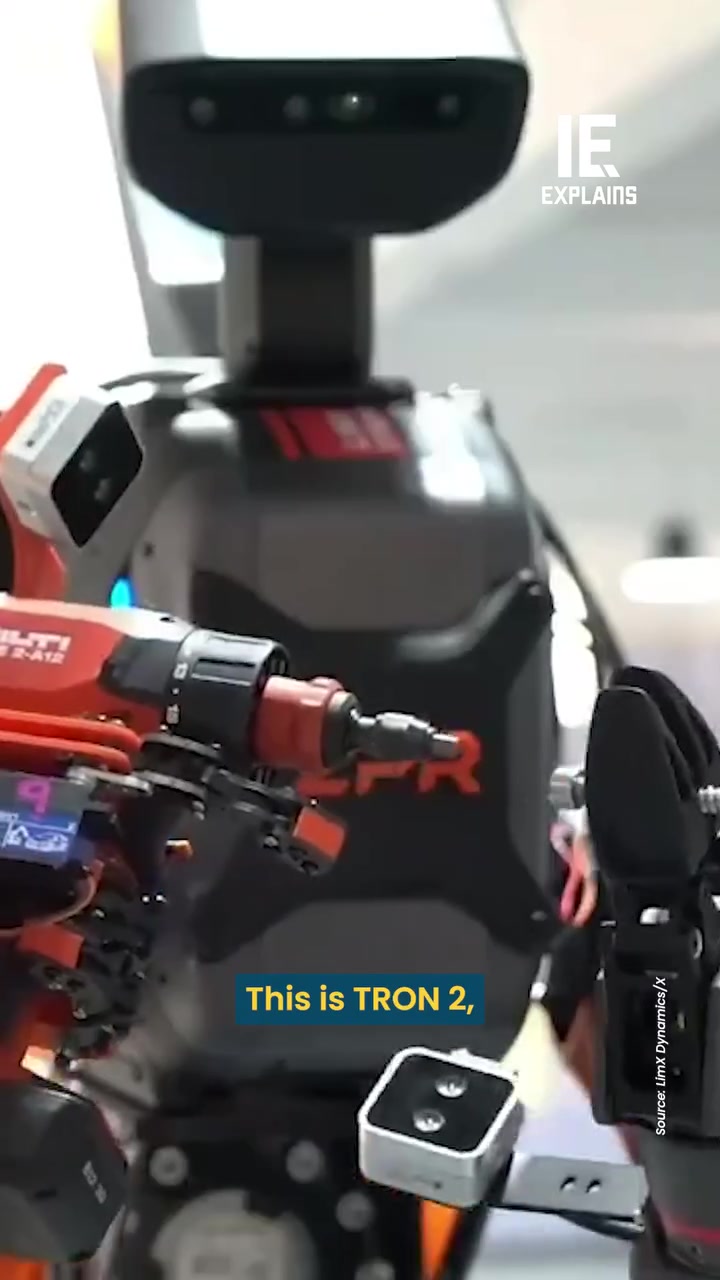
The robot that can do the job of one human crew. LimX Dynamics, based in China, has shown a new construction robot called Tron 2, which can use tools already on a site. Rebar tying robots have been around, but they only tie rebar or rebar intersections and ride on rails. Tron 2, on the other hand, moves around the workspace and uses different tools to complete different tasks.
The robotic handyman
In the construction industry, building a new machine for every job is not efficient. Instead, LimX Dynamics has developed a robot that can use tools and equipment already found on a construction site. Tron 2 can assemble formwork, lay multiple layers of concrete, and tie rebar intersections in a single workflow. This construction robot can perform different tasks at different heights and does so with high precision and accuracy. It can connect multiple steps of a job into one cohesive task. "Xenova calls it tool intelligence." This means that instead of building one robot to perform one task, the company has instead built a robot that can perform multiple tasks at a job site. However, the company is currently testing the robot at a scaled-down site and plans to use it for housing, retail, and data center construction. After that, it plans to use it to build the first structures on the Moon and Mars, demonstrating its versatility.
The future of construction is robotic
Construction sites are some of the most dangerous and inefficient workplaces in the world. Anything that can increase productivity while enhancing worker safety is a game changer. This is why automation in construction is set to grow to an industry worth USD 280.08 billion by 2025. Construction robotics is expected to have a compound annual growth rate of 16.26% in the same period. Robots like Tetrobot, MAX, and LimX Dynamics' Tron 2 are designed to handle multiple steps of a job. Each robot is designed to handle one step. A robotic arm that can do more than one task is a breakthrough in construction robotics. Adopting a robot like Tron 2 could simplify crew tasks, saving time, and costs, and reducing human error.
Automation is everywhere
Unleashing versatility
LIMX Dynamics' Tron 2 has two arms, seven joints each, 73 centimeters of reach, and half a millimeter of positioning accuracy. It swaps between wheeled legs for open ground and feet for stairs. The robot is designed to do more than one thing and to move around a workspace. The robot can handle multiple tasks at different heights and can connect multiple tasks into one connected job. This means that the robot can do the job of one human crew. The robot can use tools and perform tasks that are already on a construction site. We saw the robot assembling formwork, laying multiple layers of rebar, and tying the intersections
One robot, many robotic tasks
Giving a robot multiple functions is a strong aspect of Tron 2. The robot can handle multiple tasks across a jobsite. The robot can assemble formwork, lay multiple layers of rebar and tie intersections. One Tron 2 can handle one job across many steps.
Replaceable parts
Like many robots, Tron 2 can swap between tools. For this robot, that means it can replace legs for different terrain. Wheeled legs for open ground and feet for stairs. These modular parts make Tron 2 versatile and adaptable to a construction site
Staying put versus being mobile
Wheeled, then legged
Tron 2 switches between legs and wheels. This allows the robot to cover both open ground and stairs. Robots like TieBot ride on rails doing one thing. Tron 2 can move around the workspace and perform multiple tasks. The work done by one human crew can be handled by Tron 2. For instance, a human crew might assemble formwork, lay concrete, and tie rebar. Instead of building a new machine to perform each of these tasks, a crew could use Tron 2 to perform each of these tasks.
Don't fence in your robot
A robot that can use tools already found on a construction site is a more versatile robot. Tron 2 is not tied down by rails, it can move around the workspace. Tron 2 can work on different parts of the structure simultaneously, handling multiple tasks at a time, with different tools and at different heights.
Starting small, with big plans
Right now, LimX Dynamics is testing Tron 2 on a scaled-down site, casting concrete wall panels flat on the ground and then craning them upright into place. They aim to move onto the housing, retail, and data center construction market. They also have long-term plans of building structures on the moon and Mars. The robot has not been deployed in any live job site yet, but the company has demonstrated the robot's ability to handle many tools across many steps of a job.
Building and buying the next big thing
If you’re considering investing in construction robotics, a good place to start is by considering the power of tool intelligence. Tron 2 is a great example of how a robot can be used to perform multiple tasks on a construction site. Robotics in Construction Market Trends and Forecast – 2025 report, is a great resource for anyone interested in investing in construction robotics. It also highlights the growth of the market over the next decade and the potential impact of robots on the construction industry.
- Planning ahead: Tron 2 is designed to perform multiple tasks at different heights. This means that you can perform more than one task at a time, saving time and money.
- Versatile applications: Tron 2 can be used on various construction sites, from housing to data centers. This means that you can use the robot for multiple projects, making it a versatile investment.
- Safety and efficiency: Robots like Tron 2 can perform tasks that are dangerous or difficult for humans. This means that you can improve worker safety and efficiency on your construction sites.
Questions readers ask
What makes Tron 2 different from other construction robots like rebar tying robots?
Tron 2 stands out because it can perform multiple tasks using tools already present on a construction site. Unlike specialized robots that only handle one specific task, like tying rebar, Tron 2 can assemble formwork, lay concrete, and tie rebar intersections. It moves freely around the workspace, making it more versatile and efficient.
How does Tron 2's design help it perform multiple tasks?
Tron 2 is equipped with two robotic arms, each with seven joints and a reach of 73 centimeters, allowing it to handle tasks with high precision. It can swap between wheeled legs for open ground and feet for stairs, making it adaptable to different terrains on a construction site. This design enables it to perform various tasks at different heights and connect multiple steps of a job into one cohesive workflow.
What kind of tasks can Tron 2 handle on a construction site?
Tron 2 can handle a variety of tasks, including assembling formwork, laying multiple layers of concrete, and tying rebar intersections. Its ability to use tools already on site and switch between different tools makes it a versatile addition to any construction crew.
What are the benefits of using Tron 2 on a construction site?
By using Tron 2, construction sites can increase productivity and enhance worker safety. The robot can simplify crew tasks, saving time and costs, and reducing human error. It can perform the job of one human crew, making it a valuable asset in improving efficiency and safety on construction sites.
Can Tron 2 be used for construction in space?
LimX Dynamics has ambitious plans for Tron 2, including using it to build the first structures on the Moon and Mars. While it is currently being tested at a scaled-down site, the company envisions its versatility and adaptability making it suitable for extraterrestrial construction projects.
How does Tron 2's tool intelligence work?
Tool intelligence in Tron 2 refers to its ability to use different tools and equipment already present on a construction site. Instead of needing a new robot for each task, Tron 2 can perform multiple tasks by swapping between tools, making it a more efficient and cost-effective solution for construction sites.
What are the potential limitations of Tron 2 in construction?
While Tron 2 offers significant advantages, it is still being tested at a scaled-down site. Potential limitations could include the complexity of integrating it into existing construction workflows, the need for specialized training for workers to operate it, and the initial cost of acquiring and maintaining the robot. Additionally, its effectiveness in extreme environments like space has yet to be fully proven.
Related deep dives
Similar reads based on topic and creator.
Recent articles
Fresh deep dives from the latest Reels we unpacked.

Comments
Be the first to comment.