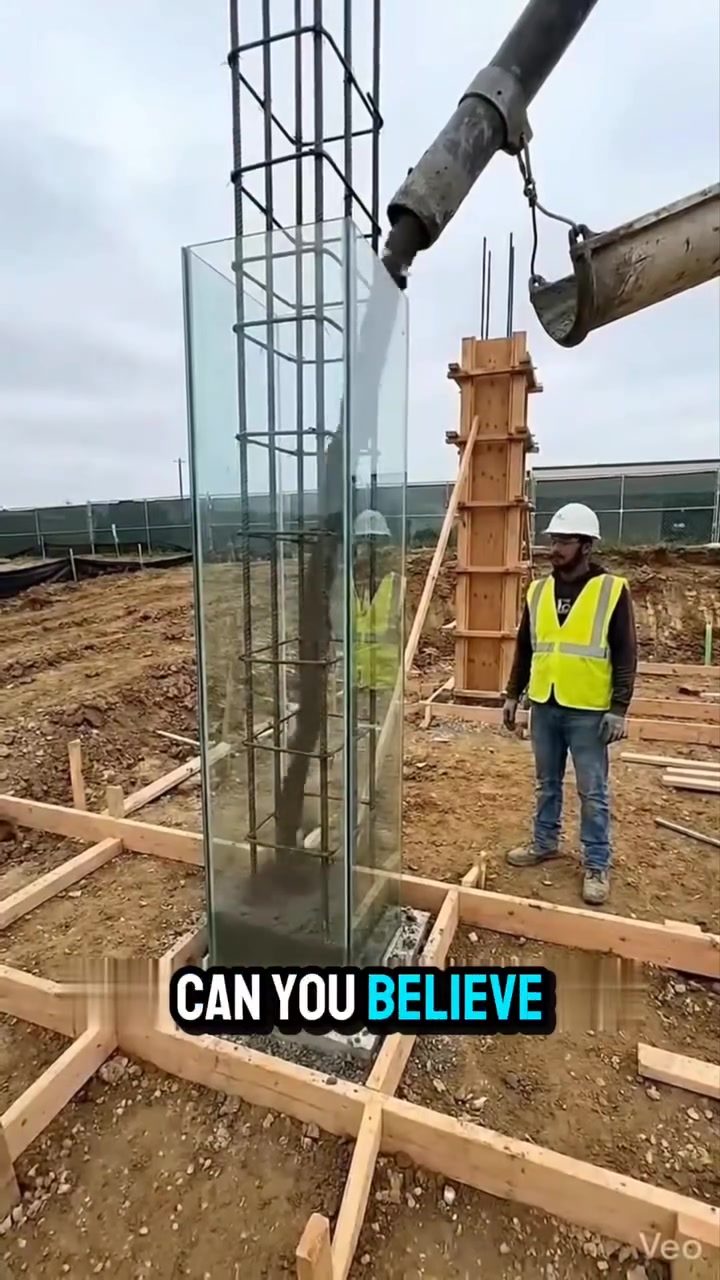
Transparent concrete formwork is transforming the way construction projects are executed. This innovative approach involves using glass-like transparent molds instead of traditional wooden formwork. By making the concrete pouring process visible, this technology offers significant advantages in quality control and efficiency.
Why This Matters
In construction, the pouring of concrete is a critical step that, if not done correctly, can compromise the structural integrity of a building. Traditional methods often involve guessing and checking, leading to potential issues like voids, honeycombing, and incomplete filling. Transparent concrete formwork, such as that used by VEO, addresses these challenges by providing real-time visibility into the pouring process.
The Science behind Transparent Concrete Formwork
Traditional Methods vs. Transparent Formwork
Traditional wooden formwork has been the standard for decades. It is affordable and readily available, but it has its limitations. The opaque nature of wood means that workers can only guess at the quality of the concrete pour until the formwork is removed. This can lead to costly repairs and delays if issues are discovered late in the process.
Transparent concrete formwork, on the other hand, uses glass-like panels that allow workers to see the concrete as it is poured. This real-time visibility provides immediate feedback on the pouring process, enabling workers to identify and correct issues on the spot. The most common transparent panels are made from acrylic or other durable, see-through materials.
Real-Time Inspection
One of the biggest advantages of transparent concrete formwork is the ability to conduct real-time inspections. Workers can see exactly where the concrete is being poured, identify air bubbles, and ensure that the concrete has fully filled the form. This level of visibility is particularly useful in complex structures packed with reinforcement, where traditional methods might leave hidden defects.
The use of transparent panels also helps in assessing the effectiveness of vibration. By observing the concrete flow, workers can determine if the vibration is reaching every area and adjust as necessary. This is crucial in preventing voids and honeycombing, which can significantly weaken the structure.
Enhancing Quality Control
With transparent concrete formwork, the guessing game of traditional methods is replaced with real-time visual inspection. Workers can immediately spot problems and take corrective action. For example, if a void or honeycomb is detected, the concrete can be re-vibrated to eliminate the issue. This proactive approach to quality control helps ensure that the final structure is sound and free from defects.
Practical Tips for Using Transparent Concrete Formwork
Choosing the Right Material
When selecting transparent formwork, it is essential to choose a material that is both durable and clear. Acrylic is a popular choice due to its strength and transparency. Ensure that the material is resistant to the chemicals and pressures involved in concrete pouring.
Proper Installation
Proper installation of transparent formwork is crucial for effective use. The panels should be securely fastened to prevent movement during the pouring process. Additionally, ensure that the panels are level and aligned correctly to maintain the structural integrity of the formwork.
Monitoring the Pouring Process
During the pouring process, continuously monitor the concrete flow. Keep an eye out for air bubbles, uneven filling, and any signs of inadequate vibration. Address any issues promptly to maintain the quality of the pour.
Post-Pouring Inspection
After the concrete has been poured, conduct a thorough inspection of the formwork. Look for any signs of stress or damage that could compromise future pours. Proper maintenance and inspection will extend the lifespan of the transparent formwork and ensure its reliability.
Important Takeaways
Transparent concrete formwork represents a significant advancement in construction technology. By providing real-time visibility into the concrete pouring process, it enhances quality control, reduces guesswork, and helps identify and correct issues more efficiently. This technology is particularly beneficial in complex structures where traditional methods might fall short.
Construction projects that adopt transparent concrete formwork can experience improved structural integrity, reduced repair costs, and faster completion times. As the demand for high-quality, efficient construction methods continues to grow, transparent concrete formwork is poised to become a standard in the industry.
Conclusion
The shift from traditional wooden formwork to transparent concrete formwork is a game-changer in the construction industry. This innovative approach offers unparalleled visibility into the concrete pouring process, enabling real-time inspections and improving quality control. By adopting this technology, construction projects can achieve higher standards of structural integrity and efficiency, ultimately leading to better outcomes for both contractors and clients.
Questions readers ask
How does transparent concrete formwork improve construction quality control?
Transparent concrete formwork enhances construction quality control by allowing workers to monitor the concrete pouring process in real-time. This immediate visibility helps in quickly identifying and rectifying issues such as voids, honeycombing, and incomplete filling, which can compromise the structural integrity of buildings. Therefore, it ensures a higher standard of concrete quality.
What are the benefits of using glass formwork for concrete pouring?
Glass formwork for concrete pouring offers several benefits, including improved visibility during the concrete pouring process. This allows workers to inspect the concrete in real-time, ensuring that it is properly placed and compacted. Additionally, glass formwork can be reused, making it a sustainable and cost-effective choice for construction projects.
Can you explain how transparent formwork helps in detecting concrete voids?
Transparent formwork helps in detecting concrete voids by providing a clear view of the concrete as it is poured. Workers can immediately see any air pockets or voids forming within the concrete, allowing them to take corrective actions promptly. This real-time inspection ensures that the final structure is free from voids, enhancing its overall strength and durability.
How does real-time concrete inspection with transparent formwork benefit construction processes?
Real-time concrete inspection with transparent formwork benefits construction processes by enabling immediate identification and correction of issues during the concrete pouring phase. This proactive approach minimizes the need for costly repairs and rework, speeds up the construction timeline, and ensures that the concrete reinforcement is properly placed and secured.
What are the advantages of transparent concrete molds in construction site monitoring?
Transparent concrete molds provide a clear view of the concrete as it is poured, allowing construction site supervisors to monitor the process closely. This real-time monitoring helps in ensuring that the concrete is evenly distributed, properly compacted, and free from defects. Additionally, it enables better management of concrete placement and curing, improving overall construction site efficiency.
How does transparent concrete formwork contribute to improved concrete pouring?
Transparent concrete formwork contributes to improved concrete pouring by offering clear visibility into the mold during the pouring process. This allows workers to observe the flow of concrete, ensuring that it fills the mold completely and evenly. By detecting and addressing issues in real-time, it helps in achieving a more uniform and robust concrete structure.
What role does real-time construction quality play in using transparent concrete formwork?
Real-time construction quality is crucial when using transparent concrete formwork as it allows for immediate assessment and correction of any issues during the concrete pouring process. By enabling on-the-spot adjustments, it ensures that the concrete is perfectly placed and compacted, enhancing the overall quality and strength of the structure.
Related deep dives
Similar reads based on topic and creator.

Recent articles
Fresh deep dives from the latest Reels we unpacked.




Comments
Be the first to comment.