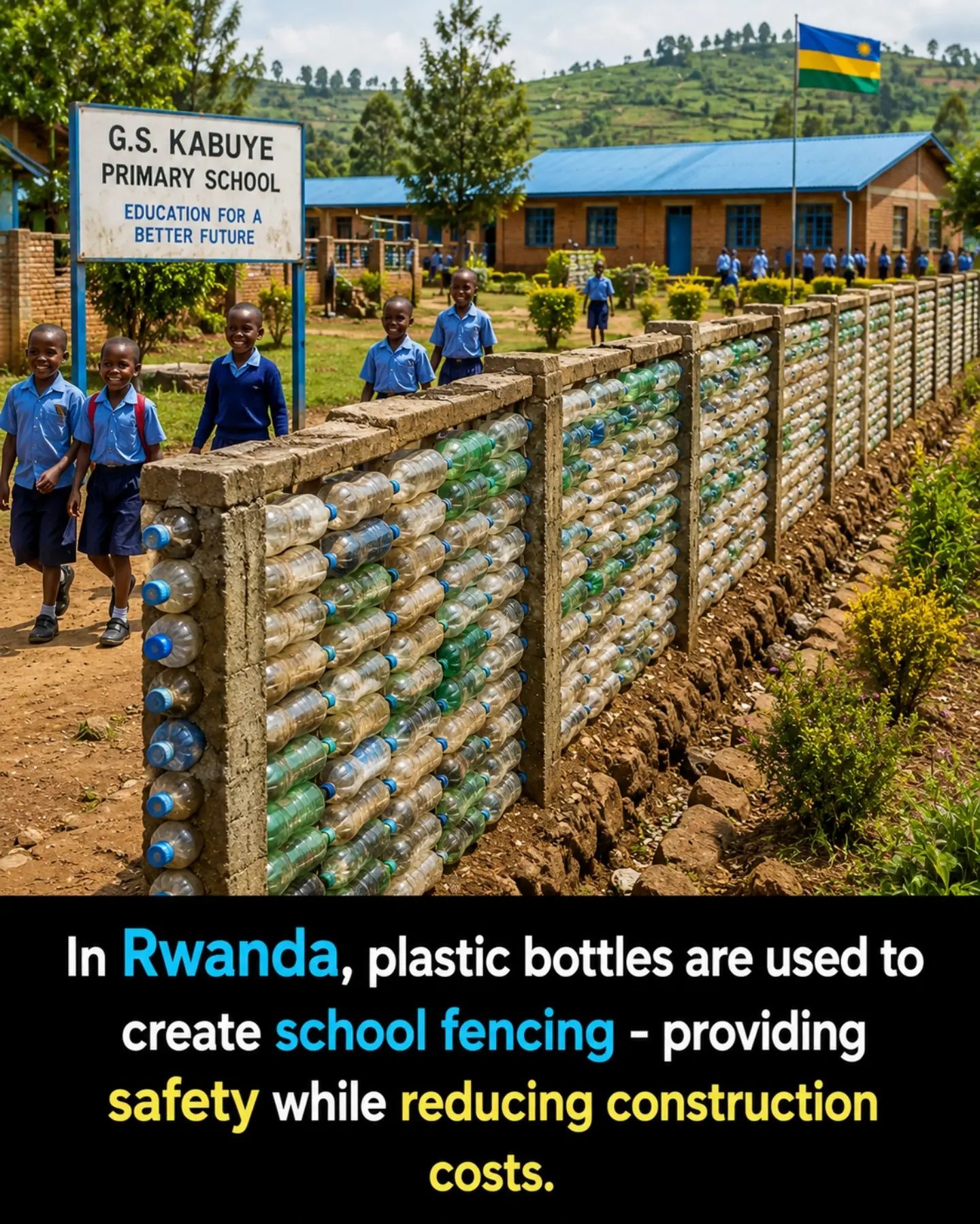
School fencing is a critical aspect of school infrastructure, providing safety and security for students. In Rwanda, an innovative approach to school fencing has emerged, utilizing plastic bottles to create durable and cost-effective barriers.
Context / Why this matters
The traditional methods of constructing school fences often involve significant financial investment and resources, which can be a burden for educational institutions, especially in developing countries. However, the use of plastic bottles for fencing offers a sustainable and economical solution. This approach not only addresses the environmental issue of plastic waste but also ensures the safety of students while reducing construction costs.
Main discussion
The Rwandan Initiative
At G.S. Kabuye Primary School in Rwanda, the implementation of plastic bottle fencing has set a remarkable example. This school has embraced a unique and environmentally conscious method of constructing its fence, using recycled plastic bottles. The initiative showcases how innovative thinking can transform waste into a valuable resource, benefiting both the environment and the educational institution.
Benefits of Plastic Bottle Fencing
-
Cost-Effective: One of the primary advantages of using plastic bottles for fencing is the significant reduction in construction costs. Traditional fencing materials like metal or concrete can be expensive, but plastic bottles are readily available and often discarded as waste. Repurposing these bottles for fencing eliminates the need for expensive materials, making it a cost-effective solution for schools with limited budgets.
-
Environmentally Friendly: The use of plastic bottles for fencing also contributes to environmental sustainability. By repurposing plastic waste, schools can reduce the amount of plastic ending up in landfills or polluting the environment. This initiative aligns with broader global efforts to minimize plastic waste and promote recycling.
-
Durability and Safety: Despite being made from recycled materials, plastic bottle fencing is surprisingly durable. The construction method involves filling the bottles with sand or other materials to create a sturdy barrier. This ensures that the fence provides adequate safety and security for students, protecting them from potential hazards.
-
Community Engagement: Implementing plastic bottle fencing can also foster community engagement. Local communities can participate in the collection and preparation of plastic bottles, creating a sense of ownership and involvement in the school's infrastructure development. This can strengthen community ties and promote a culture of sustainability and environmental responsibility.
The Construction Process
The process of constructing a plastic bottle fence involves several steps:
-
Collection: The first step is to collect a sufficient number of plastic bottles. These can be sourced from local communities, schools, and households, encouraging widespread participation in the initiative.
-
Preparation: The collected bottles are then cleaned and prepared for construction. This may involve removing labels, rinsing, and drying the bottles to ensure they are free of contaminants.
-
Filling: The bottles are filled with sand, soil, or other materials to provide weight and stability. This step is crucial for ensuring the durability of the fence.
-
Assembly: The filled bottles are arranged in a specific pattern and secured together using ropes, wires, or other binding materials. The assembly process requires careful planning to ensure the fence is sturdy and effective.
Case Study: G.S. Kabuye Primary School
G.S. Kabuye Primary School in Rwanda has successfully implemented plastic bottle fencing, demonstrating the practicality and benefits of this innovative approach. The school's fence, constructed from repurposed plastic bottles, provides a secure environment for students while reducing construction costs. The initiative has not only enhanced the school's infrastructure but also raised awareness about environmental sustainability and community involvement. The school serves as a model for other educational institutions looking to adopt similar eco-friendly and cost-effective solutions.
Practical tips
For schools interested in adopting plastic bottle fencing, the following practical tips can help ensure a successful implementation:
-
Community Involvement: Engage the local community in the collection and preparation of plastic bottles. This not only reduces the school's workload but also fosters a sense of ownership and responsibility within the community.
-
Resource Planning: Plan the resource requirements carefully, including the number of bottles needed, filling materials, and binding supplies. Ensure that all materials are readily available and sourced sustainably.
-
Design and Construction: Consult with experts or experienced individuals to design and construct the fence effectively. Proper planning and construction techniques are essential for ensuring the durability and safety of the fence.
-
Maintenance: Regularly inspect and maintain the fence to address any issues promptly. This includes checking the stability of the bottles, securing loose connections, and repairing any damages.
-
Promotion: Share the success story and benefits of plastic bottle fencing with other schools and communities. This can inspire others to adopt similar initiatives and promote environmental sustainability.
Important takeaways
Plastic bottle fencing offers a sustainable and cost-effective solution for schools looking to enhance their infrastructure while minimizing environmental impact. The initiative at G.S. Kabuye Primary School in Rwanda demonstrates the feasibility and benefits of this approach. By repurposing plastic waste, schools can reduce construction costs, promote environmental sustainability, and foster community engagement. The success of this initiative underscores the potential for innovative and eco-friendly solutions in educational infrastructure development.
Conclusion
School fencing is a crucial aspect of ensuring the safety and security of students. The use of plastic bottles for constructing fences provides a viable and sustainable alternative to traditional methods. By embracing innovative solutions, schools can not only enhance their infrastructure but also contribute to environmental sustainability and community development. The implementation of plastic bottle fencing at G.S. Kabuye Primary School serves as an inspiring example, demonstrating the practicality and benefits of this approach. Schools around the world can learn from this initiative and adopt similar eco-friendly solutions to create safer and more sustainable educational environments.
Questions readers ask
How does Rwanda's plastic bottle fencing initiative benefit the environment?
Rwanda's plastic bottle fencing initiative significantly reduces plastic waste by repurposing discarded bottles. This approach helps keep plastic out of landfills and the environment, promoting a cleaner and healthier ecosystem. Additionally, it sets a positive example for sustainable waste management practices.
What are the primary advantages of using plastic bottles for school fencing?
The primary advantages include cost savings, durability, and environmental sustainability. Plastic bottle fences are a cost-effective alternative to traditional fencing methods, and they provide a sturdy barrier for school safety. Moreover, by reusing plastic bottles, schools contribute to waste reduction and environmental conservation.
How does the plastic bottle fencing impact school safety in Rwanda?
The plastic bottle fencing enhances school safety by providing a secure barrier around school premises. This helps prevent unauthorized access and ensures that students are protected within the school grounds. The fences are designed to be sturdy and long-lasting, offering reliable security for students.
Can the plastic bottle fencing method be replicated in other countries?
Yes, the plastic bottle fencing method can be replicated in other countries, especially those facing similar challenges with plastic waste and school infrastructure. The materials are readily available, and the construction process is straightforward, making it accessible for various regions. Successful implementation depends on local support and resource availability.
What kind of plastic bottles are typically used for this fencing method?
The fencing method typically uses commonly discarded plastic bottles, such as those used for water and soda. These bottles are cleaned, filled with inert materials like sand or soil for stability, and then secured together to create a sturdy fence. The use of readily available waste materials makes this method both eco-friendly and cost-effective.
Are there any videos or resources available to learn more about Rwanda's plastic bottle fencing?
Yes, there are several videos and resources available online that demonstrate the construction process and benefits of Rwanda's plastic bottle fencing. These resources provide visual guidance on how to build the fences and showcase the positive impact on both the environment and school safety. Searching for 'plastic bottle fencing video' can yield helpful results.
How is the durability of plastic bottle fences ensured?
The durability of plastic bottle fences is achieved through a combination of filling the bottles with sand or soil for stability and securing them together with strong, weather-resistant materials. This construction method ensures that the fences can withstand various weather conditions and remain intact over time, providing long-lasting security for schools.
Related deep dives
Similar reads based on topic and creator.




Recent articles
Fresh deep dives from the latest Reels we unpacked.




Comments
Be the first to comment.