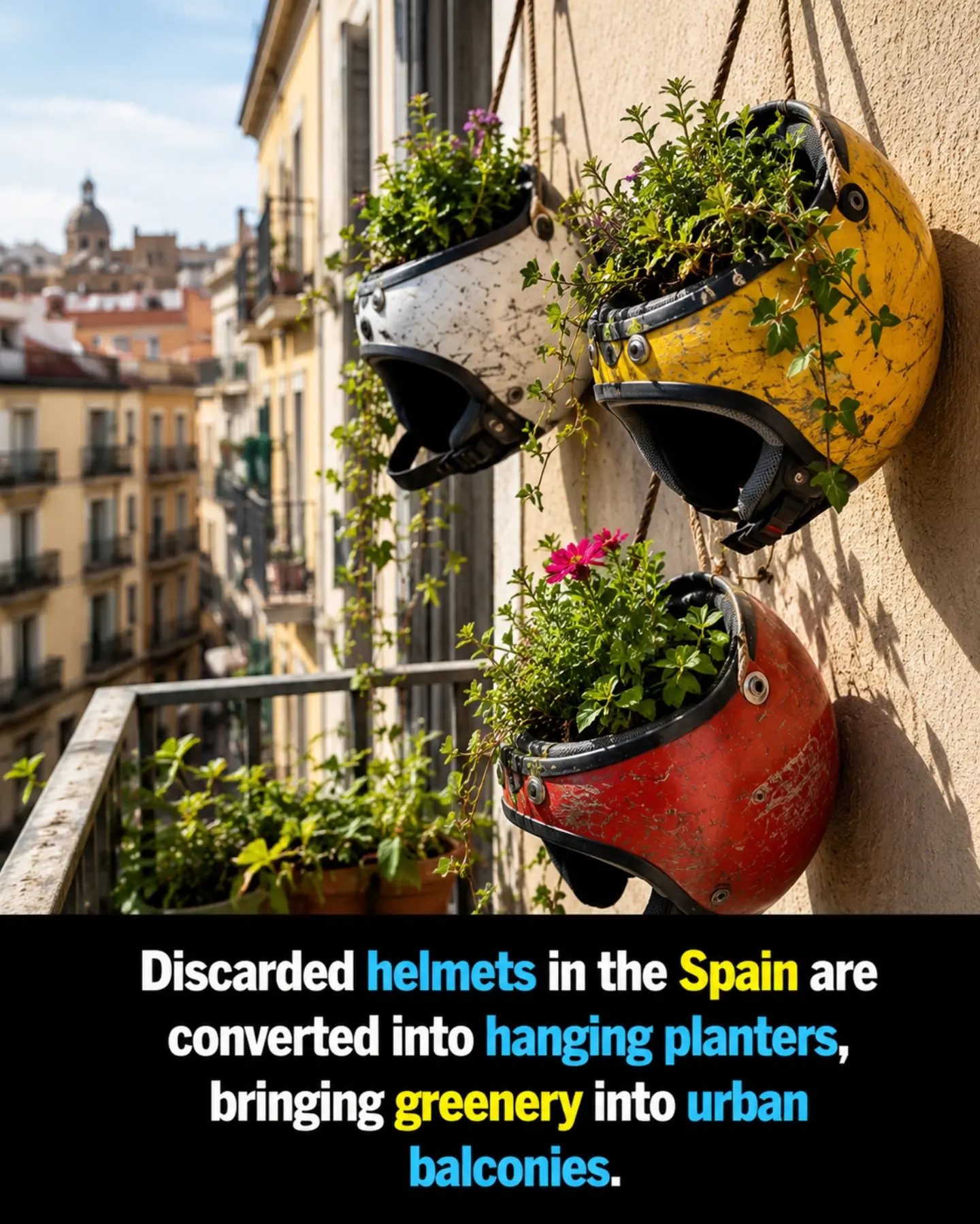
Upcycled Helmet Planters
Transforming discarded helmets into hanging planters not only adds a touch of greenery to urban balconies but also embodies the principles of upcycling and sustainable gardening.
Context/Why this Matters
Urban gardening is increasingly important as more people live in cities. Balconies and small outdoor spaces become vital for growing plants and greenery. Additionally, the concept of upcycling—reusing and repurposing items instead of discarding them—promotes sustainability and reduces waste. By combining these two ideas, helmet planters offer a creative and eco-friendly solution for urban gardening.
Helmets, especially for bicycle helmets, have a specific lifespan. Once deemed unsafe for use, they are often discarded. This upcycling approach gives these helmets a new purpose, thus diverting them from landfills and giving them a new purpose in a way that benefits modern life.
Main discussion
The Benefits of Upcycled Planters
Upcycled helmet planters offer several benefits beyond just aesthetics. They are durable, weather-resistant, and can withstand the elements, making them ideal for outdoor use. The unique shape and design of helmets make them perfect for hanging, which is great for small spaces like balconies or patios. Additionally, using upcycled materials reduces the need for new resources, contributing to a more sustainable lifestyle.
How to Create Your Own Helmet Planters
Creating your own helmet planters is a straightforward DIY project. Here’s a general guide to help you get started:
-
Choose the Right Helmet: Select a helmet that is no longer safe to use. Bike helmets are particularly well-suited for this project due to their shape and durability. Avoid using helmets that show signs of significant damage, as they may not be safe to handle even for upcycling purposes.
-
Clean the Helmet: Thoroughly clean the helmet to remove any dirt or residue. This step ensures that your plants have a clean environment to grow in.
-
Prepare the Helmet: Drill or cut holes in the helmet for drainage. This is crucial to prevent waterlogging, which can harm the plants. You can also add a layer of gravel or small pebbles at the bottom of the helmet to further improve drainage.
-
Paint and Decorate: Paint the helmet in your desired color to match your balcony or patio decor. You can also add embellishments like ribbons or stickers for a more personalized touch. Ensure you use paint that is safe for outdoor use and will not harm the plants.
-
Plant Your Greenery: Fill the helmet with potting soil and plant your chosen greenery. Choose plants that are suitable for the amount of sunlight your balcony receives. Most herbs, small flowers, and succulents are great options for helmet planters.
-
Hang the Planter: Attach a sturdy rope or chain to the helmet and hang it from the balcony railing or ceiling. Ensure the planter is securely fastened to prevent accidents.
Plants that Thrive in Helmet Planters
When selecting plants for your helmet planters, consider the following options that thrive in small spaces and varying light conditions:
- Succulents: These plants require minimal water and can tolerate varying light conditions, making them ideal for helmet planters.
- Herbs: Herbs like basil, mint, and rosemary grow well in small spaces and can add a fragrant touch to your balcony.
- Small Flowers: Flowers like petunias, marigolds, and pansies can add a pop of color and are well-suited for hanging planters.
Practical tips
-
Maintenance: Regularly water and care for your plants to ensure they thrive. Check for signs of pests or diseases and address them promptly.
-
Drainage: Ensure your helmet planter has adequate drainage to prevent waterlogging. This can be achieved by drilling holes and adding a layer of gravel at the bottom.
-
Sunlight: Place your helmet planter in a location that receives the appropriate amount of sunlight for your chosen plants. Most herbs and small flowers require at least 4-6 hours of sunlight per day.
-
Security: Make sure the hanging mechanism is secure to prevent accidents. Use sturdy ropes or chains and check the attachment points regularly.
Important takeaways
-
Sustainability: Upcycled helmet planters are an eco-friendly way to add greenery to urban spaces. By repurposing old helmets, you reduce waste and contribute to a more sustainable lifestyle.
-
Versatility: These planters are versatile and can be used in various settings, from balconies to patios. They are durable, weather-resistant, and can withstand the elements.
-
DIY Project: Creating helmet planters is a fun and rewarding DIY project. It allows you to customize your gardening space and add a personal touch to your outdoor decor.
-
Benefits for Urban Gardening: In small urban spaces, hanging planters like these are a practical solution for growing plants and adding greenery.
Conclusion
Upcycled helmet planters are not just a creative way to add greenery to your urban balcony; they also embody the principles of sustainability and upcycling. By repurposing old helmets into functional and aesthetically pleasing planters, you can create a unique and eco-friendly gardening solution. Whether you're a seasoned gardener or a beginner, helmet planters offer a rewarding DIY project that benefits both your space and the environment.
Questions readers ask
How do upcycled helmet planters benefit urban living?
Upcycled helmet planters bring nature into small urban spaces like balconies, promoting sustainability. They also contribute to waste reduction by repurposing old helmets, making them an eco-friendly choice for city dwellers.
What types of helmets can be used to create hanging planters?
Bicycle helmets are commonly used for this DIY project due to their sturdy construction and availability. Other helmets such as sports helmets can also be repurposed, provided they are clean, dry, and free from major damages.
How can I make upcycled helmet planters at home?
To create upcycled helmet planters, you'll need a helmet, a drilling tool, and some plants with small root systems. Drill drainage holes into the helmet, paint or decorate it if desired, add a hanging mechanism, and fill it with potting soil and your chosen plants.
What plants are suitable for upcycled helmet planters?
Choose plants that thrive in containers and have shallow root systems, such as succulents, herbs, or small flowers. These plants are well-suited for the limited space and soil depth of helmet planters.
How do upcycled helmet planters promote sustainable city living?
By repurposing old helmets, you reduce waste and keep usable materials out of landfills. Additionally, adding greenery to urban balconies can help improve air quality and create a more pleasant living environment.
Can upcycled helmet planters withstand outdoor weather conditions?
Helmets are designed to be durable, which makes them suitable for outdoor use. However, consider the local climate and choose plants that can thrive in your specific conditions. Also, ensure the helmet has proper drainage to prevent waterlogging.
Where can I find tutorials or videos on creating upcycled helmet planters?
Search online for upcycled planters video tutorials. Many DIY enthusiasts and gardeners share their experiences and step-by-step guides on creating these unique planters. You can find these resources on platforms like YouTube and various DIY blogs.
Related deep dives
Similar reads based on topic and creator.



Recent articles
Fresh deep dives from the latest Reels we unpacked.



Comments
Be the first to comment.