European Travel Routes
Exploring Europe by train and ferry offers a unique way to experience the continent's rich diversity. From the bustling streets of Prague to the serene canals of Venice, each route provides a glimpse into the culture, history, and natural beauty of different regions.
Why European travel routes matter
Traveling by train and ferry not only allows for a more immersive experience but also provides a convenient and eco-friendly way to explore multiple cities. Whether you're a seasoned traveler or planning your first European adventure, understanding the various routes and travel times can help you make the most of your journey.
Main discussion
Popular European train routes
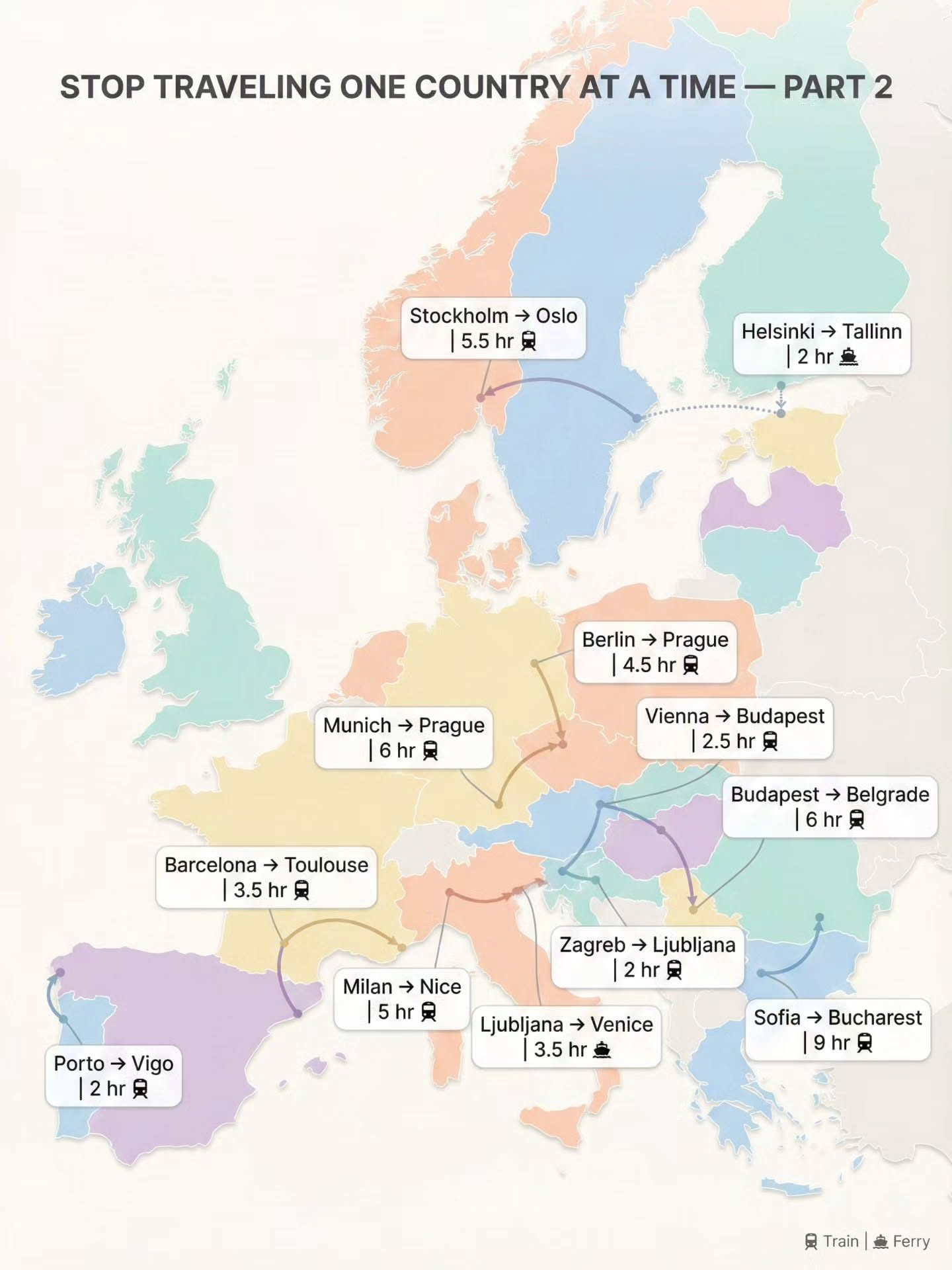
Helsinki to Tallinn — A short 2-hour ferry ride connects these two vibrant Baltic capitals. Helsinki, the Finnish capital, offers a mix of modern and historic attractions, while Tallinn, in Estonia, is known for its medieval old town and cobblestone streets. This route is perfect for a weekend getaway, allowing you to experience two distinct cultures in a short amount of time.
Stockholm to Oslo — Traveling between these Scandinavian capitals takes about 5.5 hours by train. Stockholm, with its stunning archipelago and rich Viking history, and Oslo, home to the Viking Ship Museum and the Vigeland Sculpture Park, offer a blend of urban and natural beauty.
Berlin to Prague — This 4.5-hour train journey takes you from the energetic streets of Berlin to the enchanting city of Prague. Berlin, known for its vibrant arts scene and historical landmarks, contrasts beautifully with Prague's fairytale architecture and rich cultural heritage.
Porto to Vigo — A 2-hour train ride connects the charming coastal cities of Porto and Vigo. Porto, in Portugal, is famous for its port wine and historic Ribeira district, while Vigo, in Spain, offers beautiful beaches and fresh seafood.
Barcelona to Toulouse — This 3.5-hour train journey takes you from the vibrant city of Barcelona, known for its unique architecture and lively nightlife, to the charming city of Toulouse, famous for its historic center and a rich cultural scene.
Scenic train and ferry journeys
Vienna to Budapest — A 2.5-hour journey by train connects these two beautiful cities in Central Europe. Vienna, the Austrian capital, is renowned for its classical music and elegant architecture. Budapest, the Hungarian capital, offers a mix of historic sites, thermal baths, and lively nightlife.
Munich to Prague — Traveling by train from Munich, Germany, to Prague, Czech Republic, takes approximately 6 hours. This route is a popular option for travelers looking to experience both the Bavarian culture and the historic charm of Prague. Munich, known for its beer halls and the famous Oktoberfest, offers a unique blend of tradition and modernity.
Budapest to Belgrade — This 6-hour train journey takes you from the vibrant city of Budapest to the historic city of Belgrade. Budapest, with its stunning architecture and rich culture, contrasts with Belgrade's dynamic nightlife and historic landmarks.
Zagreb to Ljubljana — A 2-hour train journey connects these two intriguing cities. Zagreb, the Croatian capital, is known for its rich history and vibrant cultural scene, while Ljubljana, the Slovenian capital, offers a blend of medieval and modern architecture along with scenic parks and lively markets.
Longer journeys for the adventurous
Sofia to Bucharest — This 9-hour train journey allows you to explore the vibrant cities of Sofia and Bucharest. Sofia, the Bulgarian capital, offers a rich history and stunning architecture, while Bucharest, the Romanian capital, is known for its historic landmarks, vibrant nightlife, and delicious cuisine.
Nice to Toulouse — A train journey from Nice, a glamorous city on the French Riviera, to Toulouse, a city known for its rich cultural heritage and historic sites, takes around 5 hours.
Barcelona to Nice — This 5-hour train journey takes you from Barcelona to Nice. Barcelona, with its vibrant culture and stunning architecture, contrasts beautifully with the glamorous and picturesque city of Nice, located on the French Riviera.
Ljubljana to Venice — This 3.5-hour train journey takes you from the historic city of Ljubljana to the enchanting city of Venice. Both cities offer a wealth of cultural and architectural treasures, providing a unique and memorable travel experience.
It is sometimes better to see one country at a time, to allow you to explore each destination more fully.
Practical tips
Plan your route in advance — Researching and planning your travel routes ahead of time can save you time and stress. Consider the time of year and any local events or festivals that might impact your journey. Be sure to check the train and ferry schedules to ensure a smooth and enjoyable trip.
Pack efficiently — When traveling by train and ferry, especially for longer journeys, packing efficiently is key. Opt for a comfortable and compact travel bag that allows you to move around easily. Don't forget essentials like a reusable water bottle, snacks, a travel pillow, and a portable charger.
Be flexible with your schedule — While it's important to plan, being flexible with your schedule can enhance your travel experience. Allow for some spontaneous adventures and unexpected discoveries. This mindset can lead to unforgettable moments and a deeper connection with the places you visit.
Stay safe and informed — Always stay informed about local customs, safety guidelines, and any travel advisories for the destinations you plan to visit. Keep your travel documents and emergency contact information handy, and be aware of your surroundings to ensure a safe and enjoyable journey.
Important takeaways
European travel routes offer a diverse and enriching experience for travelers. Depending on your preferences, you can choose from shorter, convenient journeys or longer, more adventurous trips. Each route provides unique opportunities to explore the rich history, vibrant culture, and natural beauty of Europe's cities.
Train and ferry travel not only allows you to see more of the continent but also provides a comfortable and eco-friendly way to get around. By planning your routes in advance, packing efficiently, staying flexible, and being informed, you can make the most of your European adventure and create lasting memories.
Conclusion
Exploring Europe by train and ferry is an exciting way to discover the continent's diverse landscapes, rich history, and vibrant cultures. From the charming streets of Prague to the glamorous coasts of Nice, each journey offers a unique and memorable experience. Whether you're a seasoned traveler or planning your first European adventure, understanding the various routes and travel times can help you make the most of your journey and create unforgettable memories.
Questions readers ask
What are some popular train routes in Europe for exploring multiple cities?
Some of the most popular train routes in Europe include the journey from Prague to Vienna, which takes approximately 4 hours and offers a delightful mix of historic sites and cultural experiences. Another popular route is from Berlin to Amsterdam, a scenic 6.5-hour trip that connects two vibrant cities with rich histories. Also, consider the journey from Rome to Venice, a 3.5-hour trip that showcases the diverse landscapes and iconic landmarks of Italy.
Are there any notable ferry routes in Europe that connect major cities or regions?
Yes, ferry travel in Europe offers unique connections. One notable route is from Lisbon to Vigo, a 6.5-hour ferry ride that takes you from Portugal's capital to a charming coastal city in Spain. Another popular route is from Helsinki to Tallinn, a 2-hour ferry ride connecting two dynamic cities known for their rich histories and cultural heritage.
How do I plan my train travel in Europe, and what should I consider in terms of travel times and connections?
Planning your train travel in Europe involves understanding the schedules and connections between major cities. Use online resources, apps, or a European train and ferry route map to find the best routes and travel times. Be sure to consider factors like layovers, meal stops, and the overall duration of your journey to ensure a smooth and enjoyable experience. Train travel times in Europe often vary by route, and purchasing tickets in advance can often secure better prices.
Are there any specific routes that are particularly scenic and offer a great way to see Europe's natural beauty?
Certainly, there are many routes that offer stunning views. For example, the train journey from Paris to Nice takes you through the beautiful French countryside and the stunning coastal views of the French Riviera. Also, the train from Milan to Zurich provides breathtaking views of the Swiss Alps. And the ferry from Stockholm to Helsinki offers stunning views of the Baltic Sea and the chance to see both countries' coastlines.
How can I make my European train and ferry travel more eco-friendly?
Choosing train and ferry travel over flying is already a step towards making your journey more eco-friendly. Additionally, opt for overnight journeys to save on accommodations and reduce your carbon footprint. Pack light, bring reusable items and be mindful of your waste on board. Finally, support local sustainability efforts and choose eco-friendly travel options when available.
What are the benefits of traveling by train and ferry in Europe compared to other modes of transportation?
Traveling by train and ferry in Europe provides a more immersive and relaxed experience compared to flying. You get to see diverse landscapes, experience different regions and cities up close, and enjoy the convenience of traveling directly from city center to city center. Additionally, trains and ferries are often more affordable and have a lower environmental impact compared to air travel, making them a sustainable choice.
Related deep dives
Similar reads based on topic and creator.




Recent articles
Fresh deep dives from the latest Reels we unpacked.



Comments
Be the first to comment.