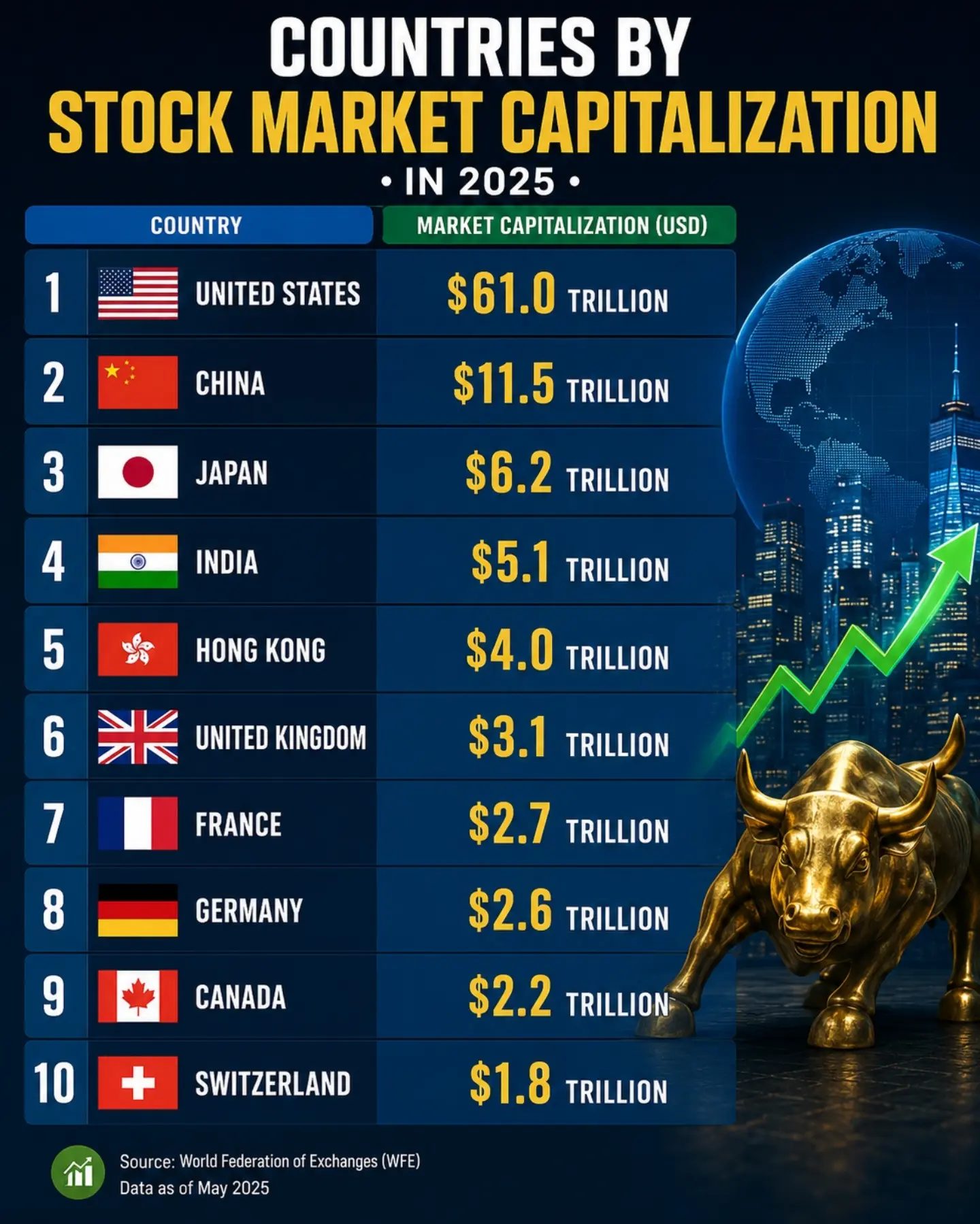
Stock Market Capitalization by Country in 2025
An up-to-date understanding of stock market capitalization by country is essential for investors, economists, and businesses looking to gauge economic strength. In 2025, the United States maintains its dominant position, followed by a diverse array of countries, each with significant financial clout. Here's a breakdown of the top ten countries and what their rankings reveal.
Global Context
Understanding stock market capitalization allows investors and financial analysts to evaluate the overall health and potential of a country's economy. It reflects the total value of all publicly traded companies within a country. This ranking provides insights into the economic influence and market maturity of each nation.
Market capitalization isn't just a number; it’s a barometer of economic strength. High capitalization often indicates robust financial markets, investor confidence, and a stable economic environment. Conversely, rapid growth or decline can signal economic shifts or market dynamics that warrant closer examination.
The Top 10: The United States
The United States leads the pack with an impressive $61.0 trillion market capitalization. This dominance is a testament to the country's robust financial markets, strong regulatory frameworks, and diverse range of industries. From technology giants to established financial institutions, the U.S. stock market is home to some of the world's most valuable companies.
The Top 10: China
China secures the second position with a market capitalization of $11.5 trillion. This ranking underscores China's rapid economic growth and increasing market influence. Driven by sectors like technology, manufacturing, and real estate, China's stock market has gained significant traction in the global financial landscape. The country remains a critical player in global trade and investment, attracting significant foreign capital.
The Top 10: Japan
Japan ranks third with a market capitalization of $6.2 trillion. Known for its innovative technology and manufacturing sectors, Japan's stock market is a formidable player in global finance. Despite facing economic challenges such as an aging population, Japan continues to maintain a strong market presence, bolstered by companies like Toyota, Sony, and SoftBank.
The Top 10: India
India, with a market capitalization of $5.1 trillion, stands out as a rapidly growing economy. Its vibrant stock market benefits from a burgeoning tech sector, expanding consumer market, and a youthful workforce. India's market capitalization reflects its potential for future growth, driven by domestic consumption and rising investment in infrastructure.
The Top 10: Hong Kong
Hong Kong secures the fifth position with a market capitalization of $4.0 trillion. As a global financial hub, Hong Kong offers a gateway to Asian markets, particularly Mainland China. Its strategic location and strong regulatory environment make it a preferred destination for international investments. The Hong Kong Stock Exchange (HKEX) is one of the largest in the world, home to many of Asia's most valuable companies.
The Top 10: The United Kingdom
The United Kingdom's market capitalization of $3.1 trillion underscores its enduring influence in global finance. London remains a pivotal financial center, housing major financial institutions and the London Stock Exchange (LSE). The UK's diverse economy, including sectors like finance, technology, and healthcare, contributes to its robust market performance.
The Top 10: France
France, with a market capitalization of $2.7 trillion, is another key player. Known for its strong industries such as aerospace, automotive, and luxury goods, France's economy is resilient and diverse. The Paris Stock Exchange (Euronext Paris) is a significant market for both domestic and international investors.
The Top 10: Germany
Germany, ranking eighth with a market capitalization of $2.6 trillion, is renowned for its robust industrial base and engineering excellence. The Frankfurt Stock Exchange (Deutsche Börse) is one of the world's largest trading centers, reflecting Germany's strong economic performance and stability.
The Top 10: Canada
Canada, with a market capitalization of $2.2 trillion, benefits from its resource-rich economy and strong financial sector. The Toronto Stock Exchange (TSX) is a significant player, driven by sectors like natural resources, finance, and technology. Canada's stable political environment and strong regulatory frameworks make it an attractive destination for global investments.
The Top 10: Switzerland
Switzerland rounds out the top ten with a market capitalization of $1.8 trillion. Known for its financial stability, strong regulatory environment, and focus on innovation, Switzerland's stock market is a key player in global finance. The Swiss Stock Exchange (SIX Swiss Exchange) is a leading hub for international investments, particularly in sectors like finance, pharmaceuticals, and technology.
Practical Tips
Investing in Global Markets
For investors looking to diversify their portfolios, understanding the market capitalization of different countries can provide valuable insights. Here are some practical tips:
- Research Market Trends: Keep an eye on economic indicators, political stability, and industry performances in the countries you're interested in.
- Diversify Your Portfolio: Spread your investments across different markets to mitigate risks and maximize potential returns.
- Stay Updated: Follow financial news and market analyses to stay informed about emerging trends and potential opportunities.
Analyzing Economic Strength
To gauge the economic strength of a country, consider the following:
- GDP Growth: Evaluate the country's Gross Domestic Product (GDP) growth rates, which can indicate economic performance and future potential.
- Inflation and Interest Rates: Monitor inflation rates and central bank policies to understand the cost of living and potential investment returns.
- Economic Policies: Assess the government's economic policies, regulatory environment, and fiscal measures that impact the stock market.
Important Takeaways
- Dominated by the United States: The U.S. leads with a market capitalization of $61.0 trillion, reflecting its robust and diverse financial markets.
- Growing Asian Influence: China ranks second with $11.5 trillion, indicating its rapid economic growth and expanding market influence.
- Diverse Economies: Countries like India, Japan, and the United Kingdom showcase diverse and resilient economies, each with unique strengths and industries.
- Global Financial Hubs: Cities like Hong Kong, London, and Frankfurt serve as pivotal financial centers, attracting global investments and fostering economic growth.
Conclusion
The ranking of stock market capitalization by country is an illustrative snapshot of the global economic landscape in 2025. These rankings highlight the dominance of the United States, the rising influence of Asian economies, and the enduring strength of European markets. Whether you're an investor, economist, or business leader, understanding these dynamics can provide valuable insights into global economic trends and potential opportunities.
Questions readers ask
What does stock market capitalization indicate about a country's economy?
Stock market capitalization reflects the total value of all publicly traded companies in a country. A higher market cap indicates a larger and more mature market, which can signal economic strength and attractiveness to investors. It also provides insights into a country's overall economic health and potential for growth.
Why is the United States at the top of the global stock market ranking in 2025?
The United States leads the global stock market ranking with a market cap of $61.0 trillion in 2025 due to its well-established financial markets, robust regulatory environment, and the presence of many large, influential companies. This dominance underscores the U.S. influence in global economic trends.
How does China's stock market capitalization compare to other countries in 2025?
In 2025, China secures the second position with a stock market capitalization of $11.5 trillion. This ranking highlights China's significant economic influence and rapid market growth, driven by its expanding industries and increasing integration into the global economy.
What can the global stock market ranking 2025 reveal about market maturity?
The global stock market ranking in 2025 provides valuable insights into market maturity by showing which countries have the largest and most robust markets. Countries with higher rankings, such as the U.S. and Japan, typically have more mature markets with established regulatory frameworks and a diverse range of industries.
Which emerging markets are expected to be in the top 10 countries by stock market capitalization in 2025?
Among the emerging markets, India and Hong Kong are expected to be in the top 10 countries by stock market capitalization in 2025. This reflects their growing economic influence and the increasing attractiveness of their markets to global investors.
How do Japan and India's stock market capitalizations compare in the 2025 rankings?
In 2025, Japan and India are both significant players in the global stock market, with Japan having a more established and mature market. India, however, is rapidly growing and is expected to have a substantial market capitalization, reflecting its emerging status and economic potential.
What trends can be observed in the world economic rankings 2025 based on stock market capitalization?
The world economic rankings in 2025 based on stock market capitalization show a mix of established economies like the U.S. and Japan, as well as rapidly growing markets like China and India. This trend highlights the shifting global economic landscape, with both mature and emerging markets contributing to global financial trends.
Recent articles
Fresh deep dives from the latest Reels we unpacked.




Comments
Be the first to comment.