Ocean Plastic Pollution
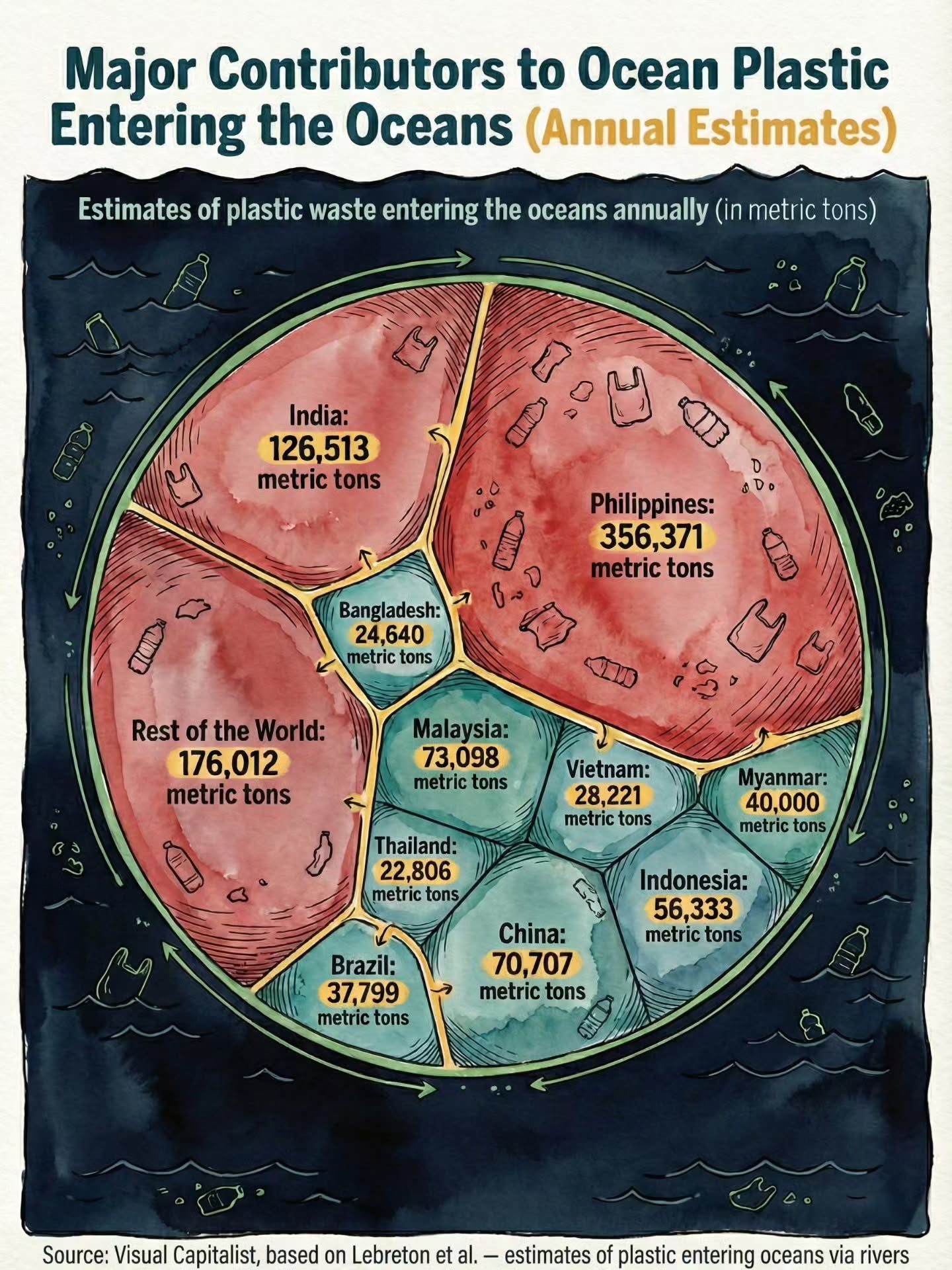
Ocean plastic pollution is a pressing global issue, with significant amounts of plastic waste entering the oceans each year. Understanding the major contributors to this problem is crucial for developing effective solutions. Annual estimates of plastic waste entering the oceans from various countries highlight the severity of the situation. This infographic is based on data from Le Breton et al.
Context / Why this matters
Plastic pollution in the oceans is a critical environmental challenge with far-reaching consequences. The impact extends beyond marine life, affecting human health and the economy. Plastic debris can harm or kill marine animals, disrupt ecosystems, and even enter the food chain, posing risks to human consumption. Addressing this issue requires a comprehensive understanding of the sources and magnitudes of plastic waste entering the oceans.
Main discussion
Major Contributors to Ocean Plastic Pollution
The infographic illustrates the major contributors to ocean plastic pollution, providing annual estimates of plastic waste entering the oceans from several countries. Key contributors include:
- India: Contributes 126,513 metric tons of plastic waste annually.
- Bangladesh: Contributes 73,098 metric tons.
- China: Contributes 70,707 metric tons.
- Malaysia: Contributes 56,333 metric tons.
- Brazil: Also a significant contributor, with Thailand, Myanmar, and Indonesia as other notable sources.
Visual Representation of Plastic Waste Flow
The infographic visually represents the flow of plastic waste into the ocean, highlighting the significant amounts of plastic waste entering the oceans from these countries. This visual approach helps to convey the scale of the problem and the urgent need for action. By presenting the data in a clear and engaging format, the infographic underscores the importance of addressing plastic pollution at its source.
Impact of Plastic Waste on Marine Ecosystems
Plastic waste in the ocean has severe impacts on marine ecosystems. Marine animals often mistake plastic for food, leading to ingestion and entanglement, which can cause injury or death. Microplastics, which are tiny plastic particles, can enter the food chain and potentially affect human health. The environmental and economic costs of plastic pollution are substantial, making it a critical issue that requires global attention.
Practical tips
Reducing Plastic Waste
To address ocean plastic pollution, it is essential to reduce plastic waste at the source. Here are some practical tips for individuals and communities:
- Use Reusable Items: Replace single-use plastics with reusable alternatives such as water bottles, bags, and containers.
- Proper Waste Disposal: Ensure that plastic waste is properly disposed of and recycled. Participate in local recycling programs and support initiatives that promote waste management.
- Support Sustainable Products: Choose products that are made from recycled materials or are designed to be recyclable. Encourage manufacturers to adopt sustainable practices.
- Community Initiatives: Engage in community clean-up efforts and support local and global initiatives focused on reducing plastic waste. Education and awareness campaigns can also play a vital role in fostering a culture of sustainability.
Policy and Regulatory Measures
Effective policy and regulatory measures are crucial for addressing ocean plastic pollution. Governments and international organizations need to implement strict regulations on plastic production, use, and disposal. Key measures include:
- Bans and Restrictions: Implement bans on non-essential single-use plastics and restrict the production and use of harmful plastics.
- Extended Producer Responsibility (EPR): Hold manufacturers responsible for the full lifecycle of their products, including disposal and recycling.
- Enforcement and Monitoring: Ensure strict enforcement of regulations and monitoring of plastic waste management practices. This includes inspections, penalties for non-compliance, and incentives for sustainable practices.
- International Cooperation: Encourage global cooperation and collaboration to address plastic pollution. International agreements and treaties can help in standardizing regulations and sharing best practices.
Important takeaways
- Significant Contributors: Countries like India, Bangladesh, China, and Malaysia are major contributors to ocean plastic pollution, with each annually adding tens of thousands of metric tons of plastic waste to the oceans.
- Impact on Ecosystems: Plastic pollution affects marine life, ecosystems, and human health, making it a critical environmental challenge.
- Visual Data: Infographics and visual representations can help convey the scale and urgency of the problem, fostering awareness and action.
- Individual and Community Action: Reducing plastic waste at the source through personal choices, community initiatives, and proper disposal practices is essential.
- Policy and Regulation: Effective regulations, enforcement, and international cooperation are necessary to address the global issue of ocean plastic pollution.
Conclusion
Ocean plastic pollution is a significant and pressing issue that requires immediate and comprehensive action. By understanding the major contributors, the impact on marine ecosystems, and the importance of visual data, we can take meaningful steps to reduce plastic waste. Implementing practical tips, supporting sustainable products, and advocating for strong policy and regulatory measures are crucial for addressing this global challenge. Together, we can work towards a cleaner, healthier ocean for future generations.
Questions readers ask
Which countries are the top contributors to ocean plastic pollution?
The top contributors to ocean plastic pollution include nations with significant coastal populations and inadequate waste management infrastructure. According to recent data, countries like China, Indonesia, and the Philippines are among the leading sources of marine plastic waste. Other notable contributors include Vietnam, Sri Lanka, and Thailand.
How much plastic waste enters the oceans annually from these countries?
The amount of plastic waste entering the oceans from these countries is substantial. Annual estimates suggest that millions of tons of plastic waste are discharged into the oceans each year, with some studies indicating that the total could be as high as 8 million metric tons.
What are the key factors contributing to ocean plastic pollution from these countries?
Several factors contribute to ocean plastic pollution, including inadequate waste management systems, lack of infrastructure for recycling, and high levels of plastic consumption. Additionally, unregulated dumping and illegal disposal practices often lead to plastic waste finding its way into waterways and subsequently into the oceans.
Why is it important to address ocean plastic pollution on a country-specific basis?
Addressing ocean plastic pollution on a country-specific basis is crucial because it allows for targeted interventions. By focusing on the specific challenges and infrastructure gaps in each country, more effective strategies can be developed. This approach can help reduce the overall amount of plastic waste entering the oceans and mitigate the environmental and health impacts.
What can individuals do to help reduce ocean plastic pollution?
Individuals can play a significant role in reducing ocean plastic pollution by adopting sustainable practices. This includes reducing plastic consumption, properly disposing of plastic waste, and supporting recycling initiatives. Participation in local clean-up efforts and advocating for stronger waste management policies can also contribute to the solution.
Are there any international efforts aimed at reducing ocean plastic pollution?
Yes, there are several international efforts aimed at reducing ocean plastic pollution. The United Nations has initiatives like the 'Clean Seas' campaign, which encourages countries to take action against marine plastic waste. Additionally, various non-governmental organizations (NGOs) and international agreements, such as the Basel Convention, are working towards reducing plastic pollution and promoting sustainable waste management practices.
Related deep dives
Similar reads based on topic and creator.




Recent articles
Fresh deep dives from the latest Reels we unpacked.



Comments
Be the first to comment.