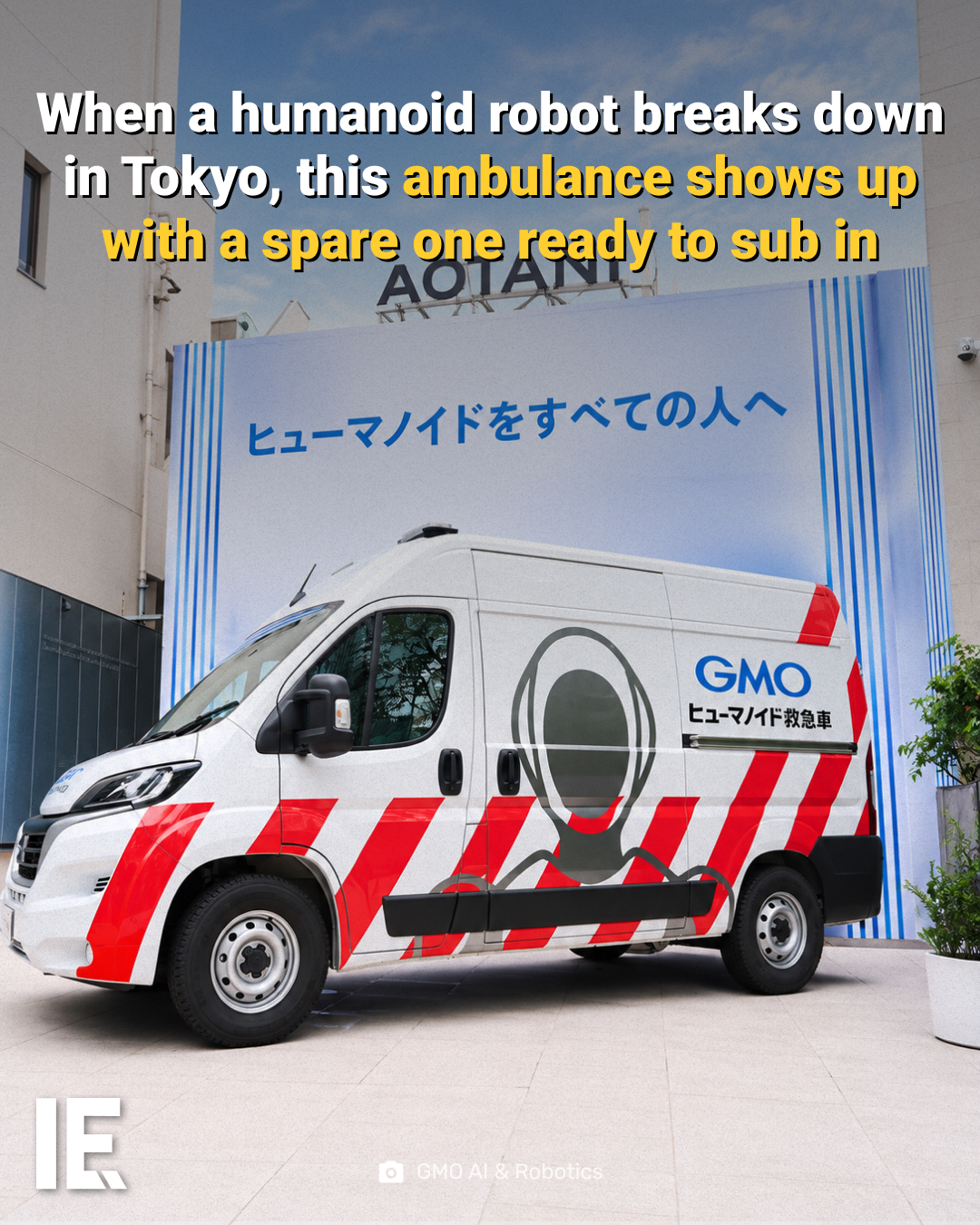
With a beeping horn, a GMO-branded ambulance rolls through the streets of Tokyo, its futuristic design hinting at a new era of emergency services. The vehicle isn't arriving at the scene of a human accident, however. It's speeding towards a fallen humanoid robot. When human forms of assistance aren't necessary, the GMO ambulance sees a solution where empty streets once separated non-existent emergencies.
The Future of Urban Care
The GMO brand of Autonomous Ambulance in Tokyo shows a specialized response vehicle permanently on standby for robotic disasters. The autonomous ambulance is an innovation designed explicitly for humanoid robots. It doesn't transport human patients. Instead, it is equipped with a spare humanoid robot to replace any malfunctioning humanoids. The vehicle is a remarkable example of how technology is being integrated into emergency services and the medical industry. It also showcases how urban care may evolve to include robots. No longer is it only about human health – the care industry is now expanding to include robotic care. The ambulance is an important step for large-scale automation that assist society. Its specialized equipment and precise design demonstrate a growing shift in emergency response towards using technology to keep up with the demands of modern society. This could mean more innovations to come, especially with robotics becoming increasingly mainstream.
The World of AI & Robotics in Tokyo
Tokyo, a city recognised for pushing technological boundaries, often showcases how robotics and AI can interwoven into daily life. By equipping an ambulance with support for humanoids, GMO has made a concrete step into urban care for robotic systems. It indicates a future where “[ lorsqu'en un humanoid robot tombe en panne à Tokyo, cette ambulance arrive avec un autre humanoïde prêt à le remplacer.]” According to the onboard text, this ambulance doesn’t just come equipped with a spare robot, but also the tools needed to support them. The vehicle does more than merely provide transport; it is a mobile maintenance unit. This vehicle not only supports human needs but also maintains the city itself. If robots are responsible for operating urban services, The GMO vehicle is part of keeping the city functional. However, since the video shows one single robot with a spare ready to sub in, it mostly resembles a tow-truck for humans in mechanical failure. The numbers of robots outgrowing humans in the near future, and a need for emergency assistance to them, is a long way off. However, Tokyo’s acceptance of robots in a supporting role will be a boon to human health maintenance and bring a drastic increase in productivity.
Plans for Tokyo's Robotics Future
The branding on the vehicle stood out: it supports humanoids and aims to provide support everywhere. This could mean a city-wide network of vehicles in Tokyo by 2030, all supporting humanoids in the city. Since Tokyo is already a hub for robotics, a city-wide network might not be impossible to achieve. Even if a city-wide network isn’t achieved, it would still mean that robots in Tokyo can be maintained.
Engineering a Robotic Future
The ambulance itself is a marvel of engineering innovation designed solely for humanoid robot support. This includes precise design and innovative technology to carefully transport another humanoid robot from the spare ready-to-substitute humble start. The vehicle itself includes all the necessary tools to maintain other humanoid robots, which could include advanced AI diagnostics, robot maintenance kits, spare robot parts, and possibly specialized tools.
Practical Guidance for a Robotic Tokyo
GMO has created a unique solution in the city of Tokyo. The company's specialized vehicle is on standby for a city where robots are more numerous than humans. Need a spare humanoid robot? The ambulance can help. This ambulance can be your guide to a city where humans and robots coexist. If you find yourself in an emergency situation in Tokyo as a robot, here's what to do:
- Stay Still: The ambulance is equipped to find robots in need of support
- Wait for the Horn: The ambulance's horn will alert you to its approach
- Trust the Support: This vehicle is equipped with a spare robot, ready to assist you if necessary Ensuring robots are maintained and kept in optimal working condition is crucial for the future of Tokyo. With a vehicle on standby, the city ensures that this will be a reality sooner rather than later.
Robotic Solutions need Robotic Support
Tokyo has long been at the forefront of AI and robotics innovation. The use of a robot-specific ambulance is an extension of this forward-thinking approach. The vehicle showcased in the video highlights a scenario where robots require emergency assistance, and an ambulance is ready to respond. In this evolving landscape, Tokyo is not just embracing robots as commonplace but also finding ways to weave them into the fabric of urban life. The ambulance doesn't just point to a future where robots require support, but also to a time when robots provide their own support and navigate urban care even more urgently.
Questions readers ask
How does Tokyo's Autonomous Ambulance for Humanoid Robots work?
The GMO-branded ambulance is on standby for robotic emergencies. It's equipped with a spare humanoid robot to replace any malfunctioning ones and tools needed to support them. The vehicle acts as a mobile maintenance unit, ensuring that robotic systems can continue to operate in the city.
What makes this ambulance different from a regular human ambulance?
This ambulance is designed exclusively for humanoid robots. It doesn't transport human patients; instead, it carries a spare humanoid robot and tools to maintain and replace malfunctioning robots. It's more like a tow-truck for robots in mechanical failure.
What does the future hold for Tokyo's robotics industry?
Tokyo is already a hub for robotics, and the introduction of this ambulance suggests a future where robots play a significant role in urban care. There are plans for a city-wide network of these vehicles by 2030, which would mean more support for humanoids and potentially a drastic increase in productivity.
Can this ambulance replace human emergency services?
No, the ambulance is not designed to replace human emergency services. Instead, it complements them by providing specialized care for humanoid robots, which is crucial as robotics becomes increasingly mainstream in society.
What kind of impact will this have on urban care in Tokyo?
This ambulance is a step towards large-scale automation and shows how technology can be integrated into emergency services. It indicates a future where urban care includes both human and robotic health, potentially leading to more innovations in the field.
What tools does the ambulance carry to support humanoid robots?
The article mentions that the ambulance carries a spare humanoid robot and the tools needed to support them. However, the specific tools are not detailed, so it's safe to assume they are maintenance tools tailored for humanoid robots.
Related deep dives
Similar reads based on topic and creator.


Recent articles
Fresh deep dives from the latest Reels we unpacked.



Comments
Be the first to comment.