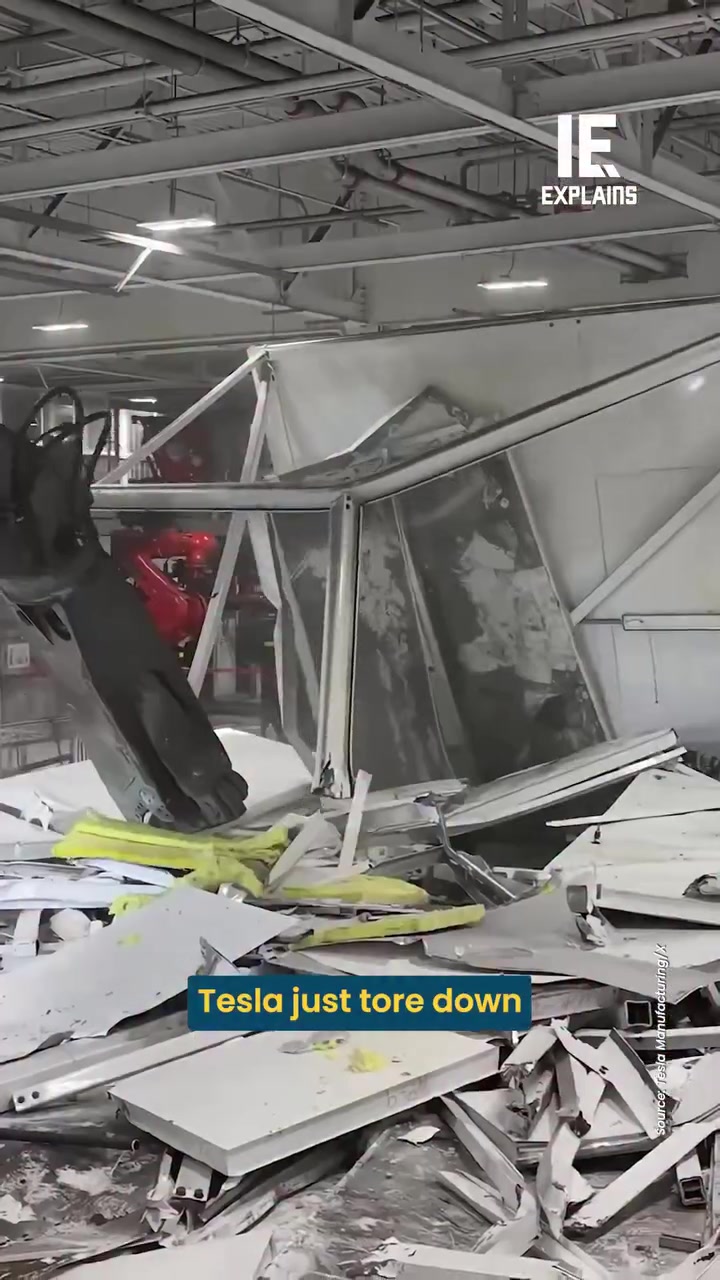
Tesla tore down 14 years of car-making infrastructure in 46 days. In a meticulous video, the company first shared the inside story of dismantling the Fremont line, which had built the Model S and Model X. Workers removed robotic arms, unscrewed bolts, and dismantled concrete pits, then patched them up. It seemed an absurdity — why demolish a factory with a capacity to build 100,000 cars a year? The answer, as Tesla explained, was a desire to maximize efficiency.
The Car-Building Line
Ripping the production line out took a mere 46 days, leaving behind an empty hall. Located in Fremont, California, it had once built some of Tesla's most iconic cars: the Model S and Model X. These vehicles are not gone, but are now built in the same factory hall as the Cybertruck. The hall once devoted to Model S and Model X construction is gone, Tesla told viewers. The explosion of Model 3 and Model Y sales necessitated a more efficient use of floor space, leaving the Model S and Model X hall an empty, slow line, worth more empty than filled. Tesla then built on the bare floor, where human workers had once labored and supply lines carried the cars through the production cycle. Today, the empty hall is not so empty; Tesla's new Optimus humanoid robot has moved in with robots already a part of the assembly line. Optimus is the robot, the replacement for the human
The Evolution of the Automobile Industry
Tesla's demolition of its Fremont line is an exercise in maximizing efficiency and adapting to changing market dynamics. The decision to disassemble the production line showcases the ultra-efficient mindset that has pushed Tesla to the pinnacle of the automotive industry. The equation is straightforward: prioritize high-volume models that sell well over those that do not. The trend in the automotive industry of mass production and later, lean manufacturing, meant that an empty hall was worth more than a slow line.
The Specifics
The first clue to the production line's end was the 2025 transition of Model S and Model X from separate reports to other models. The data reveal the sharp divergence in sales. Model 3 and Model Y, among the best-selling cars, managed about 1.6 million sales. The Cybertruck and Model S and Model X were about 50,000 units. Slow sales means the line was worth more empty. The dismantling was only part of the show, however, the Tesla video's last and perhaps most important message was shown on the floor. Tesla's new humanoid robot, Optimus, will move in to the newly empty space — the logical progression of the slow line. Tesla's CEO Elon Musk has promised 10,000 Optimus robots by 2025, although the January reveal did not seem to show effective robot functionality. More than once, the reveal was pushed back.
The Machinery
The robotic arms from KUKA, the heavy-duty manufacturing equipment, began the process of unbolting parts of the manufacturing line to lifting the conveyance systems out. The concrete pits built into the floor, which had perhaps been used to store equipment, were broken open and their holes filled in. A new floor was poured over the top. The robotic arms being dismantled were apparent, but the on-screen text also referenced KUKA. The video affirms that the heavy-duty manufacturing equipment used is from KUKA, the internationally recognized manufacturer of industrial equipment. An article on the timeline of Tesla's production line revealed that the final Model S came off the line in May 2015.
The Human Element
Robots alone cannot do the job of dismantling a car production line, in the video human workers are seen alongside the robotic arms, dismantling and clearing debris as necessary. The line itself had been built by humans, the first cars produced by the crew that built the production line in the first place; infrastructure, construction, automation, and engineering are elements of a production line. The human element is significant in the Tesla story. The final car off the line, a black Model S, was signed by the crew who built that line. The final day for the line, however, also marked the beginning of the end of the line's production capacity. The Model S and Model X line were phased out and folded in as "other models." The human part of this story was significant.
Prepare For The Factory Tour
With cars remaining on sale, Tesla kept the hall open for customers who wanted to tour the facility. To visit, Tesla offers factory tours. Some will offer a glimpse into the automation of the floor. It is best to get there early in the morning.
Questions readers ask
Why did Tesla decide to dismantle the Model S and X production line?
Tesla dismantled the Model S and X production line to maximize efficiency and better utilize floor space. The Model 3 and Model Y vehicles had higher sales, making it more beneficial to focus on those models. The empty space could be used for more productive purposes, especially with the introduction of the Optimus humanoid robot.
How long did it take Tesla to dismantle the production line?
Tesla took just 46 days to completely dismantle the production line for the Model S and X vehicles. This rapid demolition highlights Tesla's efficiency and ability to quickly adapt to changing market demands.
What will the newly emptied hall be used for?
The hall, once dedicated to the Model S and X, is now home to Tesla’s humanoid robot, Optimus, and the Cybertruck. Tesla's vision for the space includes utilizing it for more efficient and high-demand models, aligning with their strategy of prioritizing high-volume sales.
What kind of equipment was used in the dismantling process?
Tesla used robotic arms from KUKA, a company known for heavy-duty manufacturing equipment. These arms were instrumental in unbolting parts of the manufacturing line and lifting the conveyance systems out. Additionally, concrete pits were broken open and filled, and a new floor was poured over the top.
What is the significance of the Optimus humanoid robot in this context?
The Optimus humanoid robot is a significant part of Tesla's future plans. It represents the next step in automating the production process, potentially replacing human workers. The robot's integration into the newly emptied hall aligns with Tesla's goal of maximizing efficiency and adapting to new market dynamics.
How does this move reflect Tesla's approach to the automotive industry?
This move reflects Tesla's commitment to efficiency and adaptability. By dismantling the Model S and X line and focusing on higher-demand models, Tesla is prioritizing profitability and responsiveness to market trends, a strategy that has driven its success in the industry.
What was the production capacity of the dismantled line?
The dismantled line had the capacity to build 100,000 cars a year, but the slow sales of the Model S and X made it more valuable as empty space. This decision underscores Tesla's prioritization of high-volume, high-demand models over those with lower sales.
Related deep dives
Similar reads based on topic and creator.

Recent articles
Fresh deep dives from the latest Reels we unpacked.

Comments
Be the first to comment.