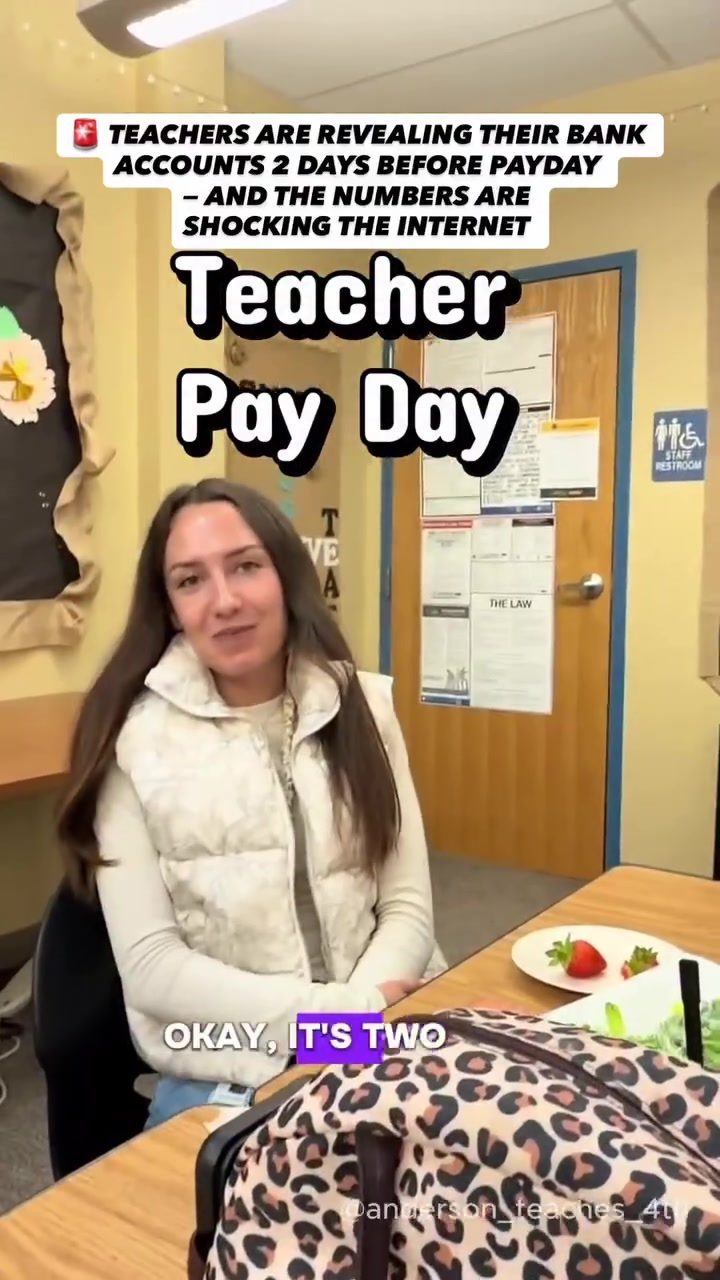
Teachers Revealing Their Bank Balances 2 Days Before Payday
Recent weeks have seen a viral trend take social media by storm: teachers sharing their bank account balances two days before payday. The numbers revealed have sparked widespread attention, highlighting the financial realities many educators face. This trend has ignited discussions about teacher salaries, the impact of inflation, and the broader implications for the education system.
Why This Matters
The trend of teachers revealing their bank balances before payday has brought into sharp focus the financial pressures that educators often endure. These revelations have surprised many, as the balances are often much lower than expected. This trend has sparked important conversations about teacher compensation, the cost of living, and the ongoing debate over education funding.
The Financial Reality of Educators
Teachers often face significant financial challenges. Despite their crucial role in society, many educators struggle to make ends meet. The trend of revealing bank balances before payday has provided a stark reminder of these challenges.
Low Balances and High Expectations
One of the most striking aspects of this trend is the disparity between what teachers hope to have in their accounts and the actual balances. For instance, a teacher might expect to have at least $40 in their account, but the actual balance could be as low as $7.46. Similarly, another teacher guessed they had $63, only to find that their balance was $1.13. These scenarios highlight the financial tightrope that many educators walk, especially in the days leading up to payday.
The Impact of Second Jobs and Additional Degrees
Many teachers supplement their income with second jobs. For example, one teacher holds a Master’s degree and teaches a 3rd-grade class, yet still struggles to cover basic expenses and depends on additional work. This underscores the challenges faced by educators who, despite their qualifications and dedication, often find themselves in precarious financial situations.
Saving for Necessities
The trend also reveals how teachers prioritize their limited financial resources. One teacher mentioned they were saving for a vacuum, which highlights the practical constraints that educators often face. Even small purchases can be a significant challenge when living paycheck to paycheck.
The Public Reaction
The public reaction to these revelations has been a mix of shock and empathy. Many viewers were taken aback by the low balances and the financial struggles that educators face. Comments have ranged from sympathetic to critical, with some questioning how education funding is being allocated.
Common Questions and Comments
The trend has prompted a range of questions and observations. Some viewers have questioned why teachers with advanced degrees are living paycheck to paycheck. Others have expressed frustration about the lack of recognition and compensation for the critical role that educators play in society. Comments like “We trust teachers with our children but pay them like this?” highlight the disconnect between the public’s expectations of educators and the reality of their financial situations.
Viral Moments
One particularly viral comment came from a teacher who shared, “A parent complained I didn’t buy mints for state testing… I had -$17 in my bank account.” This comment sparked further debate about the financial pressures on teachers and the expectations placed upon them.
Practical Tips for Supporting Educators
Given the financial challenges faced by many educators, there are several ways the public and policymakers can support them. These include advocating for fair wages, providing additional financial resources, and promoting policies that recognize the value of teachers’ work.
Advocating for Fair Wages
One of the most direct ways to support educators is by advocating for fair wages. This includes pushing for increased funding for education and ensuring that teachers are compensated appropriately for their work. Fair wages can help alleviate some of the financial pressures that educators face, allowing them to focus more on their teaching responsibilities.
Providing Additional Financial Resources
In addition to fair wages, providing additional financial resources can help teachers manage their financial challenges. This can include offering stipends for professional development, providing grants for classroom supplies, and offering financial literacy programs to help teachers manage their finances more effectively.
Promoting Policies That Recognize the Value of Teachers’ Work
Promoting policies that recognize the value of teachers’ work is crucial for improving their financial situations. This includes advocating for policies that recognize the importance of education and the critical role that teachers play in society. By valuing teachers’ work, policymakers can help ensure that educators are compensated fairly and supported in their efforts to provide quality education.
Important Takeaways
The trend of teachers revealing their bank balances before payday has brought to light the financial challenges that many educators face. It has highlighted the need for fair wages, additional financial resources, and policies that recognize the value of teachers’ work. By supporting educators, society can help ensure that they are able to provide quality education and thrive in their careers.
Conclusion
The trend of teachers revealing their bank balances before payday has sparked important discussions about educator compensation and the financial pressures they face. By recognizing these challenges and taking steps to support educators, society can help ensure that teachers are compensated fairly and supported in their efforts to provide quality education. This trend serves as a reminder of the critical role that educators play and the need for policies that reflect their value.
Questions readers ask
Why are teachers sharing their bank balances online?
Teachers have taken to social media to share their bank balances a couple of days before payday to raise awareness about their financial struggles. This trend has sparked conversations about the reality of their compensation and the challenges they face in meeting their living costs.
What does a teacher's bank balance look like before payday?
Many teachers' bank balances are often surprisingly low before payday, sometimes even close to zero. This has surprised many, as it contradicts the common perception of what a teacher's salary might be.
Why do teachers often need additional jobs?
Due to the financial pressures they face, many teachers rely on additional jobs to supplement their income. These side jobs can be crucial for covering living costs, paying off debts, and managing daily expenses.
How does inflation impact teachers' finances?
Inflation can significantly impact teachers' financial situations. Increasing costs of goods and services can outpace their salary increases, leaving many teachers struggling to make ends meet.
What is the average teacher salary?
The average teacher salary can vary greatly depending on location, experience, and other factors. However, many teachers find that their salaries do not adequately cover their living costs, leading to financial strain.
How are teachers coping with these financial challenges?
To cope with financial challenges, teachers often budget carefully, seek additional sources of income, and some even turn to payday loans to bridge the gap between paychecks. The trend of sharing bank balances has also been a way for teachers to advocate for better compensation.
Related deep dives
Similar reads based on topic and creator.


Recent articles
Fresh deep dives from the latest Reels we unpacked.




Comments
Be the first to comment.