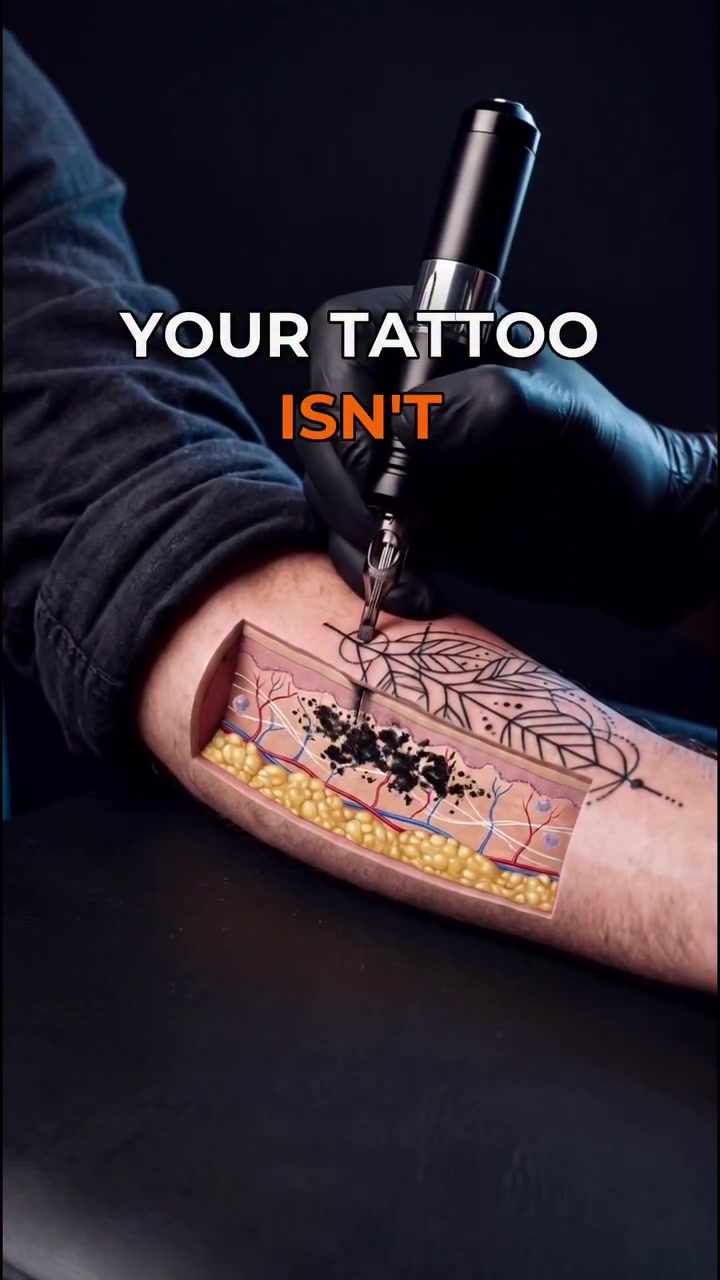
Tattoos aren't just skin-deep; they've marooned immune cells in a perpetual holding pattern
Tattoos are more complicated than they appear. For instance, the ink isn't just sitting in the skin. After the needle plunges into your skin and past the regeneration-prone epidermal layer, it deposits ink particles two millimeters below the surface, trapping them inside the dermis. The immune cells then rush to the site of the puncture, where the macrophages trap the ink. The ink remains inside those cells for a life. But the process behind tattoo permanence begins with the immune system.
The anatomy of an indelible mark
Tattoo ink isn’t sitting on the skin’s surface; it penetrates deep into the skin where it is trapped. The process begins with the tattoo needle puncturing the epidermis and depositing the ink into the dermis, the underlying skin layer. This layer doesn’t shed like the epidermis, so the ink particles remain, trapped within the skin. The dermis not only holds the tattoo ink but also plays a key role in the immune system's response to the foreign particles. The immune system responds to the ink particles within the dermis. The macrophages, which are specialized immune cells, encapsulate the ink. Since the ink particles are too large to be digested, they are held in perpetuity, spatially 2mm below the surface. This cellular capture and release process ensures the tattoo remains intact and visible, even as cells die and are replaced. The ink is continuously absorbed and recaptured by new macrophages, making the tattoo a perpetual immune response. The tattoo process isn't just about ink and skin; it's a complex interaction between the body and the foreign material. Rather than a passive recipient, the skin and immune system actively engage with and respond to the tattoo ink. The immune system's fight against the ink particles turns the tattoo into an ongoing cellular job. Tattoos are a lasting cellular memory held by millions of cells. The tattoo's permanence relies on the body's immune system and its response to the ink particles. The cells that capture the ink persist, as do the ink particles themselves. The body retains a cellular memory of the ink for years, ensuring the tattoo persists. This ongoing immune response is guaranteed to last.
The hidden human cost of decorative images
The permanence of tattoos means reflecting on how the body responds to this process, as tattoos become a part of the immune system. This cellular entrapment highlights the immune system's enduring responsibility to maintain the integrity of tattoos. Unlike temporary decorations, tattoos are a lifelong commitment that affects the immune system and the skin. The tattoo is an enduring tattoo, a permanent job for immune cells. Any fade in the color of the tattoo results from ultraviolet light. While time alone doesn’t do the fading, external factors such as ultraviolet light gradually alter its appearance. Understanding the impact of ultraviolet light highlights the continuous effects of the immune system on the ink.
Lasers don't erase tattoos — they give your macrophages a chance to finish the job
A laser session isn't an attempt to erase a tattoo but an effort to shatter the ink particles into small pieces. While the laser doesn't remove the ink, it fragments it. After fragmenting the ink, the immune system's macrophages then engulf the smaller particles, eliminating them from the body. The body's immune response then clears the remaining ink. It takes multiple sessions for the immune system to deal with the ink. The macrophages do the work of eliminating the ink. The laser's effect relies on the immune system. Laser removal's multiple sessions indicate the immune system's ability to rid the body of ink particles. Each laser session further shatters the ink, giving the immune system more opportunities to remove the particles. The immune system’s persistent action against the ink ensures the tattoo's eventual fading, albeit gradually. This process allows the body to progressively rid itself of the ink.
The tattoo's cellular enclosure
Every time a macrophage dies, a new one captures the ink, continuing the cycle indefinitely. This capture, release, and recapture cycle ensures that the tattoo remains intact and visible for years. The tattoo is an interaction between the immune system and the skin. The process is both a physical mark and a cellular memory, with the body constantly holding, digesting, and recapturing ink particles. The tattoo is a perpetual immune system job. The tattoo leaves a cellular memory, constantly held by the skin and immune system. The ink particles remain in the skin for a lifetime, ensuring the tattoo's visibility and integrity.
The light that changes everything
The ink held by the immune cells loses its vibrancy over time due to ultraviolet light, the same light responsible for fading tattoos. Ultraviolet rays break down the ink molecules, causing the tattoo to fade. The color change is a result of the interaction between the skin, ink molecules, and ultraviolet rays. The immune system’s ability to deal with the ink is further affected by ultraviolet light, although the exact mechanisms of how light affects the immune system’s reaction to the ink are unknown.
Removing an ink-covered cellular job
Deciding to remove a tattoo is an action that signals a shift in personal expression and the immune system's needs. Tattoo removal isn't easy; the immune system has to work overtime to clear the ink, and it might take multiple sessions.
- Consult a Professional Tattoo Removal Expert: The process of removing a tattoo takes multiple sessions to completely remove the ink. The professional tattoos removal expert uses a laser to shatter the ink particles, allowing the cells to absorb and clear them. While the tattoo's permanence is due to the immune system, removing it requires the immune system to absorb small ink particles and clear them from the body.
- Laser Removal Sessions: It takes more than laser removal to get rid of the ink. After the laser breaks the ink particles, the immune cells absorb and clear them from the body. The immune system does the work of removing the ink.
- Aftercare: After each laser session, it is essential to care for the treated area. Applying a topical ointment and avoiding direct sunlight can minimize the risk of complications and scarring. A medical professional usually monitors the healing process and provides necessary post-treatment care. The tattoo might not be fully removed, but the immune system has begun to clear the area.
- Expect Partial Results: Removing a tattoo is a process that removes the ink, but it might not be completely removed. While the tattoo might fade, the immune system's job doesn't end, as it continues to absorb and remove the ink particles. Aftercare ensures the immune system can complete its job. Complications can arise, but medical professionals monitor the healing process.
Questions readers ask
How exactly does the immune system keep tattoos visible over time?
The immune system's macrophages trap the ink particles in the dermis, preventing them from being removed. When these cells die, the ink is released and then absorbed by new macrophages, ensuring the tattoo remains visible.
Can the body ever fully remove tattoo ink on its own?
No, the body can't fully remove tattoo ink on its own. The ink particles are too large for the immune cells to digest, so they remain trapped within the macrophages indefinitely.
What role does the dermis play in making tattoos permanent?
The dermis, the lower layer of skin, holds the ink particles and does not shed like the epidermal layer. This layer plays a crucial role in the immune system's response to the ink, ensuring that the ink particles remain trapped and visible.
What happens if a tattoo is exposed to ultraviolet light?
Ultraviolet light can cause the tattoo to fade over time. While the ink particles themselves remain, the interaction between the ink and ultraviolet light can alter the tattoo's appearance, making it less vibrant.
Why is tattoo removal a complex process?
Laser tattoo removal doesn't erase the ink but breaks it into smaller particles, giving the immune system a chance to absorb and remove them. This process requires multiple sessions, as the body needs time to clear the ink particles.
What are the long-term effects of tattoos on the immune system?
Tattoos create a lifelong immune response as the body continuously works to encapsulate and recapture the ink particles. This means that the immune system is actively engaged in maintaining the tattoo, making it a permanent job for the cells involved.
Can new tattoos affect old ones?
While there's no direct evidence that new tattoos affect old ones, the immune system's response to the new ink could potentially alter the appearance of existing tattoos due to the body’s overall immune response. This is more likely to be a concern if the tattoos are close to each other.
Related deep dives
Similar reads based on topic and creator.




Recent articles
Fresh deep dives from the latest Reels we unpacked.



Comments
Be the first to comment.