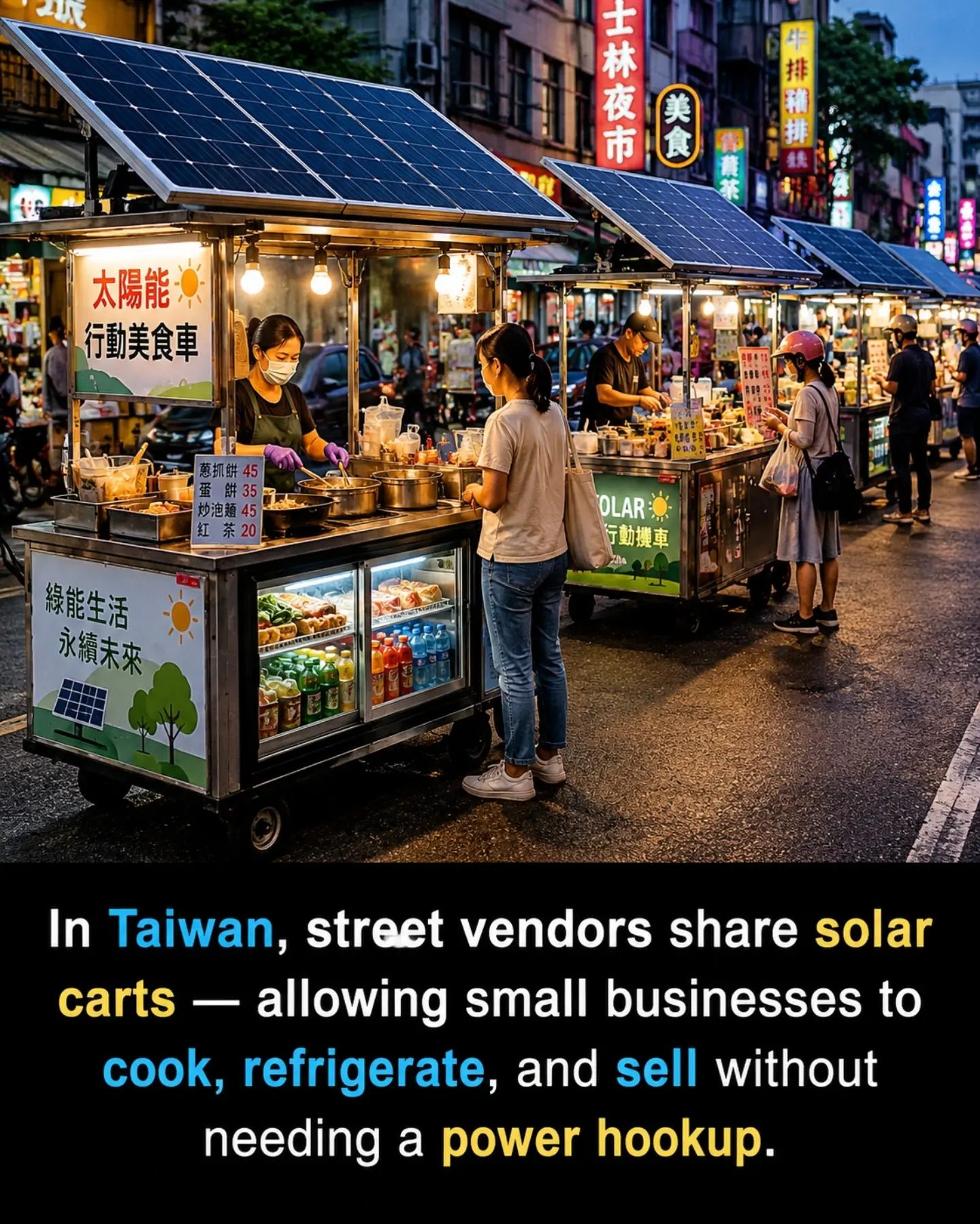
Solar-Powered Street Food Carts — A Sustainable Solution for Taiwan's Vendors
In Taiwan, street vendors are increasingly turning to solar-powered street food carts. These innovative carts are equipped with solar panels on the roof, enabling small businesses to cook, refrigerate, and sell food without needing a traditional power source. This shift towards solar-powered equipment enhances sustainability and operational flexibility.
Context / Why This Matters
Traditional street food vendors often face challenges related to power supply. Conventional carts rely on external power sources, which can limit their mobility and operational hours. Solar-powered carts, on the other hand, provide an independent and renewable energy source, allowing vendors to operate more freely and sustainably.
Main Discussion
Benefits of Solar-Powered Carts
Solar-powered street food carts offer several advantages that make them a practical and sustainable choice for vendors. These benefits include:
- Energy Independence: Solar panels provide a continuous power supply, eliminating the need for external power sources. This independence is particularly valuable in areas where power hookups are limited.
- Cost Efficiency: While the initial investment in solar panels and batteries can be high, the long-term savings on electricity costs are significant. Vendors can operate their carts without worrying about fluctuating power bills.
- Environmental Sustainability: By relying on solar energy, these carts reduce their carbon footprint, contributing to a more eco-friendly business model. This aligns with the global push towards sustainable practices and renewable energy.
Design and Functionality
Solar-powered street food carts are typically designed with a focus on functionality and ease of use. Key features often include:
- Integrated Solar Panels: Solar panels are strategically placed on the roof of the cart, maximizing sun exposure to ensure efficient energy collection.
- Battery Storage: Excess energy collected during the day is stored in batteries, providing a reliable power source for nighttime operations or cloudy days.
- Efficient Appliances: Modern designs include energy-efficient appliances and lighting to optimize power usage. This ensures that the cart can operate smoothly without excessive energy consumption.
Operational Flexibility
Solar-powered carts offer vendors unprecedented operational flexibility. They can set up their carts in various locations, including remote areas and outdoor events, without being constrained by the availability of power outlets. This flexibility allows vendors to tap into new markets and reach a wider customer base.
Enhanced Customer Experience
The convenience and reliability of solar-powered carts also enhance the overall customer experience. Vendors can offer freshly prepared food and beverages at all times, even in areas with limited infrastructure. This reliability attracts repeat customers and fosters a positive reputation for the vendor.
Practical Tips
If you're considering investing in a solar-powered street food cart, here are some practical tips to get you started:
- Assess Your Energy Needs: Evaluate the energy requirements of your cooking equipment, refrigeration units, and lighting. This will help you determine the size and capacity of the solar panels and batteries you need.
- Choose Quality Equipment: Invest in high-quality solar panels and batteries. While the upfront cost may be higher, reliable equipment will save you money in the long run and ensure consistent power supply.
- Plan for Batteries: Make sure to include a robust battery storage system. This will allow you to store excess energy and have a backup power source for days with less sunlight.
- Maintain Regularly: Regular maintenance of your solar panels and batteries is crucial for optimal performance. Clean the panels regularly and check the battery health to ensure they last as long as possible.
Important Takeaways
Solar-powered street food carts represent a significant advancement in the food vending industry. They provide vendors with a reliable, cost-effective, and sustainable solution, enhancing their operational flexibility and environmental impact. By investing in these carts, vendors can offer a better customer experience and contribute to a greener future.
Conclusion
In Taiwan, solar-powered street food carts are more than just a trend; they are a practical solution to common challenges faced by vendors. These carts offer energy independence, cost efficiency, and environmental sustainability, making them an attractive option for small businesses. If you're a vendor looking to upgrade your equipment, consider the benefits of solar-powered carts and how they can enhance your operations.
Questions readers ask
How do solar-powered food carts benefit Taiwan's street vendors?
Solar-powered food carts benefit Taiwan's street vendors by providing an independent and renewable energy source. This allows vendors to operate more freely, without relying on external power supplies, enhancing their mobility and extending operational hours.
What are the environmental advantages of using solar-powered street food carts?
Solar-powered street food carts reduce environmental impact and carbon footprint by utilizing renewable energy. This shift helps vendors contribute to Taiwan's green initiatives and promotes eco-friendly practices.
How do solar panels on food carts work and what equipment do they power?
Solar panels on food carts convert sunlight into electricity, which can power various equipment. This includes cooking appliances, refrigeration units, and lighting, enabling vendors to prepare and sell food independently of traditional power sources.
Can solar-powered carts operate in areas with limited sunlight?
Solar-powered carts are designed to store excess energy in batteries, allowing them to operate during periods of low sunlight or at night. However, prolonged periods of overcast weather may impact the cart's efficiency.
Are there any cost savings associated with using solar-powered street food carts?
Yes, solar-powered street food carts can lead to significant cost savings over time. By relying on solar energy, vendors can reduce their dependence on external power sources and lower their operational expenses related to electricity.
Can existing food carts be retrofitted with solar panels?
In many cases, existing food carts can be retrofitted with solar panels, depending on the cart's structure and design. Consulting with a professional who specializes in solar installations for food carts can help determine the feasibility and best approach.
How do solar-powered carts improve the sustainability of street food operations in Taiwan?
Solar-powered carts improve the sustainability of street food operations by providing a clean, renewable energy source. This reduces reliance on fossil fuels and lowers greenhouse gas emissions, aligning with Taiwan's broader goals of promoting green initiatives and sustainable living.
Related deep dives
Similar reads based on topic and creator.



Recent articles
Fresh deep dives from the latest Reels we unpacked.




Comments
Be the first to comment.