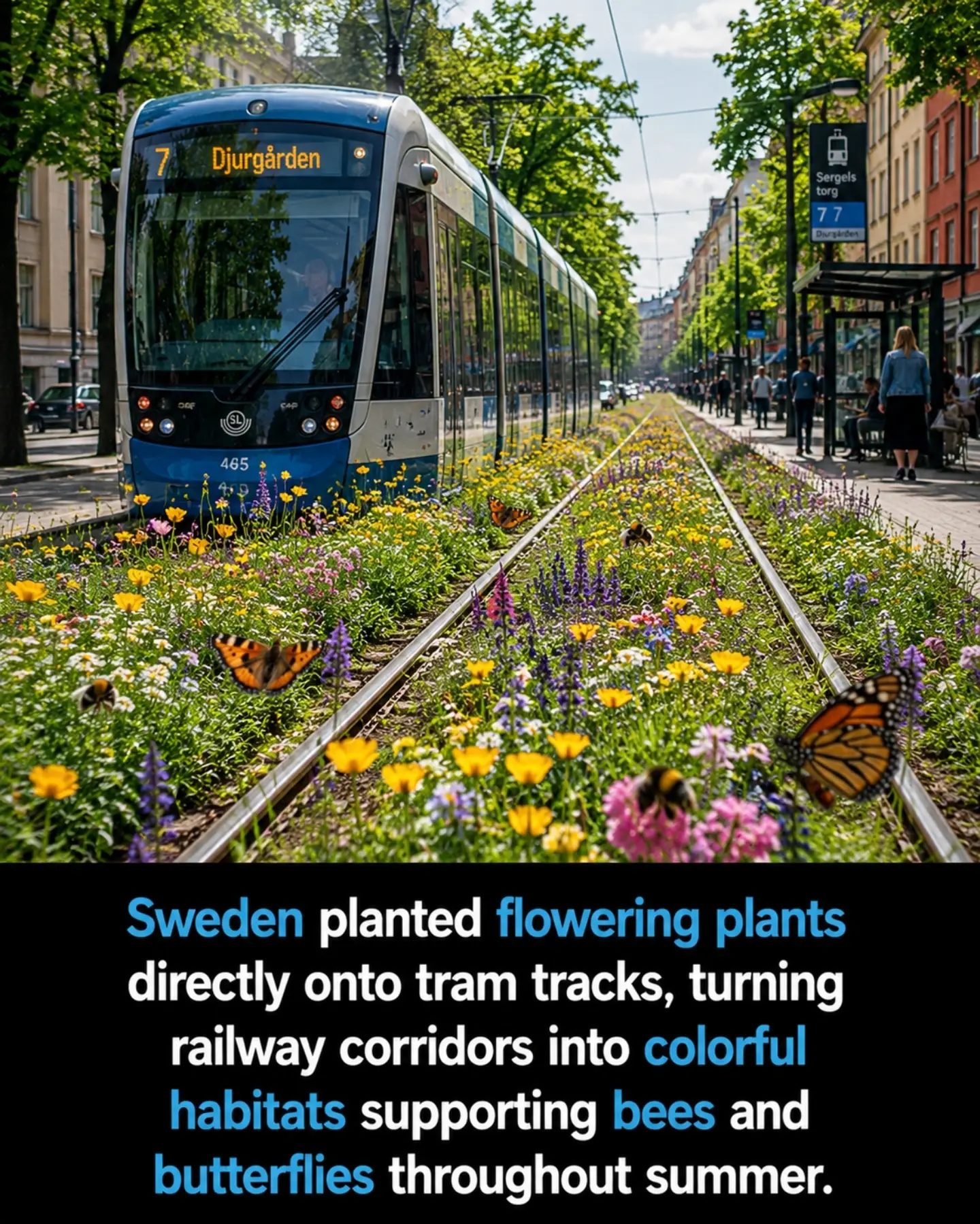
Flowering Tram Tracks in Sweden
Sweden has taken an innovative approach to urban landscaping by planting flowering plants directly on tram tracks. This initiative not only beautifies the city but also supports local ecosystems, creating vibrant habitats for bees and butterflies. The transformation of railway corridors into colorful landscapes is a testament to Sweden's commitment to integrating nature with urban infrastructure.
Why This Matters
The integration of nature into urban environments is becoming increasingly important as cities grow and green spaces become scarcer. This initiative in Sweden serves as an inspiring example of how urban planning can be both functional and environmentally conscious. By transforming tram tracks into floral pathways, Sweden creates a dual benefit: enhancing the urban aesthetic and supporting local pollinators.
Main Discussion
Urban Landscaping and Biodiversity
Sweden's approach to urban landscaping is a model for other cities looking to enhance biodiversity within their boundaries. The planting of flowering plants along tram tracks creates a vibrant ecosystem that supports pollinators such as bees and butterflies. These pollinators are crucial for maintaining the health of local flora and fauna, and their presence in urban areas can have a positive impact on the broader ecosystem.
The choice of tram tracks as a planting site is particularly effective. Tram tracks are often linear and long, providing ample space for planting a variety of flowers. This linear planting not only adds visual interest to the urban landscape but also creates a continuous habitat for pollinators to move through the city. The vibrant colors of the flowers also add a festive touch to the urban environment, making daily commutes more enjoyable for residents and visitors alike.
Benefits for Pollinators
The flowering plants along the tram tracks provide a valuable resource for pollinators, particularly during summer months when food sources can be scarce. Bees and butterflies rely on flowers for nectar and pollen, which are essential for their survival and reproduction. By providing a continuous source of these resources, the tram tracks become vital corridors for these insects, supporting their populations and contributing to the overall health of the urban ecosystem.
The presence of pollinators in urban areas also has broader environmental benefits. Pollinators play a critical role in the reproduction of many plant species, including those that provide food and habitat for other wildlife. By supporting pollinators, the flowering tram tracks contribute to the overall biodiversity of the urban environment, creating a more resilient and sustainable ecosystem.
Public Transportation and Urban Greening
Public transportation, such as trams, is often seen as a necessary but unglamorous part of urban infrastructure. However, theinitiative in Sweden demonstrates how public transportation systems can be integrated into broader urban greening efforts. By turning tram tracks into vibrant, flowering pathways, Sweden not only enhances the aesthetic appeal of its public transportation system but also supports local biodiversity.
This approach also has the potential to create a more pleasant commuting experience for passengers. The sight of flowers and butterflies can add a touch of nature to an otherwise concrete environment, making the daily commute more enjoyable. This integration of nature and urban infrastructure can also foster a greater sense of connection to the environment among city residents, encouraging them to appreciate and protect their local ecosystems.
Implementation and Maintenance
The initiative in Sweden requires careful planning and maintenance to ensure its success. The selection of plant species is crucial, as they must be able to thrive in the unique conditions of tram tracks, which can include compacted soil and exposure to vehicle vibrations. Additionally, the plants must be chosen for their ability to support pollinators and provide continuous food sources throughout the summer.
The maintenance of the flowering pathways also requires ongoing efforts. Regular watering, pruning, and replanting may be necessary to keep the flowers vibrant and healthy. The involvement of local communities in the planting and maintenance process can help ensure the long-term success of this initiative. Community engagement can also foster a sense of ownership and pride in the initiative, encouraging residents to take an active role in preserving and enhancing their local environment.
Practical Tips
If you're inspired to bring a touch of nature into your urban landscape, consider the following tips:
- Choose Resilient Plant Species: Select plants that are hardy and can thrive in urban conditions. Consider plants that can tolerate compacted soil, limited water, and exposure to vehicle vibrations.
- Plan for Continuous Blooming: Choose a variety of flowering plants that bloom at different times to ensure a continuous supply of nectar and pollen for pollinators throughout the growing season.
- Engage the Community: Involve local residents and community groups in the planning and maintenance of your urban greening projects. Community engagement can foster a sense of ownership and ensure the long-term success of the initiative.
- Utilize Existing Infrastructure: Look for existing urban infrastructure, such as sidewalks, medians, and public transportation tracks, that can be transformed into green spaces. This can help maximize the impact of your urban greening efforts while minimizing the cost and disruption to the community.
- Educate and Inform the Public: Use signage and educational materials to inform the public about the benefits of the initiative. This can help raise awareness and foster a greater appreciation for urban greening efforts.
Important Takeaways
Sweden's initiative to plant flowering plants directly on tram tracks demonstrates a creative and effective approach to urban greening. By transforming railway corridors into vibrant habitats, Sweden supports local pollinators, enhances urban aesthetics, and creates a more enjoyable commuting experience. This initiative serves as a model for other cities looking to integrate nature into their urban environments, promoting biodiversity and sustainability.
Conclusion
The integration of nature into urban landscapes is essential for creating sustainable and resilient cities. Sweden's innovative approach to transforming tram tracks into flowering pathways offers a practical and inspiring example of how urban greening can benefit both people and the environment. By supporting pollinators, enhancing urban aesthetics, and fostering a sense of connection to nature, this initiative demonstrates the potential for urban infrastructure to contribute to broader environmental goals. Whether you're a city planner, a community activist, or simply someone who appreciates the beauty of nature, there are many ways to bring a touch of greenery to your urban surroundings.
Questions readers ask
How do flowering tram tracks benefit local pollinators?
Flowering tram tracks provide a rich source of nectar and pollen for local pollinators like bees and butterflies, helping to support their populations and enhance urban biodiversity.
What kinds of plants are typically used on these tram tracks?
The tram tracks are planted with a variety of flowering plants that are well-suited to the local climate and attract pollinators. These often include wildflowers, which bloom at different times to ensure a continuous food source for bees and butterflies.
How does this initiative contribute to urban aesthetics?
By transforming grey, utilitarian tram tracks into vibrant, colorful pathways, Sweden's initiative significantly enhances the visual appeal of urban landscapes, making daily commutes more enjoyable for residents and visitors alike.
What is the impact of this initiative on urban biodiversity?
The flowering tram tracks create new habitats for various species, including bees and butterflies, thereby increasing urban biodiversity. This, in turn, supports the health of local ecosystems and contributes to a more balanced urban environment.
Are there similar initiatives in other cities?
While Sweden's flowering tram tracks are notable, other cities around the world have also implemented initiatives to integrate nature into urban infrastructure, such as green roofs, vertical gardens, and pollinator-friendly planting along roadsides.
How does Sweden maintain these flowering tram tracks?
Sweden's tram operators and local governments work together to maintain these flower beds, typically planting hardy, low-maintenance species that can thrive in the unique conditions of tram tracks. Regular upkeep ensures the tracks remain safe for trams and visually appealing for commuters.
How can other cities benefit from this approach?
Other cities can draw inspiration from Sweden's initiative by identifying similarly underutilized spaces and transforming them into green corridors. This not only supports local ecosystems but also demonstrates a city's commitment to sustainability and environmental stewardship.
Related deep dives
Similar reads based on topic and creator.

Recent articles
Fresh deep dives from the latest Reels we unpacked.



Comments
Be the first to comment.