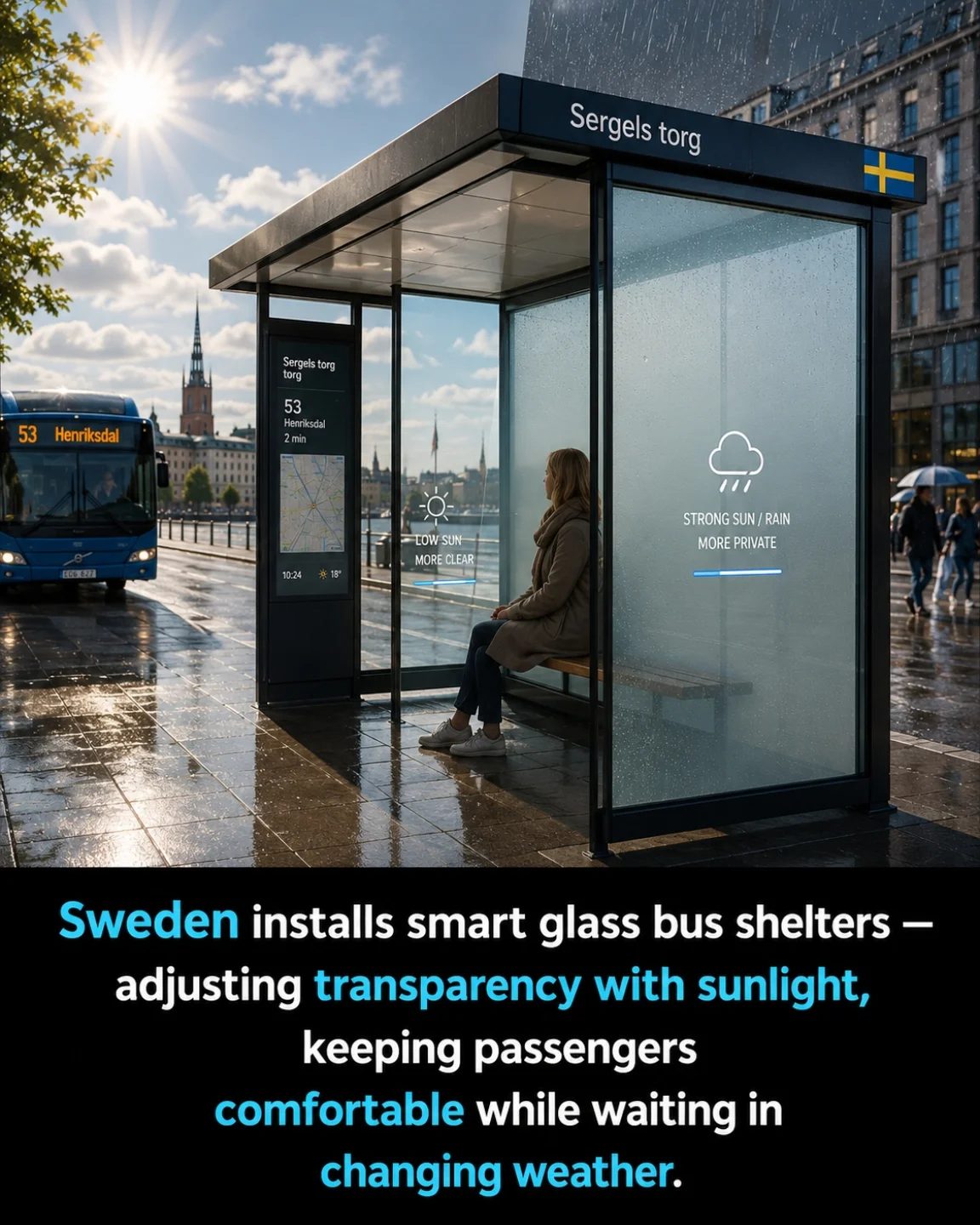
Smart Bus Shelters with Adaptive Glass Technology
Modern urban infrastructure is evolving rapidly, especially when it comes to public transit amenities. One standout innovation is the smart bus shelter equipped with adaptive glass technology. These shelters are designed to enhance the passenger experience by automatically adjusting to changing weather conditions. Located at Sergels torg in Sweden, this innovative shelter exemplifies how technology can improve everyday urban life.
Context / Why This Matters
Public transportation is a lifeline for many urban dwellers, and the quality of bus shelters plays a significant role in the overall commuting experience. With the unpredictable nature of weather, having a shelter that adapts to the environment can make a substantial difference in passenger comfort and satisfaction. The smart bus shelter at Sergels torg in Sweden is a prime example of how modern technology can revolutionize these mundane yet essential urban fixtures.
Main Discussion
Adaptive Glass Technology
The key feature of these smart bus shelters is the adaptive glass technology. This technology allows the glass to adjust its transparency based on the amount of sunlight. On sunny days, the glass can become more transparent, allowing natural light to enter while reducing glare. Conversely, on cloudy or rainy days, the glass can darken to provide privacy and protection from the elements. This dynamic adjustment ensures that passengers remain comfortable regardless of the weather conditions.
Enhanced Passenger Comfort
Traditional bus shelters often provide little more than basic protection from the rain or sun. However, the smart bus shelter at Sergels torg goes a step further. By integrating adaptive glass technology, the shelter not only protects passengers from the elements but also offers a more pleasant waiting experience. The ability to adjust to changing weather conditions means that passengers can wait comfortably, enjoying a clear view of the city when the weather is good and a cozy, sheltered space when it's not.
Environmental and Energy Efficiency
In addition to enhancing passenger comfort, these smart bus shelters contribute to energy efficiency and environmental sustainability. The adaptive glass technology reduces the need for artificial lighting and heating, as it optimizes natural light and heat. This not only lowers energy consumption but also reduces the carbon footprint associated with public infrastructure.
Urban Design and Aesthetics
The design of the smart bus shelter at Sergels torg is not just about functionality; it also enhances the urban landscape. The sleek, modern design integrates seamlessly with the surrounding architecture, adding a touch of sophistication to the urban environment. This attention to design and aesthetics makes the shelter a desirable addition to any public space, contributing to the overall ambiance of the area.
Practical Tips
If you're interested in implementing similar smart glass technology in your own urban infrastructure, here are some practical tips:
Assess Local Needs
Before installing smart bus shelters, assess the specific needs of your local community. Consider factors such as weather patterns, passenger footfall, and the overall design of the urban landscape. This will help you determine the best locations for these shelters and ensure they meet the needs of your community.
Consult with Experts
Working with experts in smart glass technology and urban design is crucial. They can provide valuable insights and recommendations on the best types of adaptive glass to use, as well as the most effective installation methods. This collaboration will help ensure that your smart bus shelters are both functional and aesthetically pleasing.
Invest in Quality Materials
When installing smart bus shelters, prioritize quality materials. High-quality adaptive glass technology will not only last longer but also provide better performance and durability. Investing in premium materials upfront can save you money in the long run by reducing maintenance costs and extending the lifespan of the shelter.
Important Takeaways
The smart bus shelter at Sergels torg in Sweden serves as a model for how urban infrastructure can be improved with innovative technology. The adaptive glass technology not only enhances passenger comfort but also contributes to energy efficiency and environmental sustainability. By integrating such advancements, cities can create more comfortable and enjoyable spaces for their residents and visitors.
The Future of Urban Infrastructure
As technology continues to evolve, we can expect to see more smart solutions integrated into urban infrastructure. From adaptive glass in bus shelters to smart lighting and heating systems, the possibilities are endless. These innovations not only improve the quality of life for urban dwellers but also contribute to sustainable development and environmental conservation.
Community Engagement
Engaging with the community is essential when implementing new urban infrastructure. Gathering feedback and input from residents and commuters can help ensure that the new shelters meet their needs and expectations. This collaborative approach fosters a sense of ownership and pride in the community, making the implementation of smart bus shelters a more successful and meaningful endeavor.
Conclusion
The smart bus shelter at Sergels torg in Sweden is a testament to the power of innovative technology in enhancing urban infrastructure. By utilizing adaptive glass technology, these shelters provide a comfortable and efficient waiting experience for passengers, regardless of the weather. As cities continue to evolve, integrating such smart solutions will be crucial in creating sustainable, efficient, and enjoyable urban spaces.
Questions readers ask
How does the adaptive glass technology in Sweden's bus shelter work?
Adaptive glass technology in the bus shelter at Sergels Torg in Sweden automatically adjusts its transparency based on weather conditions. On sunny days, the glass can darken to reduce glare, and on overcast or rainy days, it can become clearer to allow more natural light. This dynamic adjustment enhances both comfort and visibility for passengers.
What are the key benefits of the weather-adjusting bus shelter for daily commuters?
The weather-adjusting bus shelter offers several benefits for daily commuters. It provides optimal weather protection, shielding passengers from rain, snow, and harsh winds. Additionally, it helps regulate temperature and sunlight, ensuring a more comfortable and pleasant waiting experience. These features make the daily commute more enjoyable and easier to handle.
Are there any other smart features in the Swedish bus shelter besides adaptive glass?
While the adaptive glass is a standout feature, the bus shelter at Sergels Torg in Sweden may include additional smart features such as real-time bus arrival information, USB charging ports, Wi-Fi connectivity, and even digital displays for advertisements or public announcements. These features collectively enhance the overall passenger experience.
How does the adaptive glass technology improve passenger safety during weather changes?
The adaptive glass technology in the bus shelter improves passenger safety by reducing glare during sunny periods, which can otherwise impair vision. Additionally, by allowing more light in during overcast conditions, it helps maintain better visibility inside the shelter. This dual functionality ensures that passengers can see clearly and navigate safely, whether they are waiting for the bus or boarding it.
What makes the design of the Swedish bus shelter innovative compared to traditional ones?
The Swedish bus shelter's innovative design lies in its integration of adaptive glass technology, which automatically responds to weather conditions. Unlike traditional shelters, it provides dynamic adjustments to light and temperature, making it a cutting-edge example of modern bus shelter technology. This design prioritizes passenger comfort and convenience, setting a new standard for public transit amenities.
Can other cities benefit from implementing similar adaptive glass bus shelters?
Yes, other cities can greatly benefit from implementing similar adaptive glass bus shelters. These shelters enhance the overall commuter experience by providing better weather protection, comfort, and convenience. Cities looking to improve their public transit infrastructure can learn from Sweden's example and adopt this technology to make daily commutes more pleasant and efficient, as well as potentially reduce complaints about weather-related issues.
How does the adaptive glass technology in the Swedish bus shelter contribute to sustainability?
The adaptive glass technology in the bus shelter contributes to sustainability by reducing the need for artificial lighting and heating/cooling systems. By automatically adjusting to weather conditions, it optimizes the use of natural light and helps maintain a comfortable temperature without relying heavily on energy-consuming solutions. This makes the shelter more eco-friendly, aligning with modern sustainability goals.
Related deep dives
Similar reads based on topic and creator.

Recent articles
Fresh deep dives from the latest Reels we unpacked.




Comments
Be the first to comment.