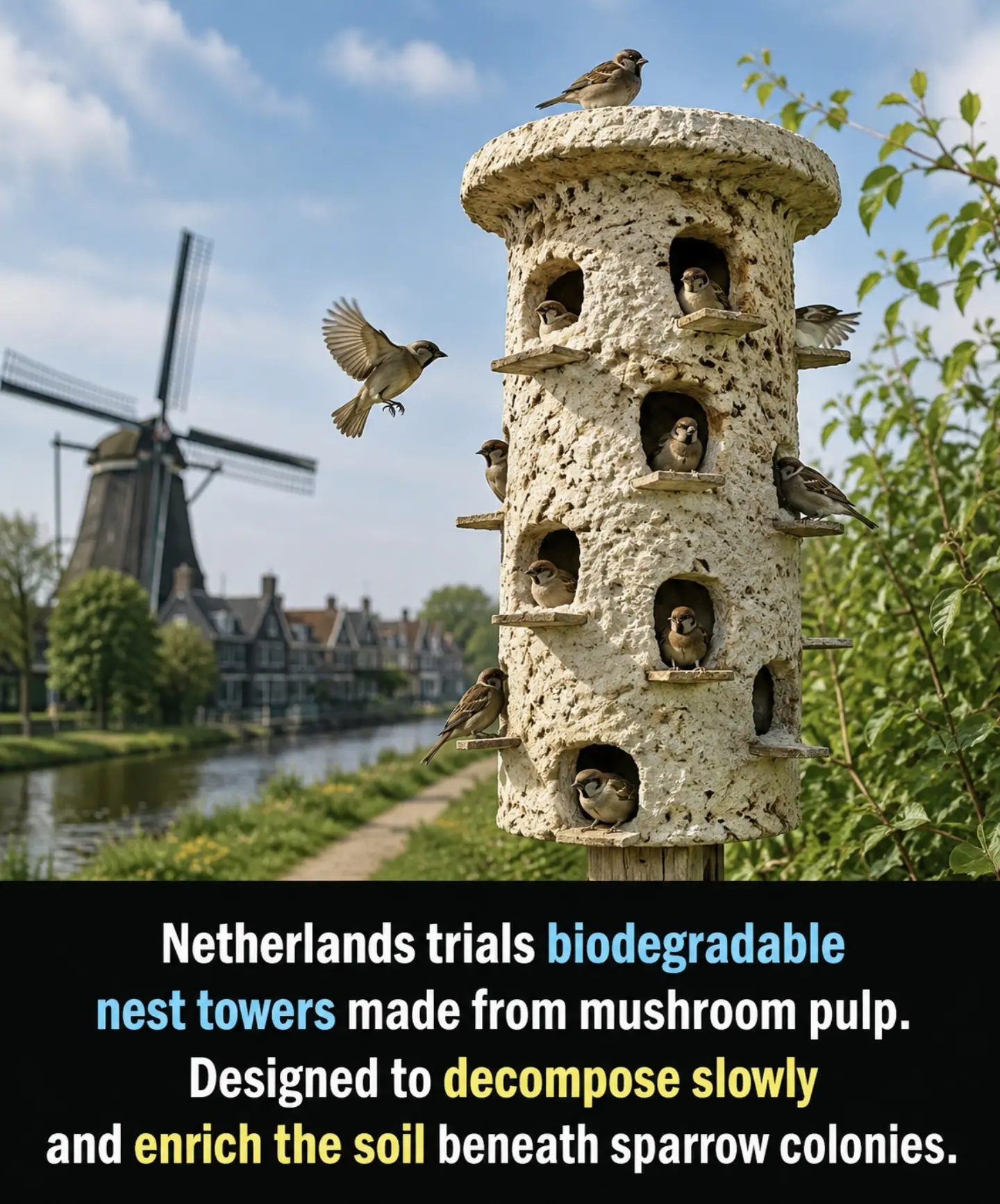
Sparrow Nest Towers: Innovative Birdhouses Promoting Natural Habitats
Sparrow nest towers are a groundbreaking innovation in birdhouse design, combining sustainability and functionality to create ideal habitats for sparrow colonies. These towers, currently being trialed in the Netherlands, are constructed from biodegradable mushroom pulp. The unique design of these towers makes them a fascinating addition to the garden landscape, offering multiple benefits to both birds and the surrounding environment.
Why the Towers Matter
The increasing scarcity of natural habitats for birds has become a pressing concern. Urbanization and deforestation have led to a decline in suitable nesting sites, making it crucial to develop alternatives that mimic natural habitats. Traditional birdhouses often fall short in this regard, offering limited space and failing to decompose over time, leading to environmental waste. The sparrow nest towers address this issue by providing ample nesting spaces and decomposing gradually, enriching the soil beneath.
The Problem of Urbanization
Urbanization has significantly reduced the availability of natural habitats for birds. As forests and fields give way to buildings and concrete, bird populations struggle to find suitable nesting sites. This problem is exacerbated by the lack of sustainable solutions. Traditional birdhouses, while helpful, do not sufficiently replicate the natural habitats that birds need to thrive.
The Environmental Impact
The environmental impact of traditional birdhouses is another concern. Made from materials like plastic or wood, these birdhouses can take centuries to decompose, contributing to environmental waste. Sparrow nest towers, on the other hand, are made from biodegradable mushroom pulp, which decomposes naturally, enriching the soil and reducing environmental waste.
The Design and Functionality of Sparrow Nest Towers
The Use of Mushroom Pulp
Mushroom pulp is an innovative material that offers numerous benefits. It is biodegradable, meaning it breaks down over time and enriches the soil. This material is also lightweight and durable, making it an ideal choice for birdhouses. The pulp provides a natural, textured surface that mimics the feel of trees and plants, offering a more authentic nesting experience for sparrows.
Multiple Nesting Spaces
The design of the sparrow nest towers features multiple nesting holes, providing ample space for sparrow colonies. This design ensures that different birds can nest in a secure and comfortable environment. The tower structure also offers a sense of community, as sparrows can nest near each other, mimicking their natural social behavior.
Natural Landscape Integration
In addition to their functional benefits, sparrow nest towers are designed to blend seamlessly with natural landscapes. The towers are placed in picturesque Dutch landscapes, surrounded by windmills and canals, creating a visually appealing and harmonious environment. This integration enhances the overall aesthetic of gardens and parks, making them more inviting for both humans and birds.
A Slow Decomposition Process
The sparrow nest towers are designed to decompose slowly, ensuring that they provide long-term benefits to the environment. This slow decomposition process not only enriches the soil but also prevents the towers from becoming a waste product. The gradual breakdown of the towers means that they will continue to support sparrow colonies for an extended period before eventually returning to the earth.
Practical Tips for Setting Up Sparrow Nest Towers
Setting up sparrow nest towers involves several practical steps to ensure that the birds have a safe and comfortable nesting environment.
Choosing the Right Location
Selecting the right location for sparrow nest towers is crucial. Ideally, the towers should be placed in open, well-drained areas where sparrows can easily access them. Avoid placing the towers in shady or windy areas, as these conditions can be uncomfortable for nesting birds. Additionally, ensure that the towers are secure and stable, as sparrows need a sturdy structure to build their nests.
Ensuring Safety
Safety is a top priority when setting up sparrow nest towers. Ensure that the towers are positioned away from any potential hazards, such as busy roads, power lines, or predators. The towers should also be placed at a height that is safe for birds to enter and exit, typically between 5 and 10 feet above the ground.
Maintaining the Towers
Regular maintenance of sparrow nest towers is essential to ensure their longevity and effectiveness. Inspect the towers periodically to check for any damage or signs of wear. Replace any damaged parts and ensure that the towers remain stable and secure. Additionally, keep the area around the towers clean and free from debris to ensure a healthy nesting environment for the sparrows.
Important Takeaways
Sparrow nest towers represent a significant advancement in birdhouse design, offering a sustainable and functional solution for supporting sparrow colonies. Here are the key takeaways:
- Sustainability: Made from biodegradable mushroom pulp, these towers decompose naturally, enriching the soil and reducing environmental waste.
- Functionality: The towers provide multiple nesting spaces, ensuring that sparrow colonies have ample room to nest securely.
- Natural Integration: Designed to blend seamlessly with natural landscapes, these towers enhance the aesthetic appeal of gardens and parks.
- Long-term Benefits: The slow decomposition process ensures that the towers continue to support sparrow colonies for an extended period, providing long-term benefits to the environment.
Conclusion
Sparrow nest towers are a testament to the innovative use of biodegradable materials to create sustainable bird habitats. By providing ample nesting spaces and decomposing naturally, these towers offer significant benefits to both birds and the environment. Whether you're a bird enthusiast or a garden lover, incorporating sparrow nest towers into your outdoor space can create a harmonious and supportive ecosystem for sparrow colonies.
Questions readers ask
What are mushroom pulp birdhouses and why are they beneficial?
Mushroom pulp birdhouses are innovative structures made from biodegradable mushroom pulp. They are beneficial because they provide nesting spaces for birds like sparrows and gradually decompose over time, enriching the soil and reducing waste. These birdhouses are an eco-friendly alternative to traditional birdhouses and contribute to sustainable living.
How do sparrow nest towers in the Netherlands help the environment?
Sparrow nest towers in the Netherlands promote environmental sustainability by creating nesting spaces for sparrows and reducing the need for additional deforestation or habitat destruction. The biodegradable nature of mushroom pulp ensures that these towers gradually decompose, contributing to soil health. Thus, they offer a nature-friendly solution to the problem of urbanization.
What makes sparrow nest towers a unique addition to garden landscapes?
Sparrow nest towers stand out due to their innovative design and sustainable materials. They are made from mushroom pulp, a biodegradable material, and provide ample nesting spaces for sparrow colonies. The towers' unique shape and eco-friendly nature make them an attractive and functional addition to garden landscapes.
Are there any benefits to using biodegradable birdhouses over traditional ones?
Biodegradable birdhouses, such as those made from mushroom pulp, offer several benefits over traditional birdhouses. They decompose naturally, reducing environmental waste and enriching the soil. Additionally, they provide a sustainable nesting solution for birds, supporting local ecosystems.
How do sparrow nest towers address the issue of declining bird habitats in urban areas?
Sparrow nest towers address the issue of declining bird habitats by offering alternative nesting sites in urban and suburban areas. These towers mimic natural habitats and provide safe spaces for sparrow colonies. Using biodegradable materials ensures that these structures contribute positively to the environment.
What materials are used to make sustainable tower birdhouses in the Netherlands?
Sustainable tower birdhouses in the Netherlands are primarily made from mushroom pulp. This material is biodegradable and provides a safe and comfortable space for sparrows. The use of mushroom pulp helps to reduce the environmental impact of these birdhouses, making them an eco-friendly choice.
Recent articles
Fresh deep dives from the latest Reels we unpacked.

Comments
Be the first to comment.