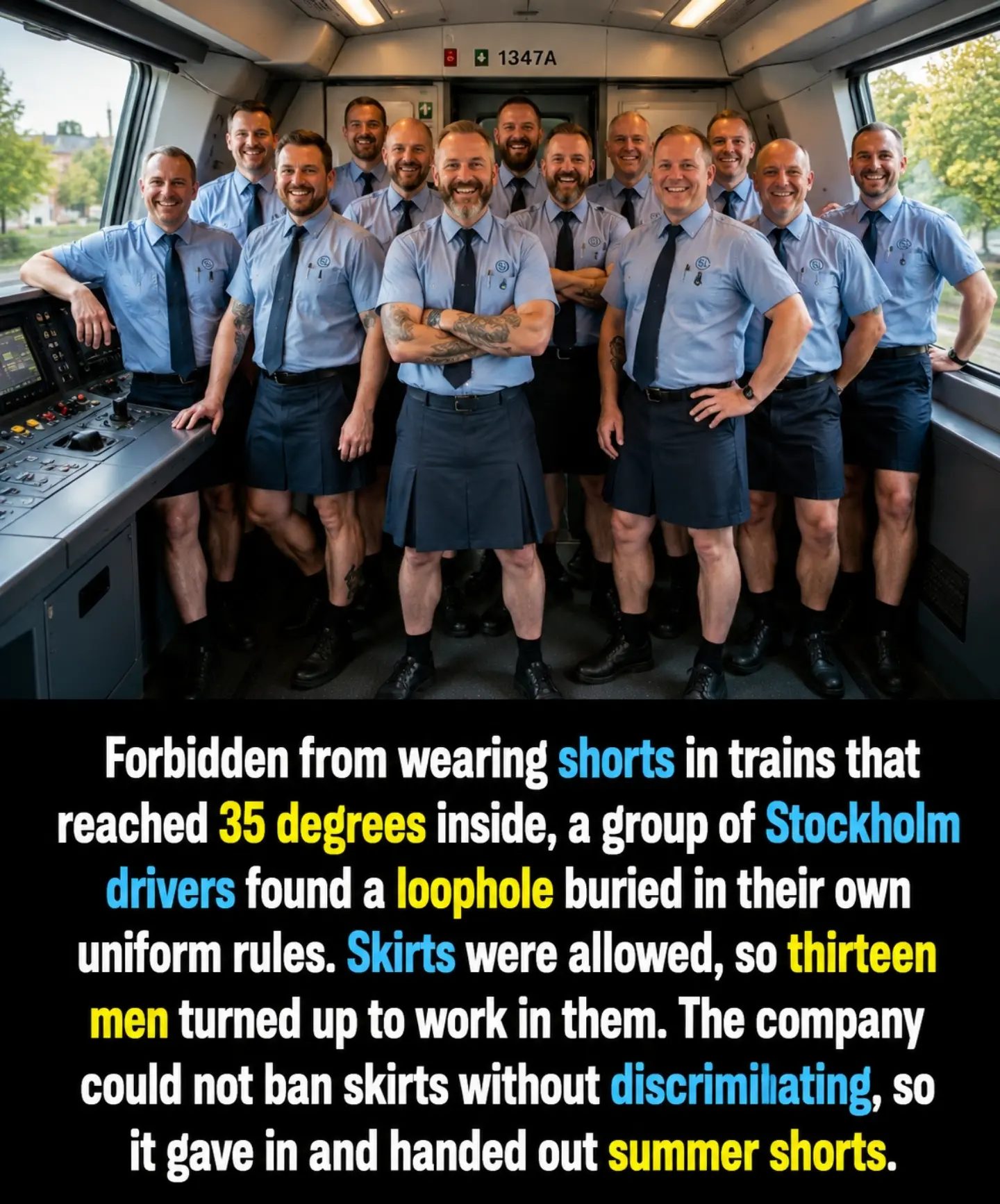
Train Drivers in Stockholm Wear Skirts to Circumvent Uniform Rules
Train drivers in Stockholm made headlines when they wore skirts to work, leveraging a loophole in uniform rules to address a ban on shorts during excessively hot weather. This unconventional workaround highlights the complexities of workplace dress codes and the creative measures employees may take to find comfort in challenging conditions.
The Context of Uniform Policies and Workplace Comfort
Uniform policies are a common feature in many professions, including train drivers. These policies are designed to maintain a professional appearance, ensure safety, and promote a consistent image for the organization. In Sweden, the Stockholm train drivers are no exception to this rule. However, the recent heatwaves in the region presented a unique challenge for these professionals.
The Heatwave and the Ban on Shorts
During a period when temperatures inside the trains reached 35 degrees Celsius, the existing uniform policy banned train drivers from wearing shorts. This policy left drivers with limited options for staying cool during their shifts. The discomfort and potential impact on performance and safety sparked a need for a creative solution.
The Loophole in Uniform Rules
Train drivers in Stockholm discovered a loophole in their uniform rules that allowed them to wear skirts. This loophole provided a legal and effective way to comply with the uniform code while also addressing their comfort needs during the intense heat. The drivers, in response, turned up to work wearing skirts, taking advantage of the existing regulations to their advantage.
This move highlighted the importance of having flexible and practical uniform policies, especially in professions where environmental conditions can significantly affect work performance. The revelation underscored the need for organizations to continuously review and adapt their policies to better suit the needs and comfort of their employees.
The Company's Response
The train company found itself in a challenging position when the drivers began wearing skirts. Banning skirts outright would have been discriminatory, as it would have singled out a specific gender. Instead, the company chose to offer a more practical solution: providing summer shorts for the drivers. This decision demonstrated a willingness to adapt to the employees' needs and to address the underlying issue of comfort during hot weather.
The Impact on Workplace Policies
This event has broader implications for workplace policies and the importance of considering employee comfort and well-being. It highlights the need for companies to keep up with changing conditions and to be willing to adapt their policies to better support their workforce. The Stockholm train drivers' initiative serves as a reminder that employees, when faced with challenges, can often find creative solutions that benefit everyone.
Practical Tips for Adapting Uniform Policies
When adapting uniform policies, companies can consider the following tips:
1. Conduct Regular Reviews
Regularly review uniform policies to ensure they remain practical and relevant. Consider the evolving needs of employees and the environmental conditions they work in.
2. Engage Employees
Engage employees in the process of updating uniform policies. Their insights and experiences can provide valuable input on what works and what doesn't.
3. Offer Flexibility
Offer flexibility in uniform choices, allowing employees to choose from a range of options that meet both the company's dress code and their personal comfort needs.
4. Consider Environmental Conditions
Take environmental conditions into account when designing uniform policies. Ensure that employees have access to appropriate clothing for different weather conditions.
Important Takeaways
The decision by train drivers in Stockholm to wear skirts highlights several important points about workplace policies and employee well-being:
- Flexibility in Policies: Uniform policies should be flexible and adaptable to changing conditions.
- Employee Comfort: Ensuring employee comfort is crucial for maintaining performance and morale.
- Adaptability: Companies must be willing to adapt their policies to better meet the needs of their employees.
- Inclusive Policies: Policies should be inclusive and non-discriminatory, considering the diverse needs of all employees.
Conclusion
The actions of the Stockholm train drivers wearing skirts to work underscored the importance of adaptable and inclusive workplace policies. By leveraging a loophole in their uniform rules, the drivers demonstrated a proactive approach to addressing discomfort during hot weather. The company's eventual provision of summer shorts also highlighted the value of listening to employee needs and finding practical solutions. This event serves as a reminder for organizations to continually review and adapt their policies to ensure they prioritize employee comfort and well-being.
Questions readers ask
Why did Stockholm train drivers start wearing skirts?
Stockholm train drivers started wearing skirts as a creative way to beat the heat during a summer heatwave. The skirt loophole came in response to a ban on wearing shorts as part of their uniform.
Are skirts part of the standard uniform for Stockholm train drivers?
No, skirts are not part of the standard uniform. Train drivers wore skirts to circumvent the uniform rules and find comfort in the heat.
What prompted the ban on shorts for Stockholm train drivers?
The ban on shorts was likely implemented to maintain a consistent and professional appearance. However, it left train drivers seeking alternative ways to cope with high temperatures.
How do uniform policies typically address changing weather conditions?
Uniform policies often struggle to address extreme weather. They usually balance professional appearance and safety, but may not account for comfort during sudden weather changes.
What can other professions learn from the Stockholm train drivers' approach?
Other professions can learn about creative problem-solving when faced with rigid uniform rules. In challenging conditions, employees may find clever ways to adapt their attire.
What are the typical guidelines for workplace attire during extreme weather?
Typical guidelines vary by company, but often include specific attire like light-colored clothing, breathable fabrics, and head coverings. If no specific guidelines exist, employees may need to find loopholes like Stockholm train drivers.
How did the public react to Stockholm train drivers wearing skirts?
The public reaction was generally positive and amused. Many saw it as a lighthearted and clever solution to the heat problem, highlighting the need for adaptable uniform policies.
Related deep dives
Similar reads based on topic and creator.




Recent articles
Fresh deep dives from the latest Reels we unpacked.




Comments
Be the first to comment.