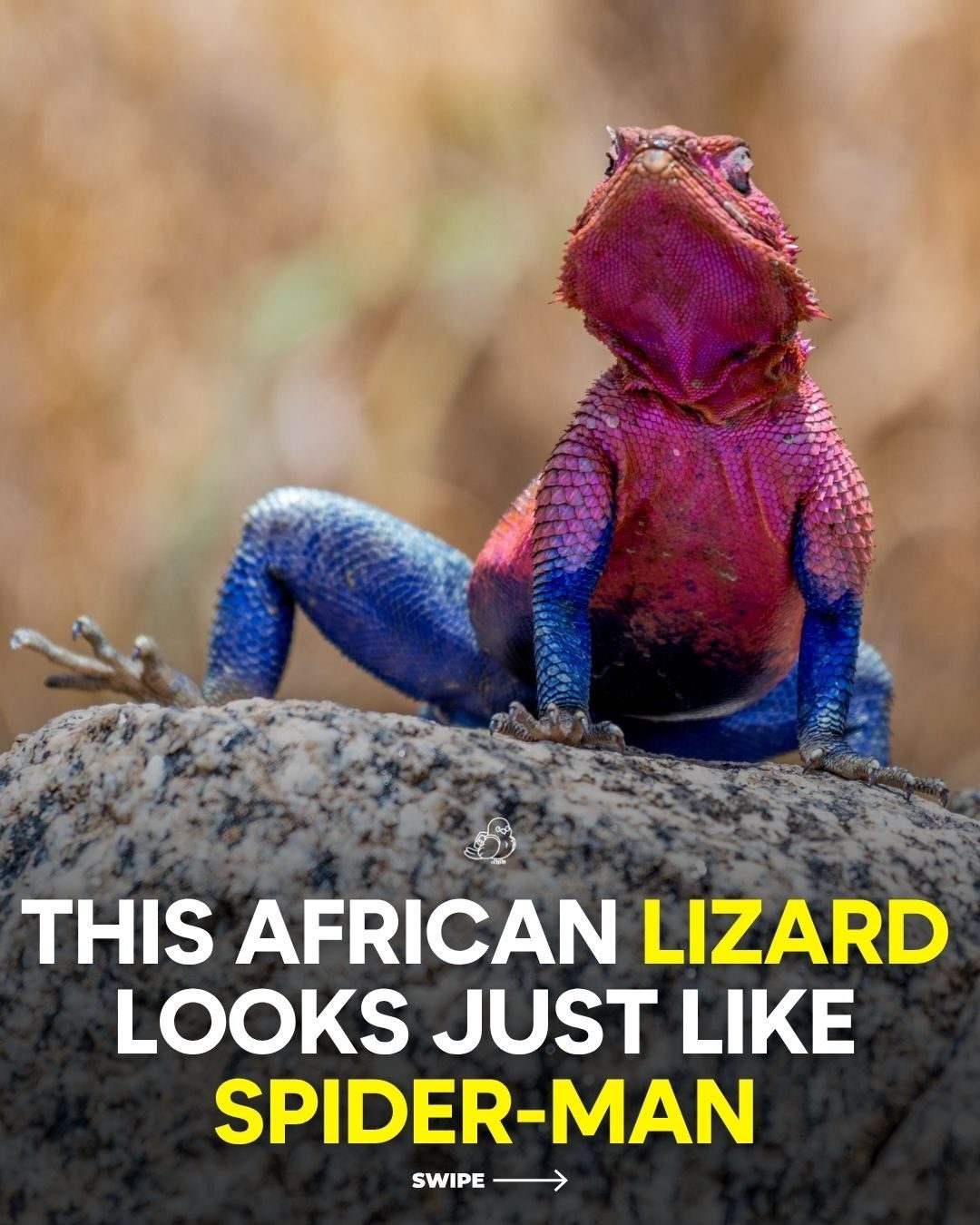
The Mwanza Flat-Headed Rock Agama
The Mwanza flat-headed rock agama is one of East Africa’s most visually striking reptiles. Found across rocky landscapes in Tanzania, Kenya, and Rwanda, these lizards are renowned for their extreme color contrast. Dominant males develop a vivid red head and deep blue body, while females and younger males remain more muted in tone. This difference is not arbitrary; it reflects the social hierarchy among these lizards. The brightest males usually control the best sunlit rocks, where they bask, defend territory, and attract mates.
Why This Matters
The vibrant coloration of the Mwanza flat-headed rock agama is not just for show. It serves critical functions in their social structure and survival. Understanding these lizards provides insights into the intricacies of animal behavior and the importance of habitat conservation.
Adaptations for Survival
The Mwanza flat-headed rock agama is highly adapted to life on exposed rock surfaces. Their flattened bodies help them stay close to the ground, reducing their visibility to predators. This adaptation, combined with their speed and agility, allows them to escape predators in open terrain. Their unique coloration also plays a role in communication and social hierarchy.
The Role of Color in Social Structure
The striking colors of the dominant males are not merely decorative; they are a form of communication. The vivid red head and deep blue body signal dominance and territory ownership. Females and younger males, with their more muted tones, often occupy lower positions in the social hierarchy. These color variations help maintain order and reduce conflicts within the group.
Territorial Behavior
Dominant males are known to control the best sunlit rocks, where they bask, defend territory, and attract mates. These rocks provide optimal conditions for thermoregulation and offer strategic vantages for spotting predators and competitors. The aggressive defense of these territories ensures that dominant males have access to the best resources, which is crucial for their reproductive success.
Habitat and Conservation
Vulnerability to Environmental Change
Rock agama lizards are vulnerable to environmental changes. Expanding development, quarrying, and habitat disruption can reduce the rocky ecosystems they depend on. These activities fragment habitats, making it harder for the lizards to find suitable rocky surfaces for basking and reproduction. Additionally, the noise and disturbance from human activities can disrupt their behavior and communication.
Habitat Conservation
Conserving the rocky habitats of the Mwanza flat-headed rock agama is essential for their survival. Protecting these ecosystems involves limiting development, preventing quarrying, and implementing sustainable land-use practices. Community involvement and education are also crucial for raising awareness about the importance of these habitats and the species that depend on them.
Sustainable Development
Sustainable development practices can help balance the needs of both humans and wildlife. This includes creating protected areas, promoting ecotourism, and implementing conservation programs. By supporting sustainable development, we can ensure that the Mwanza flat-headed rock agama and other species continue to thrive in their natural habitats.
Practical Tips for Observation
Best Time to Observe
The best time to observe the Mwanza flat-headed rock agama is during the morning and late afternoon when the sun is out. During these times, the lizards are more active and can be seen basking on rocks. Early morning and late afternoon are also when dominant males are most likely to be seen defending their territories.
Optimal Observation Conditions
For the best observation experience, choose a day with clear skies and minimal wind. Clear weather conditions provide optimal visibility, while calm winds reduce the likelihood of the lizards being disturbed. Additionally, using binoculars or a camera with a telephoto lens can help you get a closer look without disturbing the lizards.
Ethical Observation
When observing the Mwanza flat-headed rock agama, it's important to follow ethical guidelines. Maintain a safe distance to avoid stressing the animals. Avoid making loud noises or sudden movements that could startle them. Remember to leave no trace by not disturbing the habitat or leaving behind any litter.
Important Takeaways
-
Coloration Significance: The vivid coloration of the Mwanza flat-headed rock agama is essential for their social structure and survival. Dominant males use their bright colors to signal dominance and attract mates.
-
Habitat Vulnerability: The rocky habitats of these lizards are vulnerable to environmental changes, including development, quarrying, and habitat disruption.
-
Conservation Efforts: Protecting the rocky ecosystems is crucial for the survival of the Mwanza flat-headed rock agama. Sustainable practices, community involvement, and conservation programs can help ensure their long-term survival.
-
Observation Tips: Optimal viewing conditions include clear skies, minimal wind, and observing from a safe distance. Using binoculars or a camera with a telephoto lens can enhance the viewing experience without disturbing the lizards.
-
Ethical Guidelines: Following ethical observation practices, such as maintaining a safe distance and leaving no trace, helps protect the lizards and their habitats.
Conclusion
The Mwanza flat-headed rock agama is a fascinating species with a unique adaptation to its environment. Their striking coloration and territorial behavior are not just visually appealing but also critical for their survival. Understanding and conserving their habitats is essential for ensuring their continued existence. By following ethical observation practices and supporting conservation efforts, we can appreciate these remarkable creatures while contributing to their preservation.
Questions readers ask
Why is the Mwanza flat-headed rock agama called the 'Spiderman lizard'?
The Mwanza flat-headed rock agama is nicknamed the 'Spiderman lizard' due to its vibrant red and blue coloration, which is reminiscent of the iconic superhero's costume.
Where can the Mwanza flat-headed rock agama be found?
The Mwanza flat-headed rock agama is native to East Africa, specifically in the rocky terrains of Tanzania, Kenya, and Rwanda.
How does the coloration of the Mwanza flat-headed rock agama differ between males and females?
Dominant male Mwanza flat-headed rock agamas develop a vivid red head and deep blue body, while females and younger males have more muted tones. This difference in coloration is a key indicator of social status among these lizards.
What purpose does the vivid coloration serve for the Mwanza flat-headed rock agama?
The vivid coloration of the Mwanza flat-headed rock agama serves multiple purposes, including communicating social status, helping to attract mates, and aiding in territorial disputes. It is a crucial aspect of their survival and social structure.
How does the physical appearance of the Mwanza flat-headed rock agama help it survive?
The agility and flattened bodies of the Mwanza flat-headed rock agama allow them to navigate rocky, open terrain with ease, helping them to move quickly and evade predators. Their vivid coloration also aids in attracting mates and establishing social hierarchies.
Related deep dives
Similar reads based on topic and creator.




Recent articles
Fresh deep dives from the latest Reels we unpacked.




Comments
Be the first to comment.