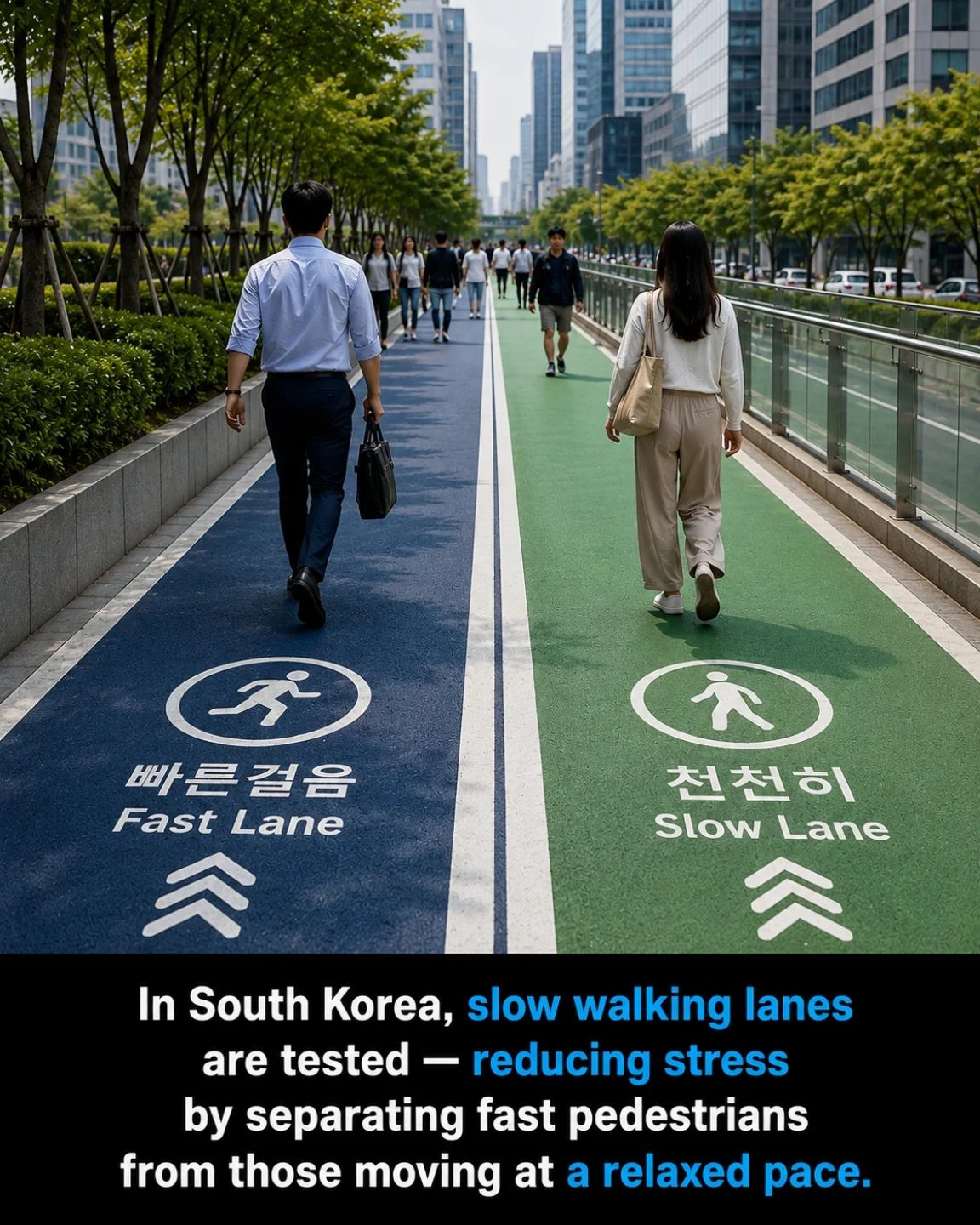
Pedestrian Lanes in South Korea
In South Korea, a novel approach to urban walking has emerged: designated pedestrian lanes for fast and slow walkers. The initiative aims to reduce stress and congestion by separating pedestrians based on their walking speed. This system, which has gained attention for its unique solution to a common urban issue, is a fascinating example of innovative urban planning.
Why this matters
In bustling cities, pedestrian traffic can be as congested as vehicular traffic. Pedestrians walking at different speeds often create bottlenecks, leading to frustration and stress. By introducing designated lanes for fast and slow walkers, South Korea is addressing this issue head-on, potentially setting a precedent for other urban areas worldwide.
Main discussion
The Concept of Designated Lanes
The core idea behind these designated lanes is to create a more efficient and stress-free walking experience. The 'Fast Lane' is typically marked in blue with a running figure icon, while the 'Slow Lane' is green with a similar icon. This visual distinction helps pedestrians quickly identify which lane to use based on their walking speed.
The Benefits
- Reduced Stress: By segregating walkers, the likelihood of collisions and near-misses is significantly reduced, creating a more pleasant walking environment.
- Improved Flow: Fast walkers can move quickly without obstruction, while slow walkers can enjoy a more relaxed pace without feeling rushed.
- Better Accessibility: The slower lane can also cater to individuals with mobility challenges, ensuring that everyone can navigate urban spaces at their own comfort level.
Implementation and Design
The implementation of these lanes involves clear signage and distinct color-coding. The use of blue and green not only distinguishes the lanes but also provides a visual cue that is easily understood. Symbols like running figures for the fast lane and leisurely walking figures for the slow lane further aid in quick identification.
Public Reception
While the initiative has garnered attention and praise for its innovative approach, it has also sparked conversations about its practicality and scalability. Some argue that such a system could be difficult to enforce in highly congested areas, while others see it as a step towards more thoughtful urban planning.
Practical tips
For Urban Planners
If you're an urban planner considering a similar initiative, here are some practical tips:
- Clear Signage: Ensure that the lanes are clearly marked with distinct colors and symbols. This will help pedestrians quickly understand the concept.
- Public Engagement: Involve the community in the planning process. Public feedback can provide valuable insights and ensure that the system is well-received.
- Pilot Programs: Start with a pilot program in a specific area before rolling it out city-wide. This will allow for adjustments based on real-world feedback.
For Pedestrians
If you're a pedestrian navigating these lanes, here are some tips:
- Choose the Appropriate Lane: Pay attention to the signs and choose the lane that best matches your walking speed.
- Be Mindful: Even in designated lanes, be mindful of others. If you need to switch lanes, do so safely and courteously.
- Respect the System: By using the lanes as intended, you contribute to a more efficient and stress-free walking experience for everyone.
Important takeaways
- Innovation in Urban Planning: South Korea's pedestrian lanes illustrate how innovative thinking can address common urban issues.
- Community Engagement: Involving the community in urban planning initiatives can lead to better acceptance and implementation.
- Simplicity and Clarity: Clear signage and distinct color-coding are key to the success of such initiatives.
Conclusion
South Korea's designated pedestrian lanes for fast and slow walkers represent a creative and practical solution to urban congestion. By segregating pedestrians based on their walking speed, the country is taking a significant step towards more efficient and stress-free urban spaces. As other cities around the world face similar challenges, this initiative serves as a valuable example of how to approach urban planning with both innovation and practicality.
Questions readers ask
How do the designated pedestrian lanes in South Korea work?
The designated pedestrian lanes in South Korea are designed to separate walkers based on their speed. There are typically two lanes: one for fast walkers and another for slow walkers. This separation helps to reduce congestion and stress by allowing pedestrians to move at their own pace without impediment.
What are the benefits of having separate lanes for fast and slow walkers?
Separate lanes for fast and slow walkers help to streamline pedestrian traffic, reducing congestion and frustration. Fast walkers can move quickly without having to weave around slower pedestrians, while slower walkers have space to move at a comfortable pace. Additionally, this system can improve overall accessibility, especially for elderly individuals and those with mobility challenges.
Where can these designated walking lanes be found in South Korea?
These designated walking lanes can be found in various urban areas throughout South Korea, particularly in busy cities like Seoul. They are often implemented in high-traffic pedestrian zones, near shopping districts, and around public transportation hubs. Pedestrian bridges may also feature these lanes to enhance the flow of foot traffic.
How are these walking lanes marked and signposted?
The walking lanes are clearly marked with distinct signs and often use color-coded or symbolic indicators to differentiate between fast and slow lanes. These visual cues help pedestrians easily identify which lane to use based on their walking speed, ensuring a smoother and more organized flow of traffic.
Do other countries have similar pedestrian lane systems?
While South Korea's system is notably unique and comprehensive, other countries have experimented with similar ideas. For instance, some cities have designated areas or times for pedestrians, such as car-free zones or pedestrian-only streets during certain hours. However, the specific implementation of separate lanes for different walking speeds is less common and is a distinctive feature of South Korea's urban planning.
How effective are these designated pedestrian lanes in reducing congestion?
The designated pedestrian lanes have shown promise in reducing congestion by minimizing bottlenecks and allowing for a more efficient flow of pedestrians. By separating walkers based on speed, these lanes help to alleviate the stress and frustration that can arise from differing walking paces, making urban environments more pleasant for all pedestrians.
Recent articles
Fresh deep dives from the latest Reels we unpacked.




Comments
Be the first to comment.