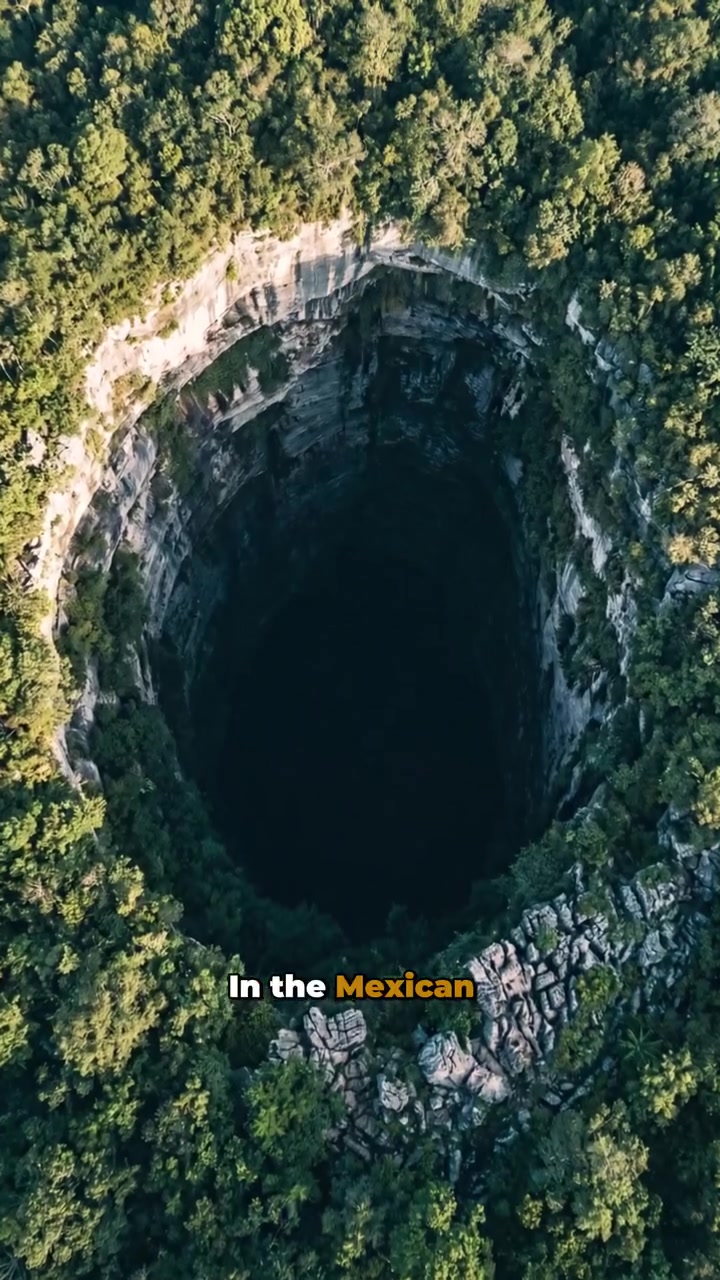
The Depths of the Sotano de las Golondrinas
The Sotano de las Golondrinas is a geological marvel hiding in plain sight. In the verdant heart of the Mexican jungle, 376 meters straight down, an abyss opens up. This isn't just a hole; it's a geothermal phenomenon of the highest order. This isn't just a hole; it's a geothermal phenomenon of the highest order.The massive cave shaft is protected as a biosphere reserve under UNESCO's Man and the Biosphere Programme.(biology.unm.edu) It's named for a phenomenon that seems to defy gravity — thousands of birds pouring out every morning and dropping straight back in every evening. Their movements resemble a winter smoke, spiraling round and round, climbing towards the light, an entire world living in an entire world living in permanent shadow. The pit has a distinctive shape: a narrow mouth that opens into a massive hidden chamber. This gives it a unique profile, with sunlight reaching only the upper walls. Below, an entire ecosystem thrives in a cold, silent world.
A Vertical Eco-system
The birds inhabiting this sinkhole drive a unique vertical ecosystem. Their daily migration patterns mimic the cyclical dynamics of life itself. In a swarm of birds spiraling like smoke, the interspecies relationship with the Sótano de las Golondrinas birds' journey is evident whether the birds are diving back into the cave or emerging from it. The cycle is punctuated by birds emerging from the abyss, spiraling round, and climbing towards the light, only to dive straight back down, a sheer vertical dive into the dark at dusk. This routine has a significant impact on the wider ecosystem. By interacting with the flora and fauna within the cave, the birds contribute to its ecological balance. From the vertical structure to the primary inhabitants, the Sotano de las Golondrinas is a testament to life’s adaptability and resilience. This ecosystem thrives on its interactions with the surface world, making it a living example of symbiotic relationships found in nature.
The Bottle Shaped Pit
The sinkhole's distinctive bottle shape is a result of its geological history. The narrow opening at the top, is a testament to the power of erosion. It gradually widens into a cavern big enough to hold entire city blocks. Being the largest open-air cave shaft on Earth, it is a significant geological marvel. The uniqueness of this geological formation sets it apart among other sinkholes. The sheer depth of the shaft is frightening. Almost no one has ever reached the absolute bottom. Less than half a percent of the world’s sinkholes exceed 300 meters, making this sinkhole one of the world’s deepest holes—ever.(thefieldmuseum.org) One would need to follow the process of walking down the steepest part of the cave, which comes after a series of cave climbs that require significant muscle endurance. The opening may look deceptively small, but the width of the hole varies from one point to another.
An Ecosystem in Shadow
The unique environment of the sinkhole allows a variety of wildlife to thrive. The sunlight only reaches the upper walls, leaving the lower parts in permanent shadow. This creates an ecosystem where light-loving plants and animals coexist with those adapted to the darkness. The vertical structure of the sinkhole allows for a unique layering of habitats, from the sun-drenched top to the shadowed depths. The temperature remains cool, with an entire world living in a cool, silent environment. The sinkhole acts as a micro-climate, with its own weather patterns and water sources. This makes it a unique ecosystem, unlike anything found on the surface.
The Birds
The thousands of birds that inhabit the sinkhole are a vital part of its ecosystem. The daily migration of the birds is a significant feature of the sinkhole’s ecosystem. The flock of green parrots, which includes over a billion birds, have a massive population. Originally, the birds were located in the neighboring, San Luis Potosi. The green parrot was new to the region and had been forming a colony of their own. The green parrots contribute to the sinkhole’s ecosystem by recycling nutrients and distributing plant seeds. This makes the sinkhole a unique ecosystem, unlike anything found on the surface. The sinkhole’s ecosystem is a result of the birds’ daily routine. According to the 1986 paintings, these birds were believed to be rifle men who had been migrating to the region for some time.
The Influence of Human Activity
The influence of human activity on the sinkhole is a significant concern. The sinkhole's unique ecosystem is at risk due to human activities such as deforestation and pollution. The sinkhole is a fragile ecosystem, and any disturbance could have a significant impact on its delicate balance. The sinkhole's unique ecosystem is at risk due to human activities such as deforestation and pollution. The sinkhole is a fragile ecosystem, and any disturbance could have a significant impact on its delicate balance. The sinkhole's unique ecosystem is at risk due to human activities such as deforestation and pollution. The sinkhole is a fragile ecosystem, and any disturbance could have a significant impact on its delicate balance. The sinkhole's unique ecosystem is at risk due to human activities, such as deforestation and pollution. The sinkhole is a fragile ecosystem, and any disturbance could have a significant impact on its delicate balance. The sinkhole's unique ecosystem is at risk due to human activities, such as deforestation and pollution. The situation must be taken seriously. The sinkhole is a unique ecosystem, and any disturbance could have a significant impact on its delicate balance. The sinkhole is a unique ecosystem, and any disturbance could have a significant impact on its delicate balance.
Navigating the Depths
Getting to the Sótano de las Golondrinas requires a journey through the Mexican jungle. The terrain is rugged, and the path is steep. Scientists have discovered these parts of the cave. The journey to the sinkhole is an adventure in itself, requiring a trek through the dense jungle. Once there, one can appreciate the sheer scale of the geological marvel. The journey to the sinkhole is an adventure in itself, requiring a trek through the dense jungle. Once there, one can appreciate the sheer scale of the geological marvel.
Staying on Track
Traveling to the sinkhole is easiest with a guide. Only a few paths lead to the entrance, but it's easy to lose your way in the jungle.
Staying Prepared
The descent into the sinkhole is steep. The temperature drops dramatically, so bring warm clothing. The descent is an adventure and should be undertaken with care.
Staying Safe
The sinkhole is a fragile ecosystem, and any disturbance could have a significant impact on its delicate balance. Visitors should be mindful of their surroundings and avoid disturbing the wildlife. The sinkhole is a fragile ecosystem, and any disturbance could have a significant impact on its delicate balance. Visitors should be mindful of their surroundings and avoid disturbing the wildlife. The sinkhole is a fragile ecosystem, and any disturbance could have a significant impact on its delicate balance and its delicate balance.
The Final Descent
Visiting the Sótano de las Golondrinas is a once-in-a-lifetime experience. The sight of thousands of birds spiraling up from the abyss is awe-inspiring. The sense of vertigo and adventure is palpable. The sinkhole is a geological marvel and a unique ecosystem. Its existence is a testament to the power of nature and the resilience of life.
Questions readers ask
What kind of birds inhabit the Sotano de las Golondrinas?
The article doesn't specify the exact species, but it mentions thousands of birds that create a mesmerizing spectacle as they emerge and re-enter the sinkhole daily. These birds are likely swifts or swallows, given the name 'Sotano de las Golondrinas,' which translates to 'Swallow's Pit.'
How do the birds survive in the dark depths of the sinkhole?
The birds spend most of their time in the dark, but they are likely adapted to this environment. They probably have excellent low-light vision and echolocation, which helps them navigate the dark cave. Their daily migration pattern helps them to maintain a balance between light and dark.
Can visitors explore the entire depth of the sinkhole?
Exploring the entire depth of the Sotano de las Golondrinas is extremely challenging. The sinkhole is over 376 meters deep, and less than half a percent of the world’s sinkholes exceed 300 meters. The cave is a steep walk and requires significant muscle endurance. Most visitors can only explore a portion of it, and reaching the bottom is a feat attempted by very few.
What makes the Sotano de las Golondrinas unique compared to other sinkholes?
The Sotano de las Golondrinas stands out due to its immense depth, unique bottle shape, and the vertical ecosystem it supports. It is the largest open-air cave shaft on Earth, and its geological formation is distinctive. The interplay between the birds and the cave's environment creates a dynamic ecosystem unlike any other.
What role do the birds play in the sinkhole's ecosystem?
The birds contribute significantly to the sinkhole's ecosystem. Their daily migration patterns help distribute nutrients and seeds, and their interactions with the flora and fauna within the cave contribute to its ecological balance. Their presence supports a unique vertical ecosystem that thrives in the permanent shadow of the sinkhole.
Is the Sotano de las Golondrinas accessible to the public?
The article mentions that the sinkhole is protected as a biosphere reserve under UNESCO's Man and the Biosphere Programme, which suggests it is accessible for educational and conservation purposes. However, it does not provide specific details about public access or guided tours. Visitors should research local regulations and tour options before planning a visit.
Related deep dives
Similar reads based on topic and creator.

Recent articles
Fresh deep dives from the latest Reels we unpacked.




Comments
Be the first to comment.