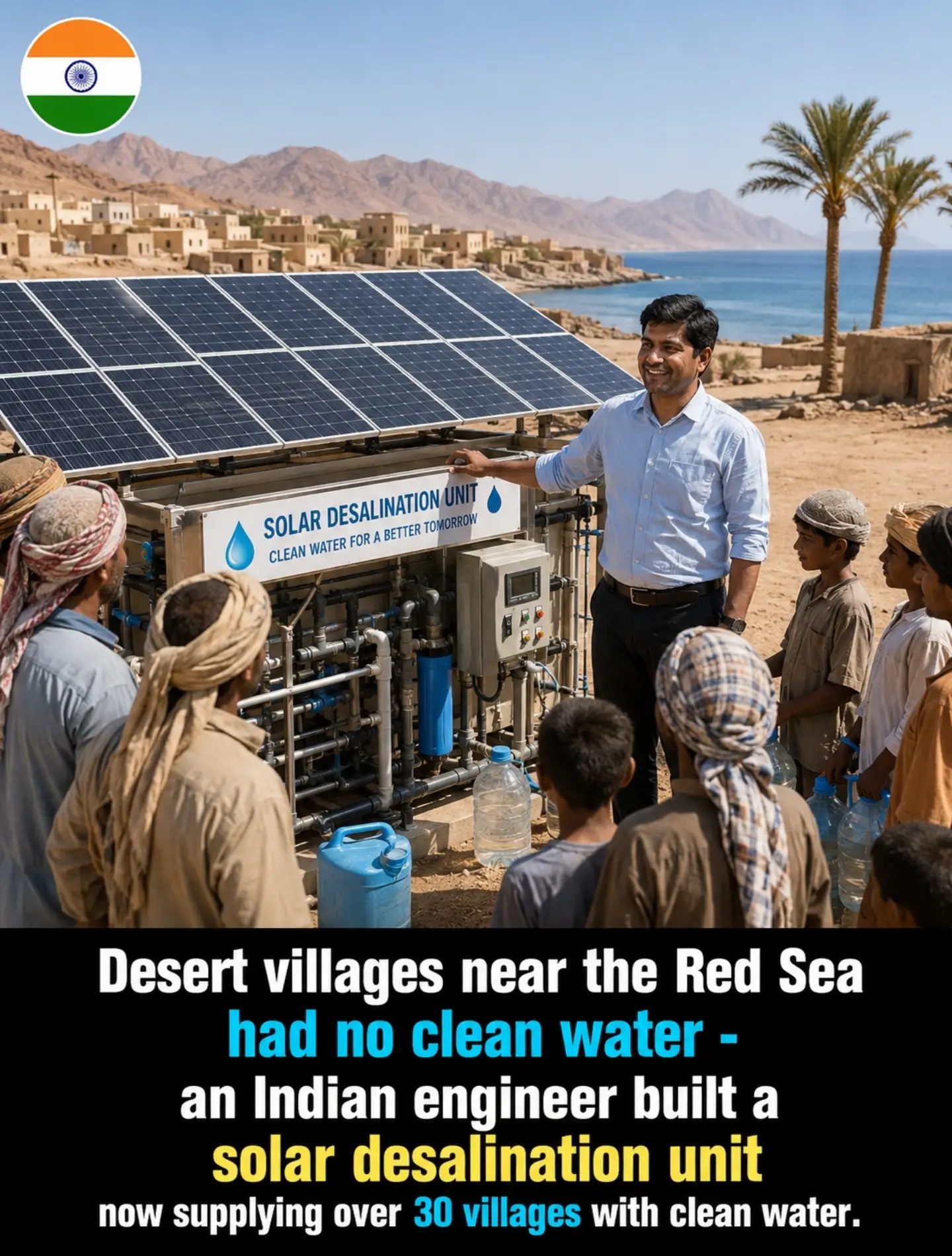
Solar Desalination Unit: A Sustainable Solution for Arid Regions
Solar desalination units are innovative systems designed to convert seawater into fresh water using solar energy. These units are particularly valuable in desert villages near the Red Sea and other arid regions where access to clean water is often scarce. An Indian engineer built a solar desalination unit in a desert village near the Red Sea. This unit now supplies over 30 villages with clean water, demonstrating the significant impact that renewable energy can have on community development.
Why This Matters
In arid regions, access to clean water is a critical issue. Traditional desalination methods often rely on fossil fuels, which are both environmentally damaging and costly. Solar desalination units offer a sustainable and cost-effective alternative. By harnessing the power of the sun, these units can produce clean water without contributing to carbon emissions or requiring extensive infrastructure.
Understanding Solar Desalination Units
How They Work
Solar desalination units operate by using solar panels to generate electricity, which is then used to power a desalination process. This process typically involves either thermal or membrane desalination. Thermal desalination heats up the seawater, evaporates it, and then condenses the vapor to produce freshwater. Membrane desalination, meanwhile, uses a semipermeable membrane to filter out salt and other impurities.
Components of a Solar Desalination Unit
- Solar Panels: These capture solar energy and convert it into electricity.
- Desalination System: This can be a thermal system (e.g., multi-stage flash distillation) or a membrane system (e.g., reverse osmosis).
- Storage Tanks: These store the purified water for distribution to the community.
- Control Systems: These manage the operation of the unit, ensuring optimal performance and efficiency.
The Impact in Desert Villages
The solar desalination unit near the Red Sea is a prime example of how this technology can transform lives. Before the installation of the unit, villagers relied on limited water sources, often contaminated and unsafe for drinking. The introduction of the solar desalination unit has provided a reliable source of clean water, significantly improving the health and well-being of the community.
Benefits of Solar Desalination
- Clean Water: The unit ensures a continuous supply of fresh, potable water, reducing the risk of waterborne diseases.
- Sustainability: By relying on solar power, the unit minimizes environmental impact and reduces dependence on non-renewable energy sources.
- Cost-Effectiveness: Over time, the cost of operating a solar desalination unit is lower than traditional desalination methods, making it a viable long-term solution for water scarcity.
- Community Empowerment: The installation and maintenance of the unit can create local jobs and foster a sense of community ownership and responsibility.
Practical Tips for Implementing Solar Desalination Units
Site Selection
Choose a location with ample sunlight and proximity to seawater. Ensure easy access to the community and a safe, secure site for installation.
Community Engagement
Engage with the local community to understand their needs and gain support for the project. This can be achieved through meetings, surveys, and community workshops.
Technical Considerations
- Solar Panel Capacity: Determine the required capacity based on water demand and sunlight availability.
- Desalination Method: Choose between thermal or membrane desalination based on cost, efficiency, and maintenance requirements.
- Water Storage: Ensure adequate storage capacity to meet peak demand and store surplus water for future use.
Maintenance and Monitoring
Regular maintenance is crucial for the unit's efficiency and longevity. This includes cleaning solar panels, monitoring water quality, and inspecting the desalination system for any issues.
Funding and Partnerships
Secure funding from governmental, non-governmental, or private organizations. Collaborate with local authorities, NGOs, and community leaders to ensure the project's success.
Important Takeaways
- Solar desalination units provide a sustainable and cost-effective solution for producing clean water in arid regions.
- They can significantly improve the health and well-being of communities by providing a reliable source of fresh water.
- Successful implementation requires careful site selection, community engagement, and regular maintenance.
Conclusion
The solar desalination unit in the desert villages near the Red Sea exemplifies how innovative technology can address critical issues in remote and arid regions. By harnessing solar power, these units offer a sustainable and efficient way to produce clean water, transforming the lives of those who depend on it. As technology advances and more communities adopt solar desalination, the potential for widespread impact and long-term sustainability grows. This initiative by an Indian engineer is just the beginning of a larger movement towards sustainable water solutions.
Questions readers ask
How does solar desalination work?
Solar desalination involves using solar energy to power the process of removing salt and minerals from seawater, making it suitable for drinking and other purposes. The process typically uses solar panels to generate electricity or heat, which drives the desalination technology, converting seawater into fresh water. This method reduces reliance on fossil fuels and reduces environmental impact.
What are the benefits of solar desalination for desert villages?
Solar desalination provides desert villages with a sustainable and cost-effective way to access clean water. By using solar energy, these units reduce the need for fossil fuels, lower operational costs over time, and decrease environmental pollution. This technology can significantly improve living conditions in arid regions where water scarcity is a major concern.
How many people can a solar desalination unit serve?
The capacity of a solar desalination unit varies depending on its size and design. For instance, a solar desalination unit in a desert village near the Red Sea supplies over 30 villages with clean water. This indicates that a well-designed unit can serve thousands of people, making a substantial difference in community water access.
What makes solar desalination a better option compared to traditional desalination methods?
Traditional desalination methods often rely on fossil fuels, which are environmentally damaging and costly. Solar desalination units harness renewable energy, reducing carbon emissions and long-term costs. Additionally, solar desalination can be more cost-effective in the long run due to lower operational expenses and reduced dependence on fluctuating fuel prices.
Can solar desalination units be implemented in other arid regions besides the Red Sea?
Yes, solar desalination units can be implemented in any arid region with sufficient sunlight. The technology is highly adaptable and can be tailored to meet the specific needs of different communities. Successful implementation in desert villages near the Red Sea demonstrates the potential for this technology to be applied in other water-scarce areas around the world.
Related deep dives
Similar reads based on topic and creator.




Recent articles
Fresh deep dives from the latest Reels we unpacked.




Comments
Be the first to comment.