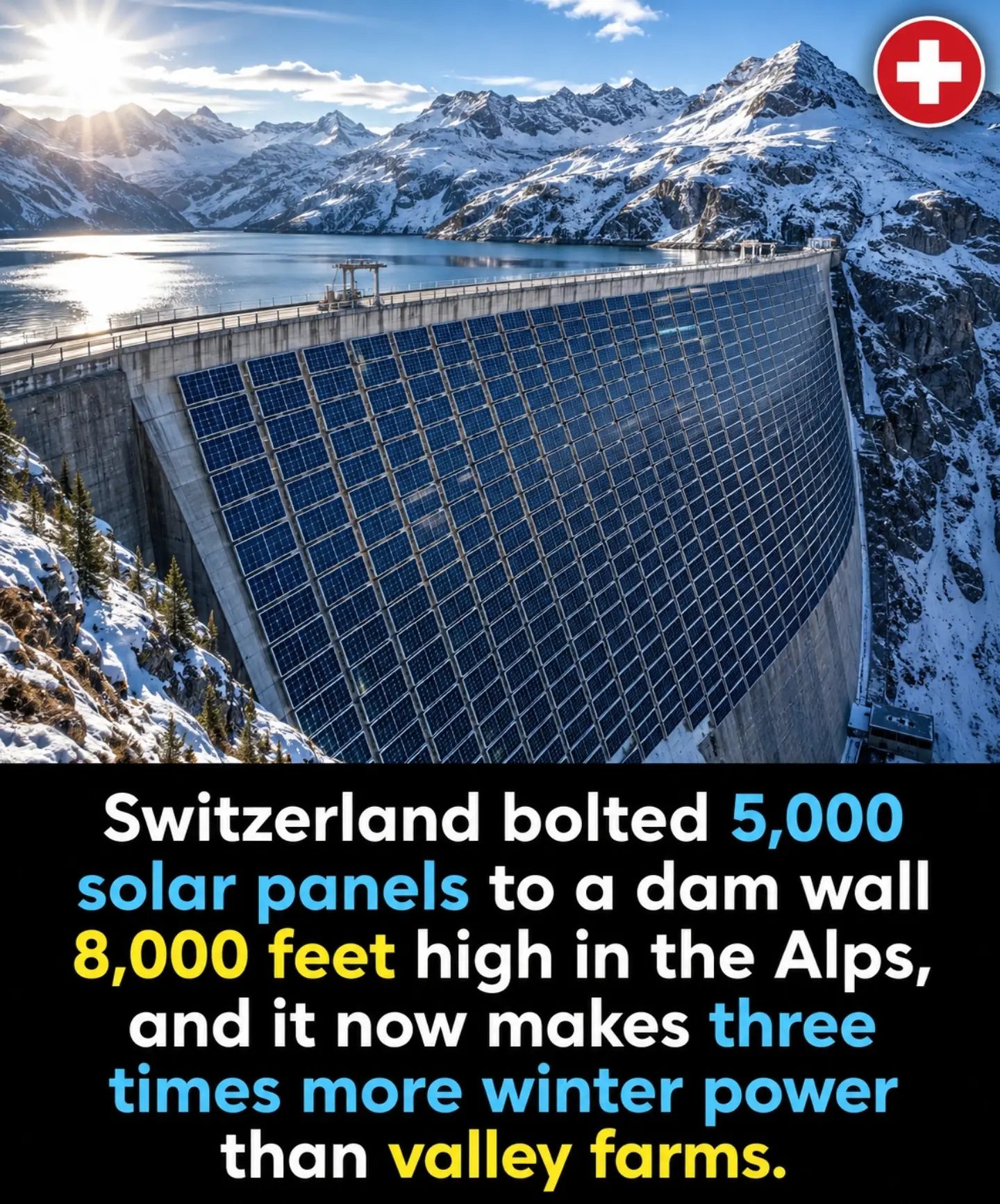
Solar Power Innovation in the Swiss Alps
Solar panels installed on a dam wall in the Swiss Alps produce three times more winter power than valley farms. This innovative approach demonstrates the potential of high-altitude solar installations and how they can significantly boost renewable energy production.
Why This Matters
Renewable energy sources, particularly solar power, are increasingly important in the fight against climate change. Traditional solar farms, typically located in valleys, face limitations due to seasonal variations and land availability. However, the installation of solar panels at high altitudes, such as on dam walls, introduces a new dimension to solar energy generation. This approach could help meet energy demands more efficiently, especially during winter when energy production is usually lower.
Main Discussion
The Installation Details
Switzerland has pioneered an innovative installation of 5,000 solar panels on a dam wall at an altitude of 8,000 feet in the Alps. This setup is a notable departure from conventional solar farm installations in valleys. The high altitude and unique positioning significantly impact the energy output, making it a groundbreaking example of renewable energy innovation.
Advantages of High-Altitude Solar Installations
Enhanced Energy Production
Solar panels installed at high altitudes, such as on the dam wall in the Swiss Alps, benefit from increased solar irradiance. The thinner atmosphere and fewer cloud obstructions make for more efficient solar energy conversion. The panels on the dam wall generate three times more power during winter compared to traditional valley farms. This increase is due to the combination of higher solar exposure and the reflective properties of snow in the surrounding area.
Reduced Seasonal Variations
High-altitude installations help mitigate seasonal variations in energy production. In lower elevations, solar farms often experience reduced energy output during winter due to shorter daylight hours and reduced solar irradiance. In contrast, the high-altitude panels benefit from prolonged daylight hours and higher solar intensity, making them more reliable year-round.
Space Utilization
By installing solar panels on existing infrastructure like dam walls, the land usage is optimized. Traditional solar farms require vast tracts of land, which can lead to conflicts with agricultural or conservation interests. High-altitude installations eliminate this land-use conflict by utilizing vertical surfaces, making them an attractive solution for regions with limited available land.
Practical Tips for High-Altitude Solar Installations
Site Selection
When planning high-altitude solar installations, selecting the right site is crucial. Factors to consider include:
- Altitude: Higher altitudes typically offer better solar irradiance.
- Orientation: South-facing orientations generally capture the most sunlight.
- Structural Integrity: Ensure the mounting structure, such as a dam wall, is stable and can withstand the weight and wind loads of the solar panels.
Installation Techniques
High-altitude installations require specialized techniques:
- Mounting Systems: Use robust mounting systems designed to adhere to vertical surfaces securely. Bolting systems, as used in Switzerland, can be particularly effective.
- Weather Resistance: Panels and mounting systems should be designed to withstand harsh weather conditions, including high winds, extreme temperatures, and snow.
- Accessibility: Ensure panels are accessible for maintenance and repairs despite their high altitude. Techniques like drone inspections and automated cleaning systems can be useful.
Maintenance and Monitoring
Regular maintenance is essential for the longevity and efficiency of any solar installation. For high-altitude installations, consider:
- Remote Monitoring: Use remote monitoring systems to track energy production, identify potential issues, and schedule maintenance.
- Drones and Robots: Employ drones and robotic systems for regular cleaning and inspections, reducing the need for human intervention in challenging environments.
Environmental Considerations
High-altitude installations have environmental benefits, but they also require careful planning:
- Wildlife: Ensure the installation does not disrupt local wildlife habitats.
- Water Bodies: Be mindful of the potential impact on water bodies, such as the vibration and reflection from the panels.
Important Takeaways
High-altitude solar installations, like the one in the Swiss Alps, offer a promising solution to enhance renewable energy production:
- Increased Energy Output: High-altitude installations can produce significantly more energy, particularly during winter.
- Efficient Land Use: These installations optimize space usage, reducing conflicts with agricultural and conservation areas.
- Environmental Benefits: Despite initial environmental considerations, high-altitude installations can lead to reduced carbon footprints and contribute to sustainable energy practices.
Conclusion
The installation of 5,000 solar panels on a dam wall in the Swiss Alps is a testament to the innovative strides being made in renewable energy. By leveraging high altitudes, renewable energy sources can produce more power, reduce seasonal variations, and optimize land use. As the world continues to seek sustainable energy solutions, this approach offers a glimpse into the future of solar power innovation.
Questions readers ask
Why do solar panels on the Swiss dam produce more power in winter?
Solar panels installed at high altitudes, like on the Swiss dam, benefit from cleaner air, more sunlight hours, and less obstruction from clouds, which enhances their performance during winter months. Additionally, the reflective properties of snow can increase the amount of sunlight reaching the panels.
What makes high-altitude solar installations more efficient than valley farms?
High-altitude solar installations benefit from reduced atmospheric interference, increased sunlight exposure, and lower temperatures that improve panel efficiency. These conditions allow high-altitude installations to generate more power, especially in winter.
How does the installation of solar panels on dam walls help the environment?
By generating more power, especially during winter, high-altitude solar installations reduce the reliance on fossil fuels. This helps lower greenhouse gas emissions and mitigates climate change, contributing to a more sustainable energy landscape.
Are there any other benefits to installing solar panels on dam walls besides increased power output?
Yes, installing solar panels on dam walls not only increases power output but also makes use of existing infrastructure, reducing the need for new land acquisition. This approach helps preserve local ecosystems and optimizes the use of available resources.
Can solar panels installed at high altitudes perform well in winter?
Yes, solar panels at high altitudes can perform exceptionally well in winter due to increased sunlight exposure, reduced atmospheric interference, and the reflective properties of snow. This makes high-altitude installations a reliable source of renewable energy, even in colder months.
How do solar panels on the Swiss dam contribute to renewable energy solutions?
Solar panels on the Swiss dam enhance renewable energy production by generating significantly more power, especially during winter, compared to traditional valley farms. This increased output helps meet energy demands more effectively and reduces the need for non-renewable energy sources.
Recent articles
Fresh deep dives from the latest Reels we unpacked.



Comments
Be the first to comment.