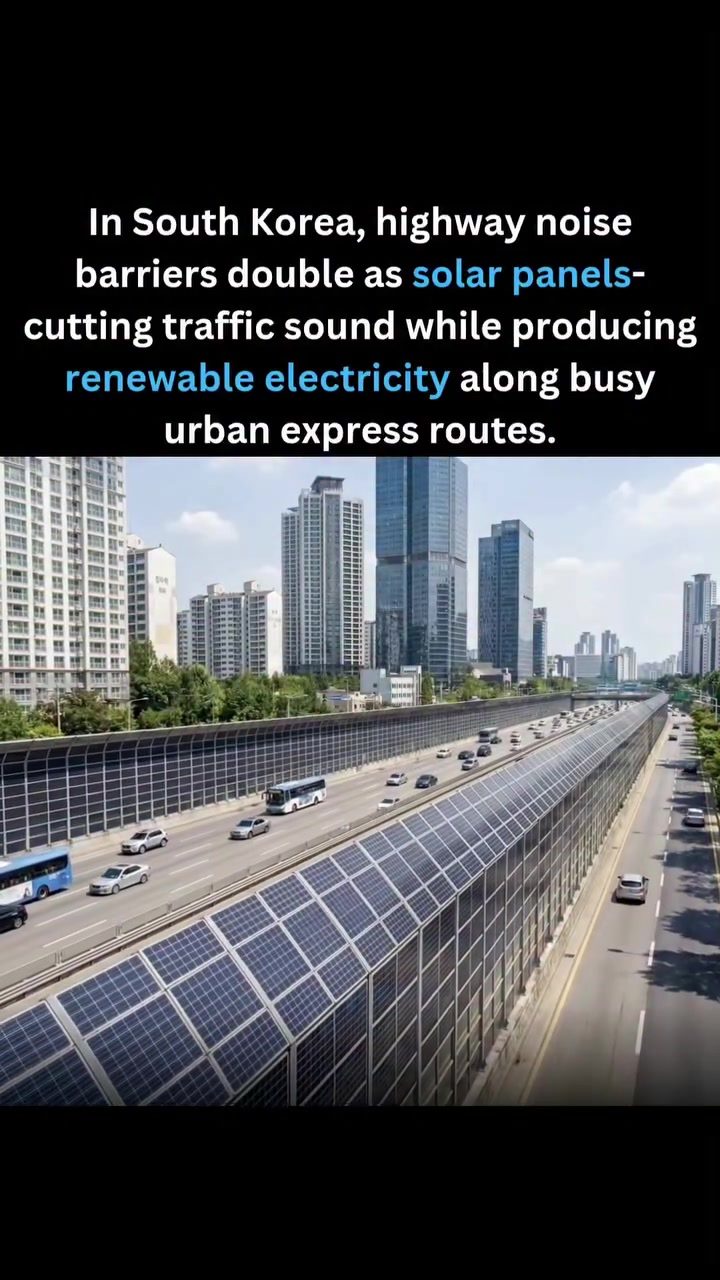
Solar Highway Noise Barriers
In South Korea, highway noise barriers are being repurposed as solar panels, offering a dual benefit of reducing traffic noise and generating renewable electricity. This innovative approach is particularly beneficial along busy urban express routes, where traffic noise can be a significant issue.
Why this matters
In densely populated urban areas, traffic noise is a persistent problem. Traditional noise barriers are effective at reducing sound, but they take up valuable space and don't contribute to the energy needs of the city. By integrating solar panels into these barriers, South Korea is not only addressing noise pollution but also harnessing solar energy. This dual-purpose design is a practical solution for cities looking to optimize the use of their infrastructure.
Main discussion
The concept of dual-purpose infrastructure
The idea of using highway noise barriers as solar panels is a brilliant example of dual-purpose infrastructure. By combining two essential functions—noise reduction and energy generation—into a single structure, cities can make better use of their limited space. This approach aligns with the growing trend of urban sustainability, where every element of the urban landscape is designed to serve multiple purposes.
How it works
The installation of solar panels on highway noise barriers involves mounting the panels on the side of the barrier that faces the sun. These panels are designed to capture solar energy while also acting as a barrier to reduce traffic noise. The electricity generated by the panels can be fed into the local power grid, contributing to the city's renewable energy supply. This setup ensures that the noise barriers are not just passive structures but active participants in the city's energy ecosystem.
Benefits for urban areas
For urban areas, this innovation offers several benefits:
- Reduced Noise Pollution: The primary function of noise barriers is to reduce the noise levels from highways, making residential and commercial areas adjacent to highways more livable.
- Renewable Energy Generation: By integrating solar panels, these barriers contribute to the city's renewable energy goals, helping to reduce dependence on fossil fuels.
- Space Efficiency: Urban areas are often constrained by space. This dual-purpose design maximizes the use of existing infrastructure, freeing up valuable land for other uses.
Implementation along urban express routes
The implementation of these solar highway noise barriers along busy urban express routes is particularly effective. These routes typically have high traffic volumes, leading to significant noise pollution. By placing solar panels along these routes, cities can tackle both the noise issue and the demand for clean energy. This approach is a practical solution for areas where space is at a premium and the need for renewable energy is high.
Integration with existing infrastructure
Integrating solar panels into existing highway infrastructure is a cost-effective and efficient way to enhance urban sustainability. The panels can be retrofitted onto existing noise barriers, which means that cities do not need to demolish and rebuild infrastructure to see the benefits. This makes the transition to renewable energy more feasible and less disruptive.
Practical tips
For cities considering this approach
If you're a city planner considering this approach, here are a few practical tips to get started:
- Assess Your Noise Barriers: Start by identifying the noise barriers that are most in need of replacement or upgrade. These are often the best candidates for solar panel integration.
- Engage with Renewable Energy Providers: Partner with renewable energy providers to design and install the solar panels. They can offer technical expertise and help navigate regulatory requirements.
- Public Engagement: Engage with the community to gather support and address any concerns about the changes. Transparency and community involvement can help ensure a smooth transition.
- Monitor and Optimize: Once the solar panels are installed, monitor their performance and optimize their efficiency. This may involve adjusting the angle of the panels or upgrading the technology as new advancements become available.
- Explore Funding Options: Consider grants, subsidies, or public-private partnerships to offset the initial costs of installation. Many renewable energy programs offer financial incentives for cities that adopt sustainable practices.
Important takeaways
- Dual-Purpose Infrastructure: Integrating solar panels into highway noise barriers is a practical example of dual-purpose infrastructure, optimizing space and resources.
- Noise Reduction and Energy Generation: This innovative approach simultaneously tackles noise pollution and generates renewable energy, addressing two pressing urban issues.
- Space Efficiency: In densely populated urban areas, this design maximizes the use of existing infrastructure, freeing up valuable land for other uses.
- Feasibility: The ability to retrofit existing noise barriers with solar panels makes this solution cost-effective and minimally disruptive.
- Urban Sustainability: By reducing noise pollution and generating clean energy, this approach contributes to the overall sustainability of urban areas.
Conclusion
The concept of using highway noise barriers as solar panels is a forward-thinking solution that addresses multiple challenges faced by urban areas. By combining noise reduction and renewable energy generation, this innovation represents a significant step towards more sustainable and efficient urban infrastructure. As cities around the world grapple with the challenges of urbanization, solutions like these offer a practical path to a greener, quieter future.
Questions readers ask
How do solar noise barriers in South Korea address traffic noise?
Solar noise barriers in South Korea are designed to absorb and deflect sound waves, reducing the impact of traffic noise on nearby urban areas. By integrating solar panels, these barriers serve the dual purpose of noise reduction and energy generation, optimizing the use of urban space.
What types of areas benefit most from these solar highway noise barriers?
The solar highway noise barriers are particularly beneficial along busy urban express routes. These areas often experience significant traffic noise, making them ideal for implementing noise-reducing solar panels.
How does the integration of solar panels into noise barriers contribute to renewable energy?
By converting highway noise barriers into solar panels, South Korea generates renewable electricity. This integration allows the city to harness solar energy from surfaces that would otherwise be unused, contributing to the city's power needs.
What are the advantages of using solar noise barriers over traditional noise barriers?
Unlike traditional noise barriers, which only reduce sound, solar noise barriers provide an additional benefit of generating renewable power. This dual-purpose design helps cities optimize their urban space and reduce their carbon footprint.
Can these solar noise barriers be implemented in other countries?
Yes, the concept of solar noise barriers can be adapted to other countries, especially those with dense urban populations and significant traffic noise issues. The success of this approach in South Korea demonstrates its potential for smart urban sustainability.
How does the generation of electricity from traffic noise barriers work?
The electricity generation process involves solar panels integrated into the noise barriers. These panels convert sunlight into electricity, which can be fed into the city's power grid, thus utilizing the space for both noise reduction and energy generation.
What role do these solar barriers play in smart urban sustainability?
Solar noise barriers contribute to smart urban sustainability by addressing multiple urban challenges simultaneously. They reduce traffic noise, generate renewable power, and optimize the use of urban space, making them a practical solution for sustainable urban development.
Related deep dives
Similar reads based on topic and creator.

Recent articles
Fresh deep dives from the latest Reels we unpacked.




Comments
Be the first to comment.