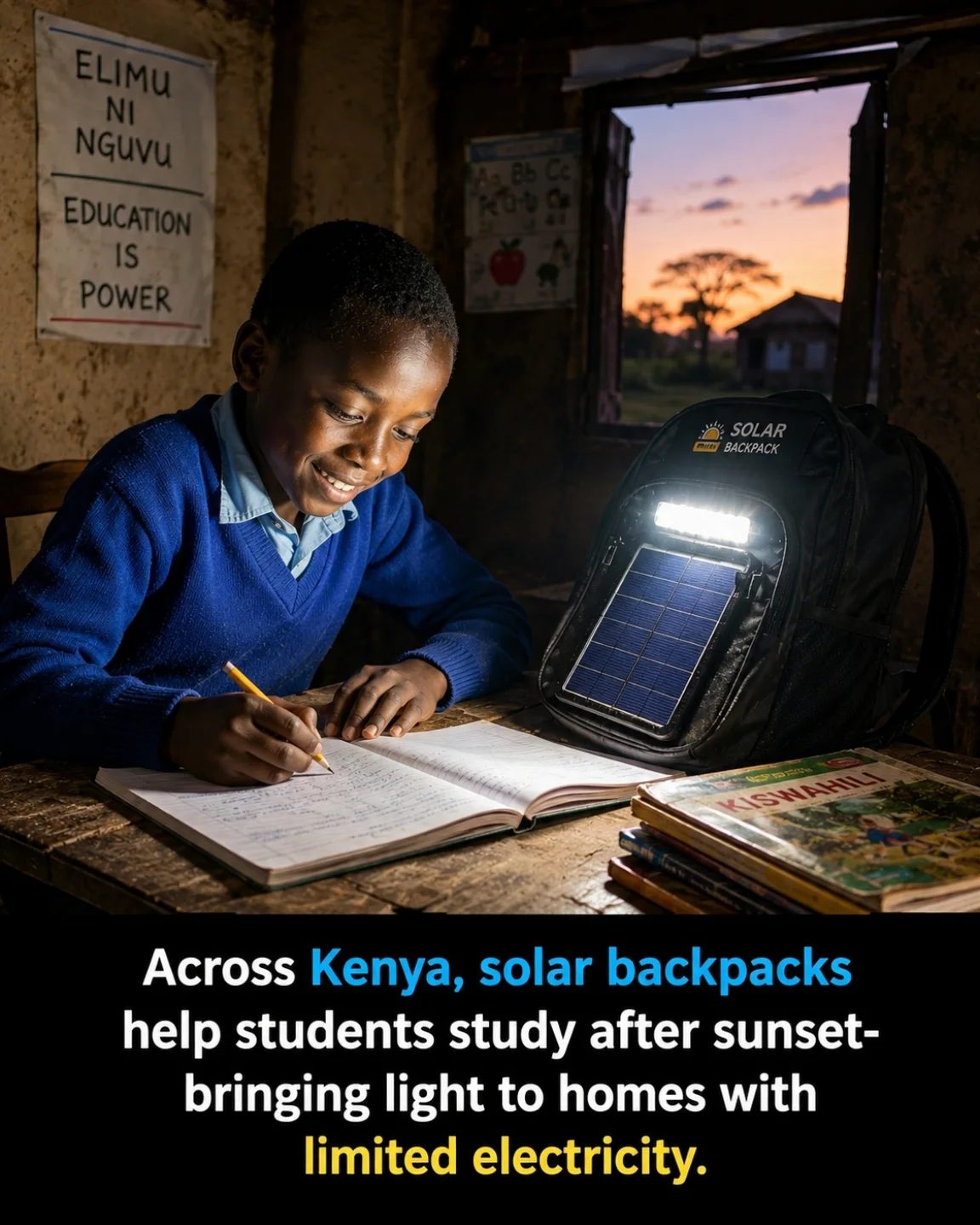
The Power of Solar Backpacks in Education
Solar backpacks are transforming the way students in remote and under-resourced areas approach their studies, particularly in regions where electricity is scarce. These innovative backpacks are designed to store solar energy during the day and provide light for studying after sunset, making them an invaluable tool for students in countries like Kenya.
Context: Why this matters
In many parts of the world, particularly in rural areas and developing countries, access to reliable electricity is limited. This poses a significant challenge for students who need to study after dark. Solar backpacks address this issue by providing a portable and sustainable source of light, ensuring that students can continue their education regardless of their access to electricity. This is especially important in regions like Kenya, where educational resources are often scarce and the ability to study at night can make a substantial difference in academic performance.
Main discussion
How Solar Backpacks Work
Solar backpacks are equipped with solar panels that capture sunlight during the day. This energy is then stored in a battery, which powers an integrated LED light. The light can be used to illuminate study areas, making it possible for students to continue their work after sunset. This simple yet effective technology has the potential to revolutionize education in areas with limited access to electricity.
The Impact on Students
For students in rural Kenya, the introduction of solar backpacks has been a game-changer. These backpacks not only provide a reliable source of light but also empower students to take control of their education. By enabling students to study at night, solar backpacks help them keep up with their peers in more urban areas, where access to electricity is more common. This leveling of the playing field can lead to improved academic performance and greater opportunities for students in the long run.
The Role of Solar Backpacks in Kenya
Kenya is one of the many African countries where solar backpacks are making a significant impact. The country's diverse landscape includes both urban and rural areas, and while urban centers have relatively reliable access to electricity, rural regions often struggle with power outages and limited infrastructure. Solar backpacks bridge this gap by providing a sustainable and portable solution for students in these underserved areas. Across Kenya, solar backpacks are being used by students to study after sunset, bringing light to homes with limited electricity and enabling continued education despite challenging circumstances.
The Benefits of Solar Backpacks
The benefits of solar backpacks extend beyond just providing light. They also teach students about renewable energy and sustainability, instilling a sense of environmental responsibility from a young age. Additionally, these backpacks are designed to be durable and long-lasting, ensuring that they can withstand the rigors of daily use and continue to support students for years to come.
Practical Tips
Choosing the Right Solar Backpack
When selecting a solar backpack, it's important to consider factors such as the capacity of the solar panel, the brightness of the LED light, and the overall durability of the backpack. Look for models that are designed specifically for educational use, as these are more likely to meet the needs of students in terms of portability and reliability. Additionally, consider the size and weight of the backpack, ensuring that it is comfortable for students to carry around throughout the day.
Maximizing the Use of Solar Energy
To get the most out of a solar backpack, it’s essential to position it in a location where it can receive maximum sunlight during the day. Encourage students to place their backpacks in open areas where there is no shade or obstructions. This will ensure that the solar panels capture as much energy as possible, providing a longer duration of light for studying at night.
Important takeaways
Solar backpacks are a practical and sustainable solution for students in areas with limited access to electricity. They provide light for studying after sunset, enabling students to continue their education despite challenging circumstances. These backpacks also teach students about renewable energy and sustainability, fostering a sense of environmental responsibility. By choosing the right solar backpack and maximizing the use of solar energy, students can significantly enhance their learning opportunities and achieve better academic outcomes. In Kenya and other regions with similar challenges, solar backpacks are proving to be an essential tool for empowering students and supporting education.
Conclusion
In conclusion, solar backpacks are an innovative and practical solution for students in areas where electricity is limited or nonexistent. These backpacks provide a reliable source of light for studying after sunset, enabling students to continue their education despite challenging circumstances. They also teach students about renewable energy and sustainability, instilling a sense of environmental responsibility from a young age. By investing in solar backpacks, communities can empower their students and support education in a sustainable and impactful way.
Questions readers ask
How do solar backpacks work to help students in Kenya?
Solar backpacks capture and store solar energy during the day through built-in solar panels. In the evening, students can use the stored energy to power LED lights, creating a well-lit study area even in regions where electricity is not available.
What are the benefits of using solar backpacks for students in rural Kenya?
Solar backpacks enable students in rural Kenya to study effectively after sunset, which is crucial for academic progress. This allows students to complete homework assignments and prepare for exams, which can otherwise be difficult without a reliable source of light.
Are solar backpacks a sustainable solution for students in electricity-poor regions?
Yes, solar backpacks are a sustainable solution. They rely on renewable solar energy, reducing dependence on non-renewable resources. This makes them an eco-friendly choice for students in electricity-poor regions, promoting self-sufficiency and reducing the environmental footprint.
How do solar backpacks help students in improving their academic performance?
By providing a constant source of light, solar backpacks ensure that students can study at any time of the day, especially after sunset. This consistency in study time helps students to develop better study habits and retain information more effectively, leading to improved academic performance.
How do solar backpacks impact the daily lives of students in rural Kenya?
Solar backpacks significantly impact the daily lives of students in rural Kenya by enabling them to study at home, reducing the need for them to travel to lit areas for studying. This saves time and enhances safety, as well as promoting a more independent and responsible approach to studying.
Can solar backpacks be used for purposes other than studying?
While solar backpacks are primarily designed for study purposes, they can also be used for other activities that require light. This includes reading, crafting, or even helping with household chores after dark, making them a versatile tool for students and their families.
What challenges do students in rural Kenya face without access to solar backpacks or reliable electricity?
Without access to solar backpacks or reliable electricity, students in rural Kenya struggle to study after sunset, which can hinder their academic progress. Limited access to light can also lead to health risks, such as eye strain, and may result in students falling behind in their studies due to lack of adequate study time.
Related deep dives
Similar reads based on topic and creator.



Recent articles
Fresh deep dives from the latest Reels we unpacked.




Comments
Be the first to comment.