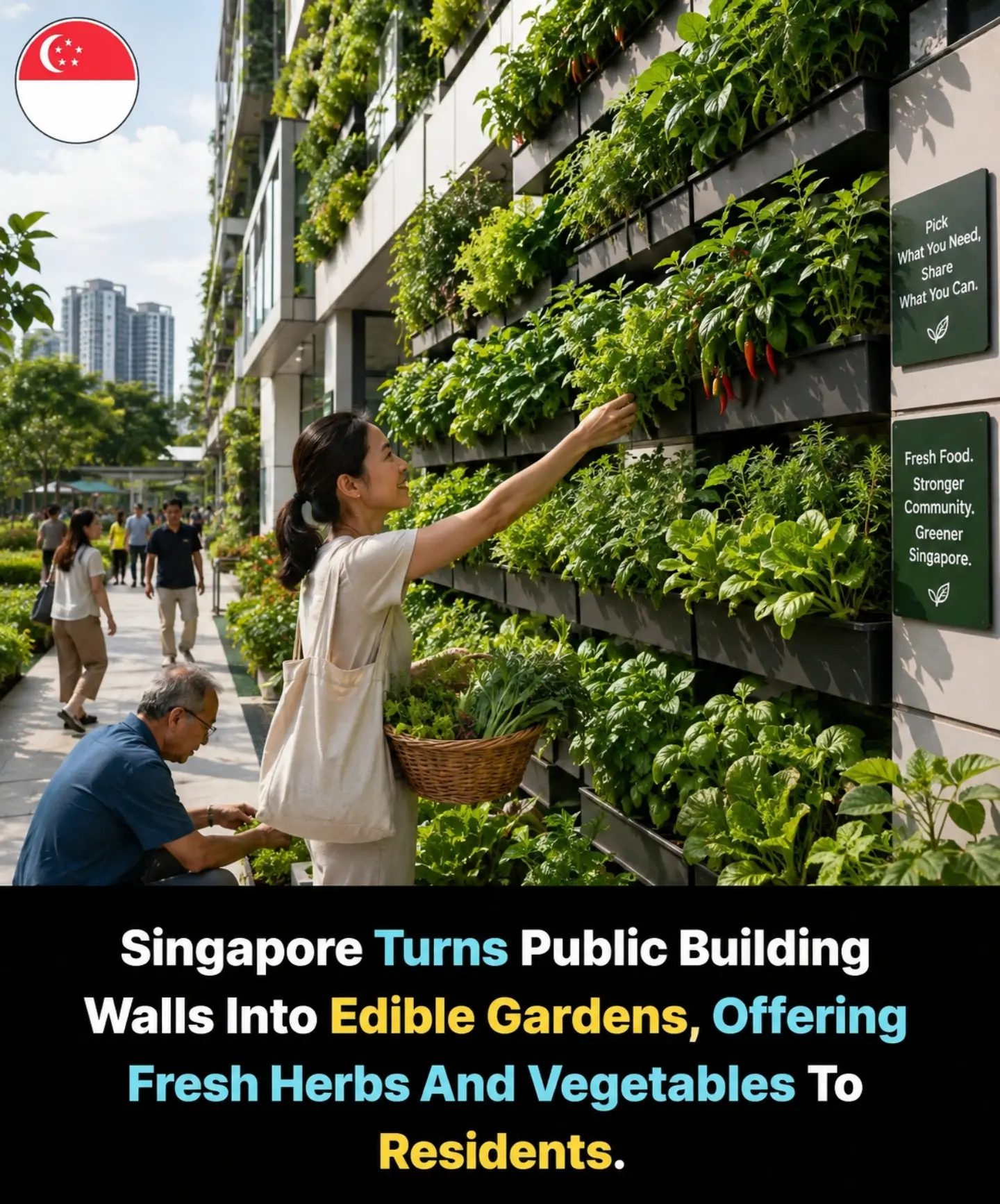
Edible Building Gardens in Singapore
Singapore has taken a bold step towards sustainable urban living by transforming public building walls into edible gardens. This vertical gardening initiative not only beautifies the urban landscape but also provides residents with easy access to fresh herbs and vegetables. Let's explore how this innovative approach is fostering a greener environment and strengthening community bonds.
Context / Why This Matters
The initiative is a significant stride in urban gardening, addressing the growing need for sustainable food production in densely populated cities. By integrating edible gardens into public buildings, Singapore is setting a benchmark for other urban areas to follow, making fresh produce more accessible while promoting environmentally friendly practices.
Main Discussion
The Urban Gardening Revolution
Urban gardening has gained traction worldwide as cities seek to balance growth with sustainability. Vertical gardens, in particular, offer a space-efficient solution, utilizing walls and other vertical surfaces to grow plants. This approach is especially beneficial in urban areas where land is scarce.
The Benefits of Edible Building Gardens
Transforming public building walls into edible gardens offers multiple benefits. Firstly, it provides residents with easy access to fresh, locally grown produce. This not only promotes healthier eating habits but also reduces the carbon footprint associated with transporting food from distant farms. Secondly, these gardens contribute to the aesthetic appeal of urban environments, turning concrete jungles into green oases. Lastly, they play a crucial role in creating a sense of community by involving residents in the gardening process.
How It Works
The vertical gardens in Singapore are carefully designed to maximize productivity while minimizing resource usage. The walls are equipped with irrigation systems that ensure the plants receive the right amount of water and nutrients. Residents are encouraged to participate in maintaining the gardens, fostering a sense of ownership and community involvement.
The Community Impact
The initiative has had a profound impact on the local community. Residents are not just passive beneficiaries; they are active participants. Community workshops and gardening sessions are regularly organized to teach people about sustainable gardening practices. This hands-on approach has led to a greater appreciation for the environment and a stronger sense of community among residents.
Practical Tips
Creating a vertical garden in an urban setting can be a rewarding experience. Here are some practical tips to get you started:
Choosing the Right Plants
Select plants that thrive in vertical conditions and require minimal maintenance. Herbs like basil, mint, and parsley, as well as vegetables like lettuce and spinach, are excellent choices for beginners. These plants are hardy and can withstand varying weather conditions.
Setting Up the Garden
Start by assessing the available space and choosing a suitable wall. Ensure the wall receives adequate sunlight and is structurally sound to support the weight of the garden. Use lightweight, eco-friendly materials for the garden structure to minimize environmental impact.
Maintenance
Regular maintenance is key to the success of a vertical garden. Ensure that the irrigation system is functioning properly and that the plants are getting enough sunlight and nutrients. Prune the plants regularly to prevent overgrowth and promote healthy growth.
Involving the Community
Involve local residents in the gardening process. Community workshops and gardening sessions can help spread knowledge and foster a sense of ownership. Encourage residents to participate in maintaining the garden and reap the benefits of fresh, locally grown produce.
Important Takeaways
- Sustainability: Vertical gardens promote sustainable food production in urban areas, reducing the carbon footprint associated with food transportation.
- Community Building: These gardens foster a sense of community by involving residents in the gardening process and promoting sustainable practices.
- Access to Fresh Produce: They provide residents with easy access to fresh, locally grown herbs and vegetables, promoting healthier eating habits.
- Aesthetic Appeal: Vertical gardens enhance the aesthetic appeal of urban environments, turning concrete jungles into green oases.
Conclusion
Singapore's edible building gardens are a testament to the city's commitment to sustainable urban living. By transforming public building walls into vertical gardens, Singapore has not only beautified its urban landscape but also provided residents with easy access to fresh, locally grown produce. This initiative serves as a model for other cities looking to integrate sustainable practices into their urban development plans, promoting a greener and more community-oriented future.
Questions readers ask
What types of plants are typically grown in Singapore's vertical gardens?
Singapore's vertical gardens primarily feature herbs and vegetables. Common plants include leafy greens like kale and spinach, as well as herbs such as basil, mint, and parsley. These plants are chosen for their suitability to vertical gardening conditions and their popularity among residents.
How do vertical gardens contribute to urban sustainability in Singapore?
Vertical gardens in Singapore contribute to urban sustainability by reducing the need for long-distance transportation of produce, which lowers carbon emissions. They also help to mitigate the urban heat island effect, improve air quality, and promote biodiversity. Additionally, these gardens encourage sustainable farming practices within the city.
Are the vertical gardens in Singapore open to the public?
Yes, many of the vertical gardens in Singapore are integrated into public buildings and spaces, making them accessible to residents. Some gardens may have designated viewing areas or tours, allowing the public to learn about urban gardening and even participate in harvesting activities.
How are these vertical gardens maintained?
The maintenance of vertical gardens in Singapore is typically managed by a combination of local authorities, community volunteers, and sometimes professional gardening services. Regular watering, pruning, and pest control are essential tasks. Many gardens also use automated irrigation systems to ensure the plants receive adequate water.
What are the benefits of having fresh produce readily available in urban areas?
Having fresh produce readily available in urban areas promotes healthier eating habits among residents. It also supports local agriculture, reduces food miles, and strengthens community bonds. Additionally, access to fresh produce can help alleviate food insecurity in densely populated cities.
Can residents get involved in the upkeep of these gardens?
Yes, many vertical garden initiatives in Singapore encourage community involvement. Residents can participate in workshops, volunteer for gardening tasks, and even adopt specific plots to care for. This community engagement helps to foster a sense of ownership and responsibility towards the gardens.
How do vertical gardens enhance the aesthetics of Singapore's urban landscape?
Vertical gardens transform dull building walls into lush, green spaces, adding a vibrant touch to the urban landscape. They introduce colors, textures, and a sense of nature into concrete jungles, making cities more visually appealing. These green walls also serve as living art installations, enhancing the overall beauty of the cityscape.
Related deep dives
Similar reads based on topic and creator.



Recent articles
Fresh deep dives from the latest Reels we unpacked.




Comments
Be the first to comment.