Singapore's Sidewalk Trees: A Hidden System for Urban Cooling
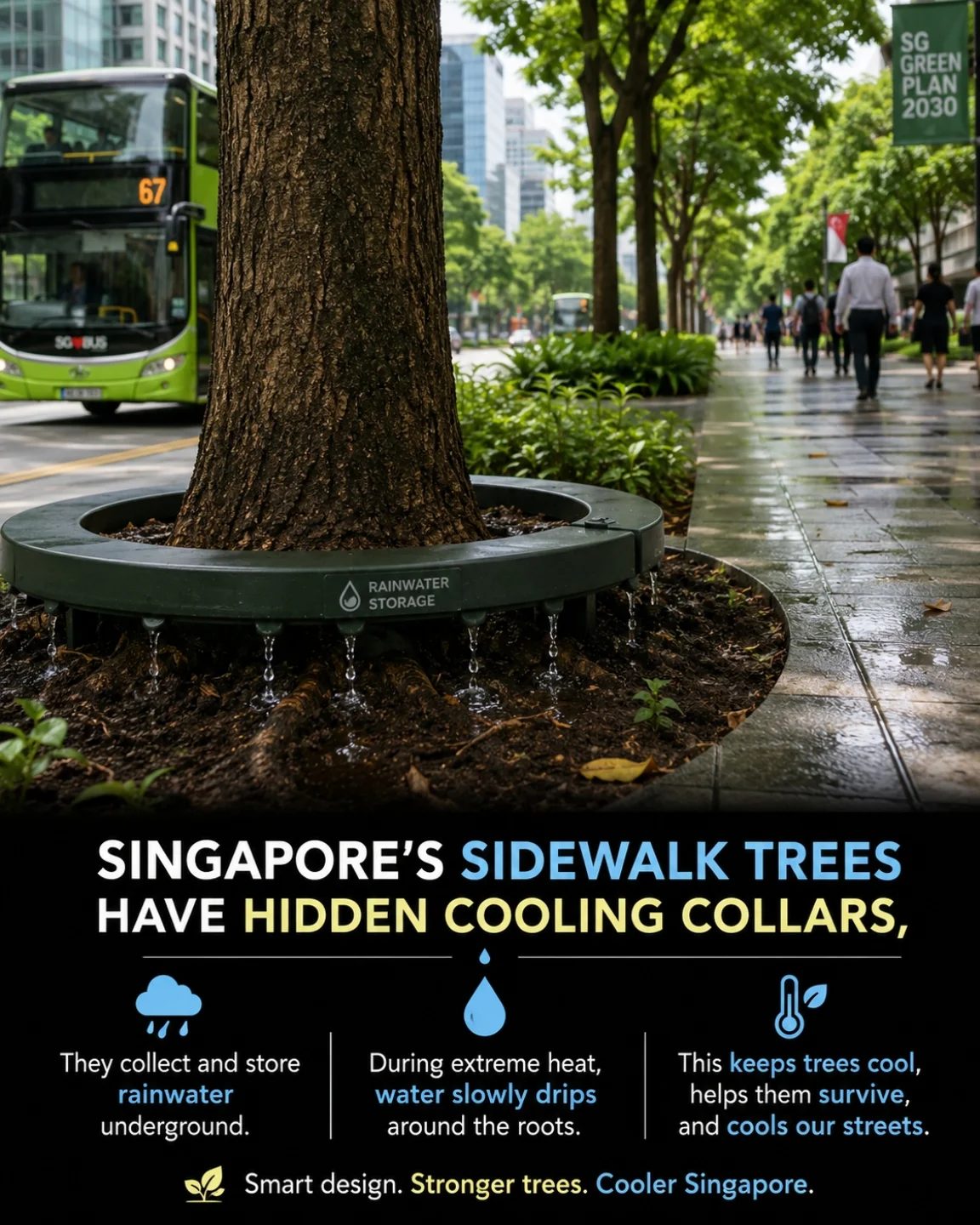
Singapore's urban landscape is renowned for its lush greenery, with trees lining many sidewalks. Beyond their aesthetic appeal, these trees play a crucial role in the city's urban cooling strategy. A unique rainwater storage system integrated around their bases helps them thrive in extreme heat while also cooling the surrounding streets.
Context / Why this matters
Urban heat island effects, where cities experience higher temperatures than their rural surroundings, are a significant challenge in densely populated areas like Singapore. Trees are a vital component in mitigating this, providing shade and releasing moisture into the air. However, trees in urban environments often face harsh conditions, including limited water access and high temperatures. This is where Singapore's innovative rainwater storage system comes into play.
The rainwater storage system
How it works
The system is ingeniously designed to collect and store rainwater underground, around the roots of the trees. This is achieved through hidden cooling collars at the base of the trees. During rainfall, water is channeled into these collars, which act as reservoirs, ensuring a steady water supply even during dry periods.
Benefits for trees
This underground storage system provides several benefits for the trees:
- Improved survival rates during extreme heat: By having a consistent water supply, trees can better withstand periods of high temperature and drought.
- Enhanced root health: The system ensures that water is stored right around the roots, promoting healthier root growth and overall tree vitality.
- Reduced maintenance: With a self-sustaining water supply, the need for manual watering is significantly reduced, making maintenance more efficient.
Urban cooling effects
The benefits extend beyond the trees themselves. The system helps cool the surrounding streets in several ways:
- Efficient water use: By storing water underground, the system reduces runoff and evaporation, making the urban landscape more efficient in its water use.
- Shade and evaporative cooling: Healthier, well-watered trees provide more shade and release moisture into the air through evapotranspiration, creating a cooling effect in the immediate vicinity.
- Lowering ambient temperatures: The combined effect of shade and evaporative cooling can lower ambient temperatures, contributing to a more comfortable urban environment.
Practical tips for creating a similar system
While Singapore's system is specifically designed for its urban context, the principles can be applied elsewhere. Here are some practical tips for creating a similar rainwater harvesting system:
- Assess your site: Determine the amount of rainfall and the water requirements of your trees. This will help in designing an appropriate storage system.
- Choose the right materials: Use durable, non-toxic materials for the storage collars to prevent contamination and ensure longevity.
- Integrate with existing infrastructure: Where possible, integrate the system with existing urban infrastructure, such as gutters and drains, to maximize efficiency.
- Regular maintenance: While the system is designed to be low-maintenance, regular checks are necessary to ensure it's functioning properly and to address any issues promptly.
Important takeaways
- Singapore's sidewalk trees are equipped with a unique rainwater storage system that collects and stores water underground.
- This system helps trees survive extreme heat and cool the surrounding streets.
- The design promotes efficient water use, improves tree health, and contributes to a more comfortable urban environment.
- Similar systems can be created in other urban areas by assessing site-specific needs and integrating with existing infrastructure.
Conclusion
Singapore's approach to urban cooling through its sidewalk trees offers a practical and innovative solution to the challenges posed by urban heat islands. By integrating a rainwater storage system around the base of these trees, the city not only ensures the health and survival of its urban forest but also creates a more comfortable environment for its residents. This model serves as an inspiration for other urban areas seeking sustainable and effective ways to cool their cities.
Questions readers ask
How do sidewalk trees in Singapore help with urban cooling?
Sidewalk trees in Singapore contribute to urban cooling by providing shade and releasing moisture into the air, which helps lower the ambient temperature and mitigates the urban heat island effect. This makes the surrounding streets more comfortable for pedestrians and reduces the overall heat in the city.
What is the role of the rainwater storage system in Singapore's sidewalk trees?
The rainwater storage system integrated into the bases of sidewalk trees ensures a consistent water supply. This is crucial for the trees' survival in the city's hot climate and enhances their cooling effects by keeping them healthy and robust.
Why are sidewalk trees important for Singapore's urban greening efforts?
Sidewalk trees are vital for Singapore's urban greening efforts as they not only beautify the city but also play a significant role in cooling the urban environment. They help to reduce the urban heat island effect, making the city more livable and sustainable.
How does the water storage system benefit the surrounding streets in Singapore's urban heat management?
The water storage system benefits the surrounding streets by ensuring that the trees remain healthy and effective in cooling the area. The trees release moisture into the air, which can help cool down the immediate surroundings, making the streets more comfortable for pedestrians.
What challenges do trees in urban environments like Singapore face?
Trees in urban environments like Singapore often face challenges such as limited water supply, extreme heat, and pollution. The water storage system integrated into the sidewalk trees helps to mitigate these challenges by providing consistent water supply and allowing the trees to thrive despite the harsh conditions.
Related deep dives
Similar reads based on topic and creator.


Recent articles
Fresh deep dives from the latest Reels we unpacked.
Comments
Be the first to comment.