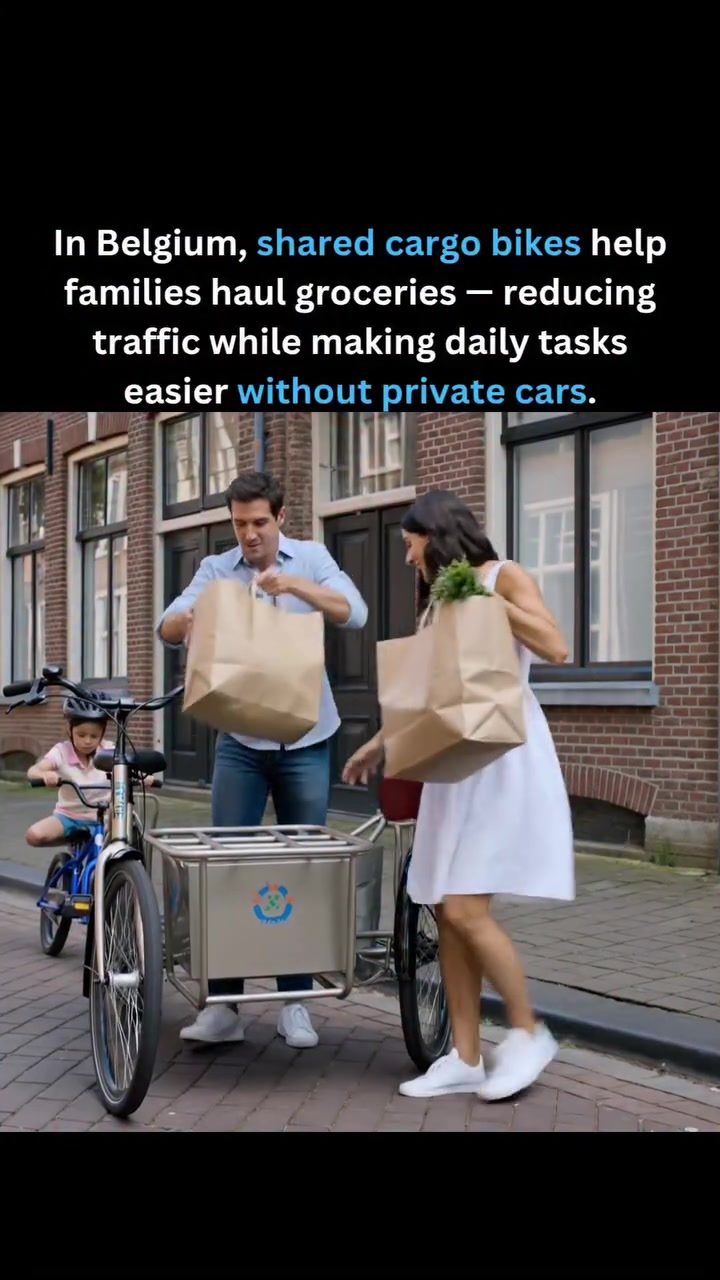
Cargo Bike Family Transport
In Belgium, shared cargo bikes are transforming how families handle daily errands. These robust bicycles, designed for hauling cargo, are becoming a popular alternative to private cars, especially for transporting groceries.
Context / Why This Matters
Cities worldwide are grappling with congestion and pollution from private vehicles. In response, many urban areas are promoting shared mobility solutions like cargo bikes. These initiatives aim to reduce traffic, lower emissions, and make daily tasks more convenient. In Belgium, the use of shared cargo bikes is particularly noteworthy, as it illustrates a practical and sustainable solution for family transportation.
Cargo bikes are versatile and offer a range of benefits. They provide ample storage space, are environmentally friendly, and often come with features that cater to families, such as child seats and weather-proof storage compartments. By integrating cargo bikes into urban transport systems, cities can encourage a shift from car-centric to bike-friendly infrastructures.
Main Discussion
The Rise of Cargo Bikes
Cargo bikes have gained traction in recent years due to their practicality and environmental benefits. These bikes are designed with a sturdy frame and a large front rack or trailer, making them ideal for hauling heavy or bulky items. Families find them especially useful for grocery shopping, as they can carry multiple bags of groceries without the need for a car.
In Belgium, the adoption of cargo bikes is part of a broader push to promote sustainable and active transportation. The country's bike-sharing programs, which include cargo bikes, are making it easier for families to switch from cars to bikes for their daily commutes and errands.
Benefits for Families
For families, cargo bikes offer several advantages over traditional modes of transport. First, they provide a cost-effective way to run errands. Instead of relying on a car, which requires fuel and maintenance, families can use shared cargo bikes for free or at a low cost. This makes it easier for families to save money while contributing to a more sustainable lifestyle.
Second, cargo bikes encourage physical activity. Riding a bike is a great form of exercise, and incorporating it into daily routines can help families stay active and healthy. This is particularly beneficial for children, who can gain from the physical activity and reduced exposure to car emissions.
Third, cargo bikes help families save time by making it easier to carry large items. For instance, a family can load groceries, school supplies, or other essentials onto a cargo bike and ride directly to their destination without worrying about parking or navigating traffic. This convenience makes cargo bikes a practical choice for families with busy schedules.
Environmental Impact
The environmental impact of cargo bikes cannot be overstated. By reducing the number of cars on the road, cargo bikes help lower traffic congestion and air pollution. This not only benefits the environment but also improves the quality of life for urban residents, who can enjoy cleaner air and quieter streets.
Moreover, the sustainability of cargo bikes extends beyond just reducing emissions. These bikes are often made from durable materials and can be powered by human effort, making them a renewable and eco-friendly transportation option. In areas where shared cargo bikes are available, families can contribute to a greener future by opting for bike rides instead of driving.
Integrating Cargo Bikes into Urban Planning
For cargo bikes to become a mainstream mode of transport, cities need to invest in infrastructure that supports their use. This includes designated bike lanes, secure parking spots, and bike-sharing stations. By prioritizing these elements, urban planners can make it easier for families to switch to cargo bikes for their daily transportation needs.
In Belgium, shared cargo bikes are integrated into the existing bike-sharing programs. This integration makes it convenient for families to access these bikes whenever needed. The bikes are stationed at key locations, such as grocery stores, schools, and residential areas, ensuring that they are readily available to those who need them.
Additionally, cities can promote the use of cargo bikes through education and awareness campaigns. By highlighting the benefits and convenience of cargo bikes, cities can encourage more families to adopt this mode of transport. This can include workshops, demo days, and informative materials that help families understand how to use and benefit from cargo bikes.
Practical Tips
Here are some practical tips for families considering the use of cargo bikes:
-
Find the Right Model: Choose a cargo bike that fits your family's needs. Consider factors such as the size of the cargo area, the type of brakes, and the durability of the frame. Make sure it's suitable for the terrain and weather conditions in your area.
-
Safety First: Always wear a helmet and ensure that any passengers, especially children, are secured with appropriate safety gear. Follow traffic rules and use designated bike lanes whenever possible.
-
Plan Your Route: Before heading out, plan your route to avoid busy roads and ensure that there are convenient rest stops along the way.
-
Maintain Your Bike: Regularly check your bike for any issues, such as flat tires or worn-out brakes. Keep it well-maintained to ensure safety and longevity.
Important Takeaways
Cargo bikes are proving to be a valuable addition to urban transportation systems. They help families reduce their reliance on cars and contribute to a more sustainable lifestyle. The convenience and cost-effectiveness of cargo bikes make them an attractive option for daily errands, while their environmental benefits are a significant plus for urban areas.
By promoting the use of cargo bikes, cities can achieve multiple goals: reducing traffic, lowering emissions, and creating a healthier environment for residents. Families stand to gain from this shift, as they can enjoy the benefits of a more active lifestyle and save money on transportation costs.
Conclusion
Cargo bikes are transforming the way families approach daily transportation in Belgium. This shift towards more sustainable and active transportation options holds promise for urban areas worldwide. As more families discover the benefits of cargo bikes, shared mobility initiatives will continue to grow, paving the way for cleaner, quieter, and more livable cities.
Questions readers ask
What are the benefits of using cargo bikes for families in Belgium?
Cargo bikes offer families in Belgium a sustainable way to transport groceries and handle daily tasks. They provide ample storage, reduce reliance on private cars, and help lower carbon emissions, making them an efficient and eco-friendly choice for urban families.
How do shared cargo bikes contribute to reducing congestion in cities?
Shared cargo bikes help alleviate traffic congestion by providing a viable alternative to private cars. By encouraging families to use shared bikes for daily errands, cities can reduce the number of cars on the road, leading to less traffic and improved urban mobility.
Why are cargo bikes a practical solution for families in Belgium?
Cargo bikes are designed with family needs in mind, offering robust construction and ample storage for groceries and other items. They are accessible through shared bike programs, making them a convenient and cost-effective option for families looking to simplify their daily transport routines.
What initiatives are in place to promote shared cargo bikes in Belgium?
Belgium promotes shared cargo bikes as part of a broader effort to reduce traffic and emissions. These initiatives include making cargo bikes available for public use. Families can easily rent these bikes for their daily tasks, encouraging a shift towards more sustainable transportation methods.
How do cargo bikes support green grocery delivery in families?
Cargo bikes allow families to transport groceries without relying on private cars. By using a cargo bike for grocery trips, families can significantly reduce their carbon footprint. This method promotes a greener lifestyle while ensuring that families can still carry out their daily errands efficiently.
Are cargo bikes suitable for all family sizes?
Yes, cargo bikes come in various designs to accommodate different family sizes. Many models offer seating for children and ample space for groceries, making them a versatile choice for families of all sizes. Whether it's a small family or a larger one, there's likely a cargo bike model that fits their needs.
Recent articles
Fresh deep dives from the latest Reels we unpacked.




Comments
Be the first to comment.