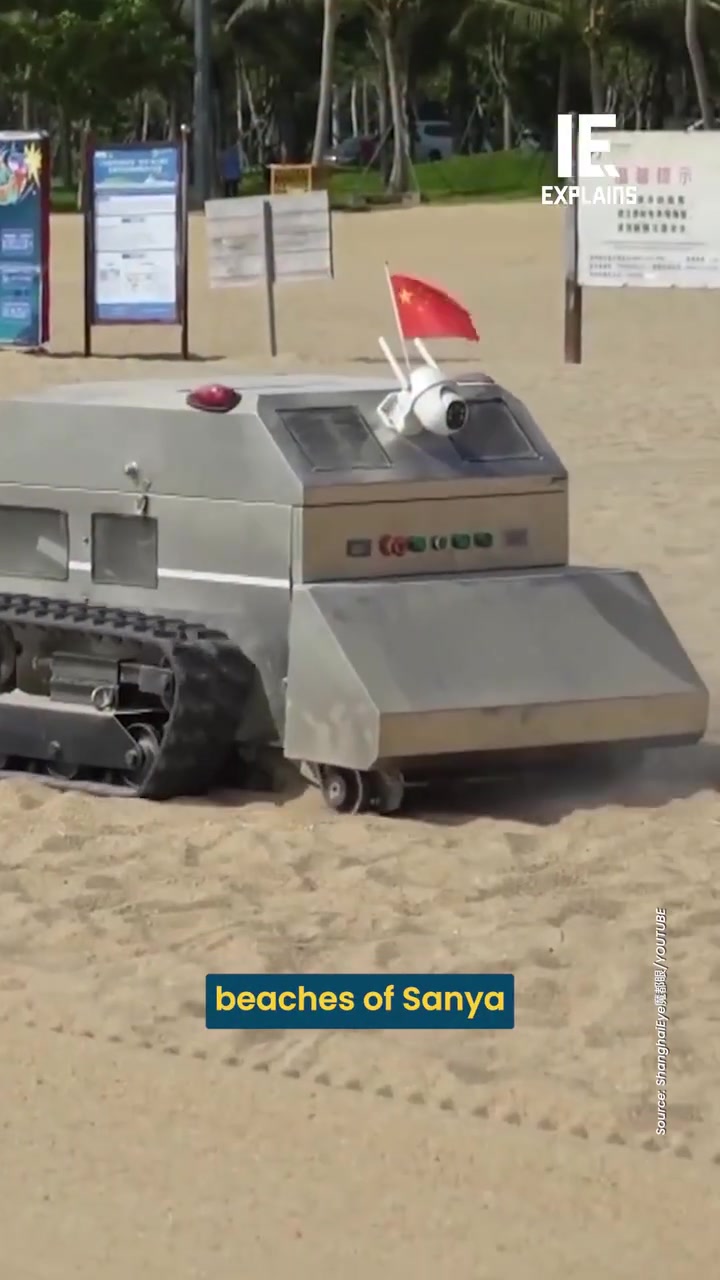
The Beach Dog Simplifies Sand Cleaning on Sanya's Beaches
On South China’s Sanya beaches, where sand sifting is often a challenge for sanitation workers, an innovative technology has arrived. Enter the Beach Dog, a robotic sand cleaner designed to tackle the problem buried litter that's out of reach for traditional cleaning tools. It’s an invention from the esteemed Shanghai Jiao Tong University’s Hainan Research Institute. The scientific crew’s challenge is epitomized by cigarette butts, bottle caps, and plastic shards that sink into the sand, eluding the reach of rakes and bin bags. The Beach Dog aims to clean approximately 2,000 square meters per hour. Litter below the surface is targeted through four meticulous actions: plunging into the sand, combing it with a set of teeth, shaking out debris over a sieve, and finally leveling the sand. The Chinese university’s work demonstrates the importance of automating labour on existing beaches. This innovation scales beyond aesthetic improvements, also enhancing the sanitation of whole cities, especially during sporting events like the Asian Beach Games.
Getting to the Grit
The Beach Dog is a robotic cleaner designed for beaches. Invented by Shanghai Jiao Tong University’s Hainan Research Institute, the Beach Dog reaches hidden litter that manual tools and rakes cannot. Because litter accumulates in sand, it needs a machine that can remove it from under the surface. This machine is a development from Shanghai Jiao Tong University's Hainan Research Institute. This device distinguishes itself from other cleaners by targeting litter embedded in the sand and removing it in four steps. The Beach Dog operates through a set of actions: "ploughing," "combing," "shaking," and "sifting." It "ploughs" the sand, combing out hidden debris, shaking it over a sieve. The sand falls back through the sieve, while the rubbish remains behind. Given how it operates, it’s understandable that the robot works at such a high capacity: 2,000 square meters per hour. All the while, the Beach Dog is designed to navigate the sand. The Beach Dog’s efficiency reflects in its extended role. Sanya has expanded the deployment of driverless street sweepers and remote beach cleaners along many beaches, as it hosts the Asian Beach Games. The robust performance of the Beach Dog meets the needs of robust performances at these games.
The Beach Dog in Action
Cleaning in four moves
The Beach Dog cleans beaches in four distinct moves that follow precise steps. First, it plunges into the sand, disturbing the surface layer. This initial action uncovers buried litter. Then, a set of teeth comb through the sand, lifting out anything hidden beneath. Once debris is exposed, a shaking action separates the litter from the sand. This is followed by a sieve process where the sand falls back through and the rubbish stays behind. Finally, the clean sand is raked level, leaving the beach smooth and free of manmade debris.
Navigating tough conditions
The Beach Dog is designed to operate in harsh beach conditions, like blazing sun and crowded tourist areas. Workers at Sanya beaches report that the machine efficiently cleans areas they can't reach, emphasizing its effectiveness in hot, crowded environments. This capability is particularly useful for events like the Asian Beach Games, where maintaining cleanliness is crucial for a good impression and enjoyment of visitors.
High-capacity cleaning
The Beach Dog can clean 2,000 square meters per hour. This makes it a crucial tool for managing the large-scale sanitation needs of busy tourist spots. The machine’s ability to cover extensive areas efficiently reduces the manual labor required and ensures that beaches remain clean and safe for visitors.
Environmental Impact
The Beach Dog’s efficiency reduces the need for manual labor. This robot can lift debris from the sand, where manual cleaning can't reach. By automating this process, marine animals can be kept safe from litter, and the sand can be kept clean. Cleaner beaches also mean healthier ecosystems and richer experiences for visitors.
The Beach Dog’s future
The Beach Dog has found a versatile use beyond the beach. Sanya is now using driverless street sweepers and unmanned beach cleaners along Sanya Bay, all due to the Beach Dog’s success. The Beach Dog will be a key part of cleaner cities in the future. This is expected because of its effects on cleaning standards. This has shown how robots and machines can outdo humans in certain tasks. The Beach Dog serves as an example of how auto machines can solve problems.
Questions readers ask
How does the Beach Dog specifically target litter that's buried in the sand?
The Beach Dog uses a four-step process to tackle buried litter. First, it plunges into the sand to disturb the surface. Then, it combs through the sand with a set of teeth to lift out hidden debris. After that, it shakes the sand to separate the litter, and finally, it uses a sieve to let the sand fall through while keeping the rubbish behind.
Is the Beach Dog useful only for beaches, or can it be adapted for other environments?
The Beach Dog is specifically designed for beach environments, where litter often gets buried in the sand. While it excels in this environment, its technology might not be directly adaptable to other environments like streets or forests without significant modifications.
What kind of litter can the Beach Dog effectively collect?
The Beach Dog is particularly effective at collecting small, hidden litter like cigarette butts, bottle caps, and plastic shards that tend to sink into the sand. These are items that traditional cleaning tools like rakes and bin bags struggle to reach.
How does the Beach Dog's cleaning process ensure that the beach remains smooth after cleaning?
After the Beach Dog has shaken out the debris and sifted out the sand, it levels the sand with a raking action. This final step ensures that the beach is left smooth and free of manmade debris, maintaining an aesthetically pleasing environment.
Can the Beach Dog operate in all weather conditions, or are there limitations?
The Beach Dog is designed to operate in harsh beach conditions, including hot weather, but it’s not clear if it can handle extreme weather conditions like heavy rain or strong winds. Its effectiveness in crowded tourist areas suggests it’s built to withstand typical beach traffic, but specific weather limitations aren’t detailed.
Related deep dives
Similar reads based on topic and creator.



Recent articles
Fresh deep dives from the latest Reels we unpacked.



Comments
Be the first to comment.