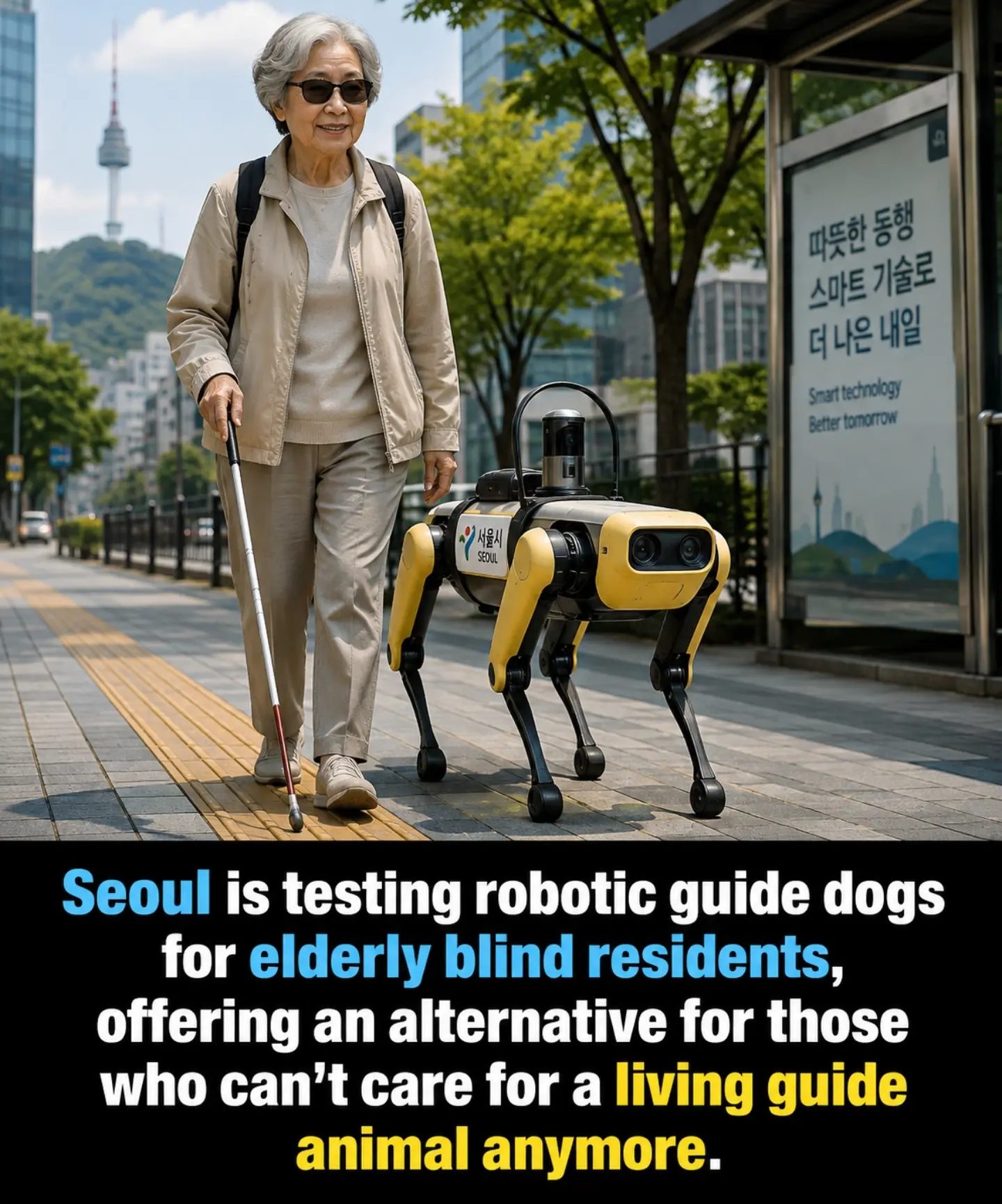
Robotic Guide Dogs in Seoul: A Modern Mobility Aid
Robotic guide dogs are revolutionizing mobility assistance, particularly for elderly blind residents in Seoul, South Korea. These innovative devices offer a practical alternative to traditional guide animals, addressing the challenges faced by those who can no longer care for living guide dogs. The city is at the forefront of this technological advancement, leveraging smart technology to improve the lives of its residents.
Context / Why This Matters
The elderly blind population faces unique challenges when it comes to mobility. Traditional guide animals, while invaluable, require significant care and commitment. For many elderly individuals, the responsibility of caring for a living guide dog becomes burdensome over time. Robotic guide dogs provide a solution that requires less maintenance and offers consistent support, enhancing the independence and quality of life for those who rely on them.
The Role of Robotic Guide Dogs
Robotic guide dogs are designed to assist individuals with visual impairments, much like their biological counterparts. These advanced mobility aids use smart technology to navigate environments, detect obstacles, and guide users safely.
Assistive Technology
The robotic guide dogs in Seoul are equipped with state-of-the-art sensors and algorithms that enable them to perceive and respond to their surroundings. These devices can detect changes in terrain, identify obstacles, and provide real-time guidance, ensuring the safety and comfort of their users.
Enhancing Independence
For elderly blind residents, the ability to navigate their environment independently is crucial. Robotic guide dogs offer a level of autonomy that traditional mobility aids may not provide. By reducing the need for constant supervision, these devices allow users to maintain a sense of independence and dignity.
Reduced Care Requirements
One of the primary advantages of robotic guide dogs is their lower maintenance requirements. Unlike living animals, robotic guide dogs do not require feeding, grooming, or veterinary care. This makes them a more practical option for elderly individuals who may struggle with the physical and emotional demands of caring for a living guide animal.
Practical Tips for Using Robotic Guide Dogs
If you or someone you know is considering a robotic guide dog, here are some practical tips to ensure a smooth transition:
Training and Adaptation
Even though robotic guide dogs are designed to be user-friendly, it's essential to undergo proper training. This will help users become familiar with the device's features and capabilities, ensuring they can navigate their environment safely and confidently.
Important Takeaways
Robotic guide dogs represent a significant advancement in mobility assistance, particularly for elderly blind residents. These devices offer a practical and efficient alternative to traditional guide animals, providing enhanced independence and reduced care requirements.
Conclusion
Robotic guide dogs are transforming the way elderly blind residents in Seoul navigate their environment. By leveraging smart technology, these devices offer a practical and efficient alternative to traditional guide animals, enhancing independence and improving the quality of life for those who rely on them.
Questions readers ask
How do robotic guide dogs differ from traditional guide animals in Seoul?
Robotic guide dogs differ from traditional guide animals in several ways. The robotic alternatives require less maintenance and don't need the daily care that living animals demand. They are equipped with smart technology, making them a practical and efficient solution for elderly blind residents in Seoul. This allows them to maintain independence while reducing the responsibility of feeding and grooming that comes with traditional guide animals.
What are the key benefits of robotic guide dogs for elderly blind residents in Seoul?
Robotic guide dogs offer several key benefits. They enhance the users' independence, providing a reliable mobility aid that doesn't require the upkeep of a living animal. They also mitigate the risk of injury from falls and collisions. Additionally, they provide consistent assistance, as they do not need breaks or rest like living animals.
Are robotic guide dogs in Seoul tailored to the needs of the blind elderly?
Yes, robotic guide dogs in Seoul are designed with the specific needs of blind elderly individuals in mind. They are equipped with sensors and smart technology to navigate urban environments. They do not require the same level of physical interaction and care as a real animal, which can be a significant advantage for elderly users.
Are robotic guide dogs in Seoul an alternative to the traditional guide dogs?
Absolutely. Robotic guide dogs serve as a modern, low-maintenance alternative to traditional guide dogs. They are particularly beneficial for elderly individuals who may struggle with the daily care demands of a living guide dog. Plus, they can be very reliable and consistent in their assistance.
What challenges do traditional guide animals pose for elderly blind residents in Seoul?
Traditional guide animals can pose several challenges for elderly blind residents. They require constant care, feeding, grooming, and health check-ups. Additionally, they do not have a lifespan as long as a robot, which can lead to emotional distress when they need to be replaced. This can be a significant burden for elderly individuals, making robotic guide dogs an attractive alternative.
How do robotic guide dogs improve the lives of blind elderly residents in Seoul?
Robotic guide dogs improve the lives of blind elderly residents by providing consistent, reliable mobility assistance. They help users navigate urban environments safely and independently, reducing the risk of falls and accidents. By eliminating the need for constant care, they also reduce physical and financial burdens, enhancing overall quality of life.
What is the role of smart technology in Seoul's robotic guide dogs?
Smart technology is integral to the functionality of Seoul's robotic guide dogs. It enables the devices to navigate complex environments, avoid obstacles, and provide real-time assistance. This technology also allows for customization, ensuring that each user receives tailored support based on their specific needs and preferences. It helps to create an environment where blind elderly residents can move around without fear of injury.
Related deep dives
Similar reads based on topic and creator.

Recent articles
Fresh deep dives from the latest Reels we unpacked.




Comments
Be the first to comment.