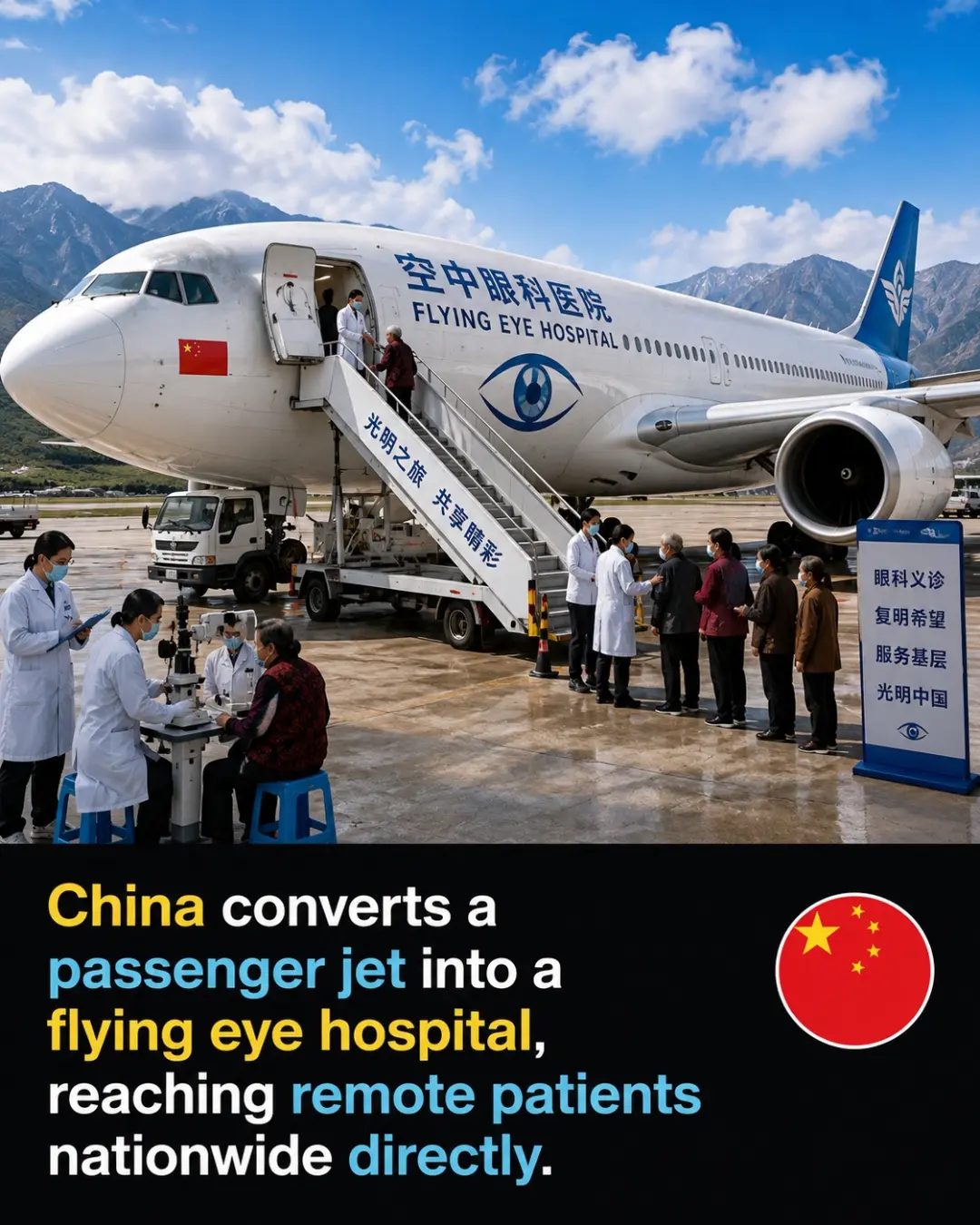
Flying Eye Hospital in China: Bringing Eye Care to Remote Areas
A passenger jet has been converted into a Flying Eye Hospital in China, providing vital eye care services to remote populations.
Context / Why this matters
The need for healthcare, especially in remote and underserved areas, remains a significant challenge globally. For eye care, access to specialized treatment and timely interventions can make a substantial difference in patient outcomes. China's conversion of a passenger jet into a Flying Eye Hospital is a practical and innovative solution to this problem, significantly impacting public health.
Main discussion
The Flying Eye Hospital initiative
The Flying Eye Hospital in China is a remarkable initiative aimed at bringing eye care services directly to patients in remote, hard-to-reach areas. The program utilizes a converted passenger jet equipped with state-of-the-art medical facilities. This plane is designed to provide comprehensive eye care services, from consultations to surgical procedures. By doing so, the initiative aims to eliminate the barriers of distance and accessibility that often hinder patients from receiving necessary medical care.
The conversion of a passenger jet
The transformation of a passenger jet into a fully functional hospital is a meticulous process. The interior of the aircraft is redesigned to accommodate medical equipment, surgical rooms, and patient care facilities. This includes setting up operating theaters, consultation rooms, and recovery areas. The conversion ensures that all necessary medical procedures can be performed onboard, providing a seamless and safe environment for patients.
The aircraft is also equipped with advanced communication and navigation systems to ensure safe travel to remote locations. The Flying Eye Hospital is staffed with a team of highly skilled medical personnel, including ophthalmologists, nurses, and support staff. This ensures that patients receive high-quality care throughout their journey and treatment.
Medical services offered
The Flying Eye Hospital offers a wide range of medical services to address various eye conditions. These services include:
- Consultations and diagnostics: Patients undergo thorough eye examinations and diagnostic tests to determine their specific needs and treatment plans.
- Cataract surgeries: One of the most common procedures performed on the Flying Eye Hospital is cataract surgery, which helps restore vision in patients suffering from cataracts.
- Glaucoma treatments: The hospital provides treatments for glaucoma, a condition that can lead to vision loss if left untreated.
- Laser eye surgeries: Advanced laser treatments are available for correcting vision issues such as myopia, hyperopia, and astigmatism.
Benefits for remote communities
The conversion of a passenger jet into a Flying Eye Hospital has several benefits for China's remote communities:
- Improved access to care: By taking medical services directly to patients, the Flying Eye Hospital ensures that everyone, regardless of location, has access to necessary eye care.
- Cost-effective: Traveling to remote areas can be expensive. The Flying Eye Hospital reduces these costs significantly by bringing the services to the patients.
- Time-saving: Patients do not need to travel long distances to receive medical care, saving them valuable time and reducing the risk of complications.
Practical tips
If you are involved in a similar initiative or planning to set up a mobile medical unit, consider the following practical tips:
- Choose the right equipment: Ensure that all medical equipment is portable, durable, and capable of operating in various conditions. Consider factors like power supply, space constraints, and ease of use.
- Train your staff: Make sure your medical team is well-trained and experienced in providing care in mobile settings. They should be prepared to handle any emergencies and adapt to different environments.
- Plan your routes: Carefully plan the routes and schedules for your mobile unit to maximize efficiency and reach the most remote areas. Use data and community feedback to identify high-need areas.
- Communication: Maintain open communication with local communities to build trust and ensure that your services are utilized effectively. Use local language and cultural sensitivities to connect with patients.
- Logistics: Plan for logistical challenges such as fuel, supplies, and transportation. Ensure that you have a reliable support team to handle these aspects seamlessly.
Important takeaways
Innovation in healthcare
The Flying Eye Hospital initiative highlights the power of innovation in addressing healthcare challenges. By thinking outside the box and utilizing unconventional solutions, it is possible to provide high-quality medical care to underserved populations.
Collaboration and community engagement
Successful healthcare initiatives often rely on collaboration and community engagement. The Flying Eye Hospital exemplifies this by working closely with local communities to identify needs and deliver services effectively.
Scalability and sustainability
The Flying Eye Hospital model is scalable and sustainable, making it a viable solution for other regions facing similar challenges. By adapting this approach, other countries can improve access to healthcare in remote areas and ensure that no patient is left behind.
Conclusion
The Flying Eye Hospital in China is a groundbreaking initiative that brings eye care services directly to remote populations. By converting a passenger jet into a medical unit, the program addresses critical healthcare needs and provides high-quality medical care to underserved areas. This innovative approach serves as a model for other regions facing similar challenges, demonstrating the power of collaboration, innovation, and community engagement in improving public health.
Questions readers ask
What type of aircraft is used for the Flying Eye Hospital in China?
The Flying Eye Hospital in China is operated using a converted passenger jet. This allows for the transportation of necessary medical equipment and personnel to remote areas, making eye care services accessible to underserved communities.
What services does the Flying Eye Hospital provide?
The Flying Eye Hospital offers a range of eye care services, including consultations, surgeries, and other medical treatments. These services are provided directly to patients in remote and underserved areas, ensuring they receive timely and essential medical care.
How does the Flying Eye Hospital improve public health in China?
By delivering vital eye care services to remote and underserved communities, the Flying Eye Hospital significantly improves public health. It ensures that individuals in hard-to-reach areas have access to specialized treatment and timely interventions, which can greatly benefit patient outcomes.
What challenges does the Flying Eye Hospital address?
The Flying Eye Hospital addresses several critical challenges, including distance and accessibility barriers to eye care. By bringing medical services directly to remote populations, it ensures that those who might otherwise go without treatment can receive the care they need.
Can the Flying Eye Hospital be used for other medical services besides eye care?
While the Flying Eye Hospital is specifically designed for eye care services, the concept of a converted passenger jet for medical outreach could potentially be adapted for other specialized medical services in the future. This would further enhance medical accessibility in remote areas.
How does the Flying Eye Hospital support China's medical outreach efforts?
The Flying Eye Hospital is a key component of China's medical outreach efforts, particularly in reaching underserved communities. By providing eye care services through a mobile eye clinic, it ensures that even the most remote areas have access to necessary medical treatments, supporting overall public health initiatives.
What technology is used in conjunction with the Flying Eye Hospital?
In addition to the physical services provided by the Flying Eye Hospital, telemedicine can be used in conjunction with the Flying Eye Hospital to provide remote consultations and follow-up care. This ensures that patients continue to receive support even after the hospital has moved on to the next location.
Related deep dives
Similar reads based on topic and creator.




Recent articles
Fresh deep dives from the latest Reels we unpacked.



Comments
Be the first to comment.