Palo Verde Trees: Thriving in Arid Landscapes
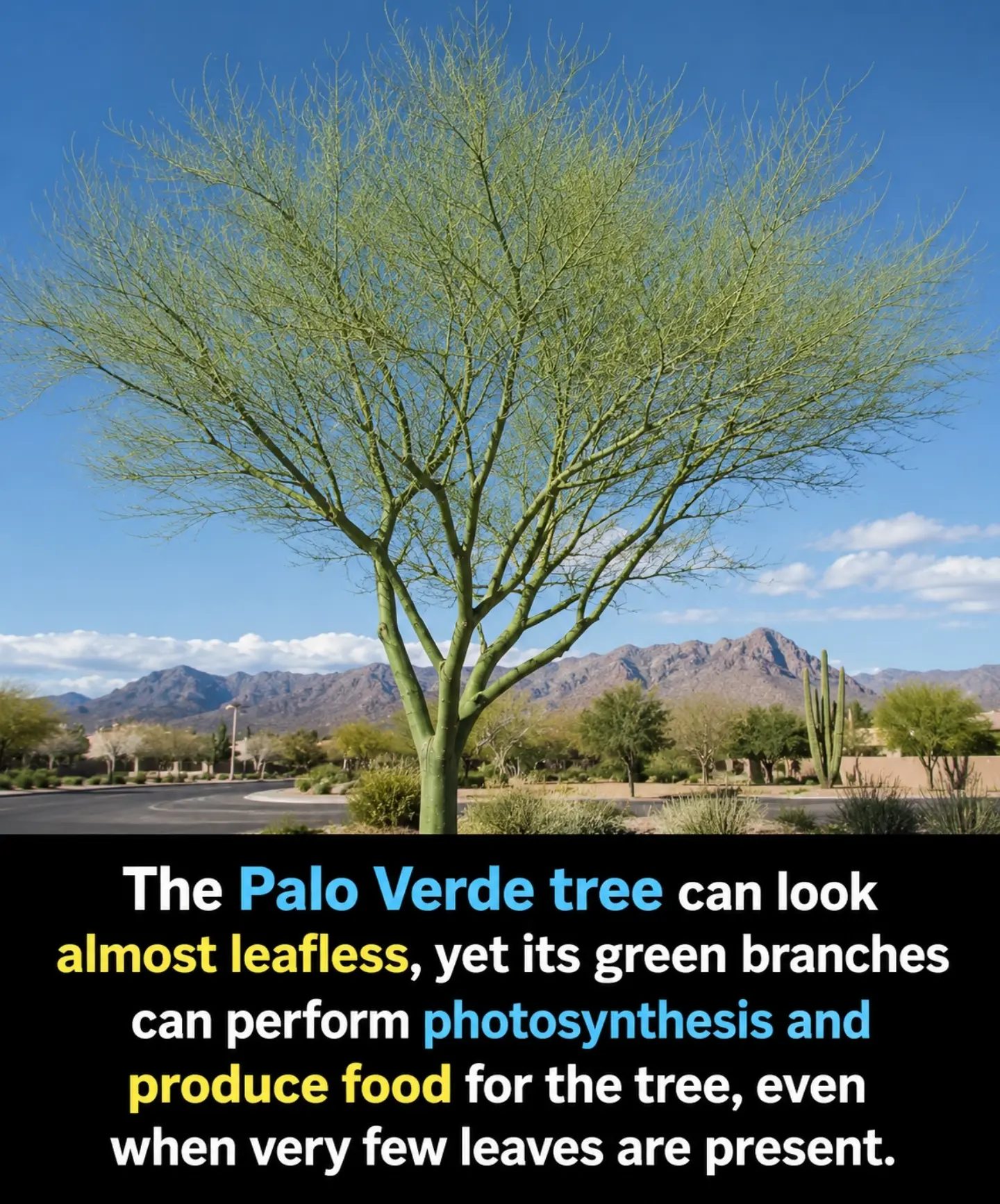
Palo Verde trees are a remarkable sight in desert landscapes. These trees can often look nearly leafless, yet they possess a unique ability to thrive in harsh, arid environments. Understanding their adaptability sheds light on the fascinating ways nature sustains life in extreme conditions.
Context: Desert Adaptations
Palo Verde trees are native to the Southwestern United States and Mexico, where water is scarce, and temperatures can be extreme. The most striking feature of these trees is their almost leafless appearance, which might seem counterintuitive for a plant's survival. However, this adaptation is key to their resilience.
Palo Verde trees have evolved to survive in arid conditions by minimizing water loss. Their green branches perform photosynthesis, allowing them to produce food even when very few leaves are present. This adaptation enables them to conserve water and nutrients, which are crucial in desert environments.
The Science Behind Palo Verde Trees
Photosynthesis in Green Branches
Most trees rely on leaves to perform photosynthesis, the process by which plants convert light energy into chemical energy. However, Palo Verde trees have a unique mechanism: their green branches contain chlorophyll, the pigment responsible for photosynthesis. This allows the branches to absorb sunlight and produce food for the tree, even when foliage is sparse.
Water Conservation
Water conservation is another critical factor in the survival of Palo Verde trees. Their glossy, waxy coating on the branches helps reduce water loss through evaporation. Additionally, the tree's root system is extensive and can reach deep into the soil to access water sources that other plants cannot.
Nutrient Efficiency
Palo Verde trees are highly efficient in nutrient use. They have developed mechanisms to recycle nutrients within the plant, minimizing the need for external nutrients. This efficiency is crucial in desert environments where nutrient availability is often limited.
Practical Tips for Growing Palo Verde Trees
If you're considering growing Palo Verde trees in your landscape, here are some practical tips to ensure their health and longevity:
Soil Preparation
Palo Verde trees thrive in well-draining soil. Ensure the soil is sandy and not too dense, as this will help prevent waterlogging, which can be detrimental to the tree's health. Adding organic matter to the soil can also improve its structure and nutrient content.
Watering
While Palo Verde trees are drought-tolerant, they still need water, especially when young. Water deeply but infrequently to encourage deep root growth. Once established, these trees can survive on rainfall alone.
Light and Temperature
Palo Verde trees love the sun and can tolerate a wide range of temperatures. They are best suited for full-sun conditions and can withstand both high and low temperatures. However, protect young trees from extreme temperature fluctuations.
Pruning
Palo Verde trees do not require extensive pruning. Remove dead or damaged branches to maintain the tree's health and appearance. Pruning can also help control the tree's size and shape.
Pest and Disease Management
Palo Verde trees are generally resistant to pests and diseases. However, they can be affected by scale insects and spider mites. Regularly inspect the tree for signs of infestation and treat promptly with insecticidal soap or horticultural oil.
Important Takeaways
Palo Verde trees offer a unique insight into the adaptability of plant life. Their ability to perform photosynthesis through green branches and their efficient use of water and nutrients make them a symbol of resilience in arid landscapes. By understanding their needs and providing the right conditions, you can successfully grow these remarkable trees.
Conclusion
Palo Verde trees are a testament to nature's ingenuity in adapting to harsh environments. Their green branches, extensive root systems, and efficient nutrient use make them ideal for desert landscapes. Whether you're a gardener or a nature enthusiast, understanding the unique features of Palo Verde trees can inspire appreciation for the natural world's amazing adaptations.
Questions readers ask
Why do Palo Verde trees appear to be leafless?
Palo Verde trees appear leafless because they have evolved to minimize water loss in arid environments. Instead of traditional leaves, their green branches perform photosynthesis, allowing them to thrive in desert landscapes with minimal water.
How do Palo Verde trees conserve water?
Palo Verde trees employ several strategies for water conservation. Their green branches, which conduct photosynthesis, are covered in a waxy coating that reduces water loss. Additionally, their root systems are extensive, allowing them to efficiently absorb water from deep soil layers.
Where are Palo Verde trees commonly found?
Palo Verde trees are native to the Southwestern United States and Mexico. They are well-adapted to the desert climates in these regions, where water is scarce and temperatures can be extremely high.
Can Palo Verde trees survive without leaves?
Yes, Palo Verde trees can survive without traditional leaves. Their green branches have evolved to perform photosynthesis, which is crucial for their survival in arid environments. This adaptation allows them to thrive in desert landscapes where water is limited.
How do Palo Verde trees perform photosynthesis without typical leaves?
Palo Verde trees conduct photosynthesis through their green branches. These branches contain chlorophyll, which absorbs light energy for photosynthesis. The green color of the branches indicates the presence of chlorophyll, enabling them to produce energy in the absence of traditional leaves.
Related deep dives
Similar reads based on topic and creator.


Recent articles
Fresh deep dives from the latest Reels we unpacked.




Comments
Be the first to comment.