Community Refrigerators: A Simple Solution to Food Insecurity
Community refrigerators, also known as "free fridges," are a growing phenomenon aimed at addressing food insecurity and waste. These refrigerators are typically placed in public spaces, stocked with donated food, and accessible to anyone in need. The concept is simple yet powerful: provide a convenient and dignified way for people to access food without the stigma or bureaucracy often associated with traditional food assistance programs.
Why Community Refrigerators Matter
Food insecurity is a widespread issue that affects communities globally. According to the United Nations, up to 828 million people go hungry each year. Community refrigerators offer a localized, community-driven solution to this problem. They help reduce food waste by redistributing surplus food and provide a source of nourishment for those who might otherwise go without. This initiative not only addresses immediate hunger but also builds community resilience and fosters a sense of solidarity among neighbors.
The Mechanics of a Community Refrigerator
Setup and Placement
To establish a community refrigerator, a suitable location must be identified. This could be outside a residential home, a local community center, or any other public space with regular foot traffic. The refrigerator should be easily accessible and visible to encourage participation from both donors and those in need. It's essential to ensure the refrigerator is secure and properly maintained to prevent vandalism and ensure food safety.
Stocking the Fridge
The success of a community refrigerator relies heavily on community involvement. Neighbors, local businesses, and even small farms can contribute surplus food, non-perishable items, and other necessities. Regular monitoring and restocking are crucial to keep the refrigerator well-stocked and reduce waste. Some community fridges operate on a first-come, first-served basis, while others have specific times for restocking and taking items.
Ensuring Food Safety
Food safety is paramount when handling donated food. Proper refrigeration and regular cleaning can prevent bacterial growth and spoilage. It's also important to provide clear guidelines for donors and users. For instance, perishable items like meat and dairy should be clearly labeled with expiration dates, and non-perishable items should be in good condition. Regular checks and maintenance can help ensure that the food remains safe and edible.
Practical Tips for Starting a Community Refrigerator
Community Engagement
Building a strong community presence is crucial to the success of the initiative. Engage with local residents, businesses, and organizations to spread awareness and gather support. Social media platforms, community bulletin boards, and local newspapers can be effective tools for outreach. Encouraging participation from local schools, churches, and other community groups can also help maintain a steady supply of food.
Legal and Logistical Considerations
Ensuring compliance with local regulations is essential. Check with your local health department for guidelines on food donation and storage. Additionally, obtaining necessary permits and insurance can help safeguard the initiative. Collaborating with local authorities and community organizations can simplify the process and provide additional support.
Maintaining Sustainability
To keep the refrigerator running smoothly, establish a maintenance plan. This includes regular restocking, cleaning, and inspections. Engage volunteers from the community to help with these tasks. Additionally, consider setting up a donation box for non-perishable items and other necessities to complement the refrigerator. Donations of cleaning supplies, hygiene products, and other essentials can further support those in need.
Why Community Efforts Work
The success of the community refrigerator initiative in Saudi Arabia and elsewhere highlights the power of grassroots community efforts. When neighbors come together to address common issues, they create a supportive environment that fosters mutual aid and resilience. This model has proven effective in various regions, showing that simple yet thoughtful approaches can make a significant impact.
Case Study: The Saudi Community Refrigerator
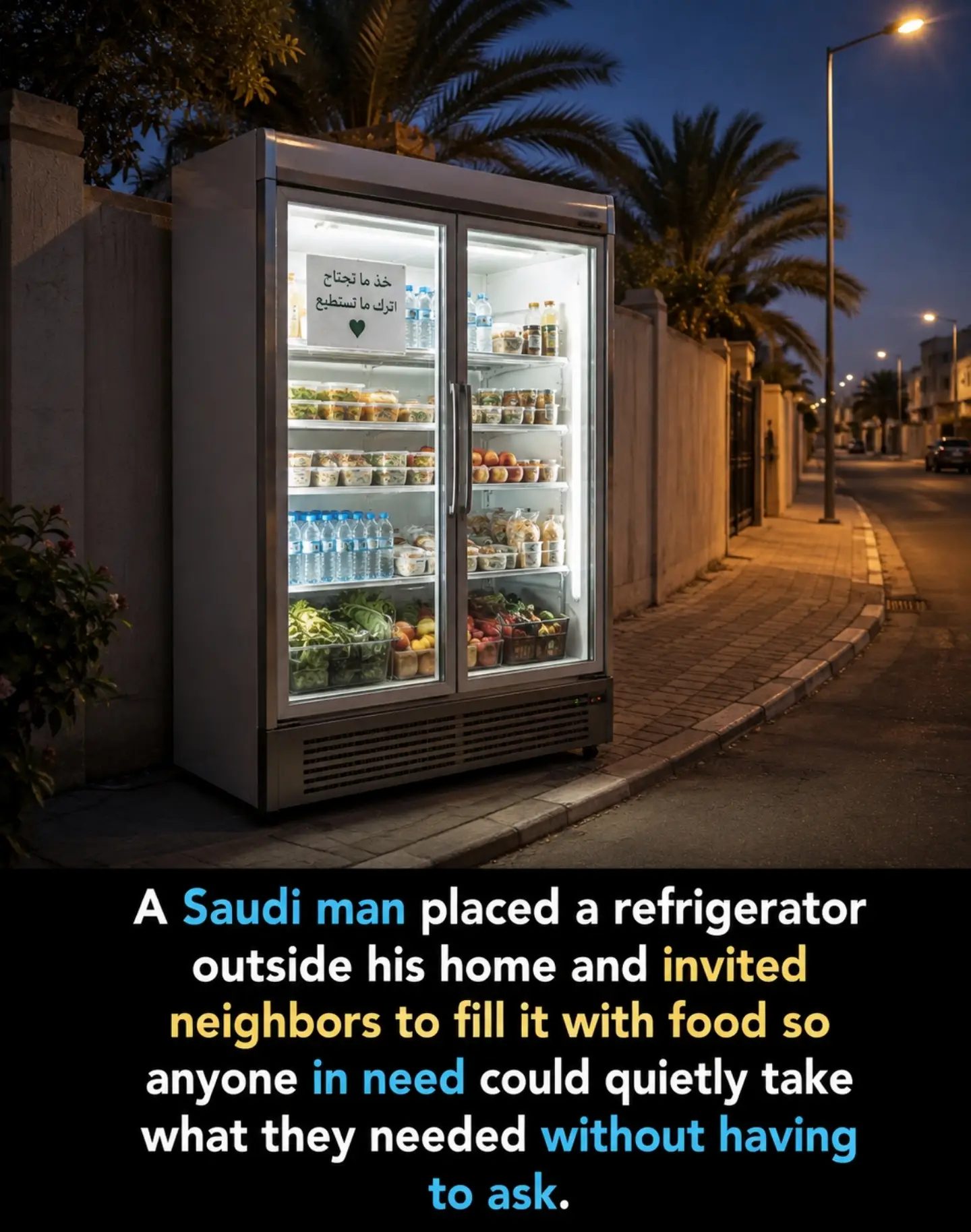
A notable example of this initiative is the community refrigerator set up by a Saudi man. He placed a refrigerator outside his home and encouraged neighbors to contribute food. This simple act of kindness aimed to provide food assistance without the need for formal requests or questions, creating an accessible and dignified way for anyone to take what they need. The refrigerator was stocked with various food items like water bottles, fruits, vegetables, and prepared meals, demonstrating how such initiatives can help address food insecurity and waste.
The Benefits of Community Support
The success of community refrigerators relies heavily on the collective effort of the community. When neighbors come together to support each other, they create a supportive environment that fosters mutual aid and resilience. This model has proven effective in various regions, showing that simple yet thoughtful approaches can make a significant impact.
Important Takeaways
Community refrigerators offer a practical and dignified solution to food insecurity and waste. By setting up a fridge in a public space and encouraging community involvement, anyone can contribute to reducing hunger and fostering community support. This initiative not only addresses immediate hunger but also builds a supportive environment that can lead to long-term positive changes. Engaging with local authorities, maintaining food safety, and ensuring regular participation are key to the success of such initiatives.
Conclusion
Community refrigerators exemplify how small, community-driven efforts can address significant issues like food insecurity and waste. By providing a convenient and dignified way for people to access food, these initiatives build community resilience and foster mutual support. Whether you're considering starting a community refrigerator or looking to support an existing one, remember that collective effort and community engagement are the keys to success. Together, we can create a more supportive and resilient community.
Questions readers ask
What exactly is a community fridge and how does it work?
A community fridge, or free fridge, is a public refrigerator where people can leave surplus food for others to take. It operates on a simple principle: neighbors donate food and anyone in need can help themselves, with no strings attached. These fridges are usually found in accessible public spaces and rely on community support to stay stocked.
How does a community fridge help reduce food waste?
Community fridges help reduce food waste by providing a physical location for people to donate food that they would otherwise throw away. This could include items that are approaching their expiration date, or even unwanted leftovers from meals. By making this food available to others, community fridges ensure that perfectly good food doesn’t go to waste when someone else is in need.
What are the benefits of having a community fridge in my neighborhood?
Having a community fridge in your neighborhood fosters a sense of camaraderie and mutual support. It provides a convenient and dignified way for neighbors to access food without any bureaucratic hurdles. Additionally, it helps reduce food waste by ensuring surplus food is put to good use, and it contributes to community resilience by encouraging neighbors to look out for one another.
Who can use a community fridge and who can donate food?
Anyone can use a community fridge. If you're in need of food, you can take what you need without any judgment or paperwork. Similarly, anyone can donate food. If you have surplus food that you can't use before it goes bad, you can contribute it to the fridge so others can benefit from it.
How are community fridges maintained and kept safe?
Community fridges are typically maintained by volunteers and community members who ensure they are regularly stocked and cleaned. To keep the fridges safe and hygienic, it's important for users to follow good food handling practices, such as not leaving perishable items out for extended periods and keeping the fridge clean. Local organizations or neighborhood groups may also oversee the fridge to ensure its smooth operation.
Are there community fridges outside of Saudi Arabia, and if so, where?
Yes, the community fridge movement has spread beyond Saudi Arabia and can be found in various countries around the world. You can find them in cities across the United States, Europe, and other regions. To locate one near you, check online community resources, local social media groups or ask around in your neighborhood.
How can I start a community fridge initiative in my area?
Starting a community fridge initiative involves several steps. First, gather a group of interested volunteers and community members. Next, identify a suitable public location for the fridge and obtain any necessary permits. Reach out to local organizations, businesses, and neighbors for support and donations. Promote the initiative through local media, social media, and community events to raise awareness and encourage participation.
Recent articles
Fresh deep dives from the latest Reels we unpacked.




Comments
Be the first to comment.